
Recently, more news about the R & D and construction of 6G has surfaced.
According to the news released by the “Purple Mountain Laboratory”, a top domestic communication and security research institution, the first domestic Pre6G test network will be officially put into operation in Nanjing. Some media have stated that this marks that China’s 6G technology has completed technical verification and officially entered a new stage of system capability verification.
According to reports, the test network “integrates 6G innovation technologies into the 5G network, featuring high bandwidth, long – distance coverage, low – latency certainty, and AI endogenous integration”, and its relevant capabilities can reach 10 times that of 5G.
From the PC Internet in the 3G era, to the 4G mobile Internet, then to the 5G intelligent Internet of Things, and even the future 6G sky – integration, the iterative evolution of the communication industry is a major event in the global technology field, and it also involves an industrial and market cake worth trillions.
Seven years ago, the Ministry of Industry and Information Technology issued the 5G commercial license in advance. Government departments, the media, society, and research institutions jointly outlined a grand blueprint for future technology:
4G changes life, and 5G changes society.
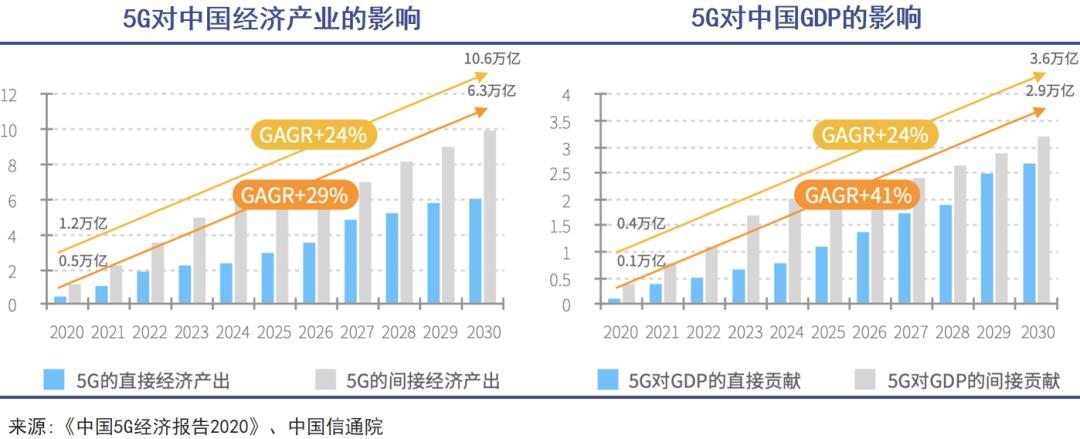
Not long after the completion of the 4G network, the 5G project directly became a strategic project at the level of a “national weapon”. The China Academy of Information and Communications Technology clearly pointed out in the “Economic Contribution of the 5G Industry” that by 2025, 5G will drive an economic output of 10.6 trillion yuan and directly create 3 million jobs.
Compared with 4G, 5G, which requires higher investment and is more expensive, doesn’t seem to bring a leap – forward experience to consumers. In areas such as telemedicine, industrial Internet, and virtual reality, which were expected to boom, the situation is “neither here nor there”.
Now, with the explosion of commercial spaceflight, the investment window for the sky – integrated 6G is coming. It hasn’t been long since the 5G dividends faded away, and it seems that the major communication revolution that once fascinated countless people is about to happen again.
01
“National Policy”
In 2019, the China Academy of Information and Communications Technology released a research report titled “China’s 5G Economic Report 2020”.
The report states that by 2030, 5G will directly drive a total economic output of 6.3 trillion yuan and indirectly contribute 10.6 trillion yuan. It is estimated that by 2020, the commercialization of 5G will directly create 540,000 job opportunities, more than 3.5 million by 2025, and over 8 million by 2030.
At that time, public enthusiasm was quickly mobilized. Just like the current AI and embodied robots, the business community, research institutions, the media, and governments at all levels jointly pushed people’s expectations to an unprecedented high.
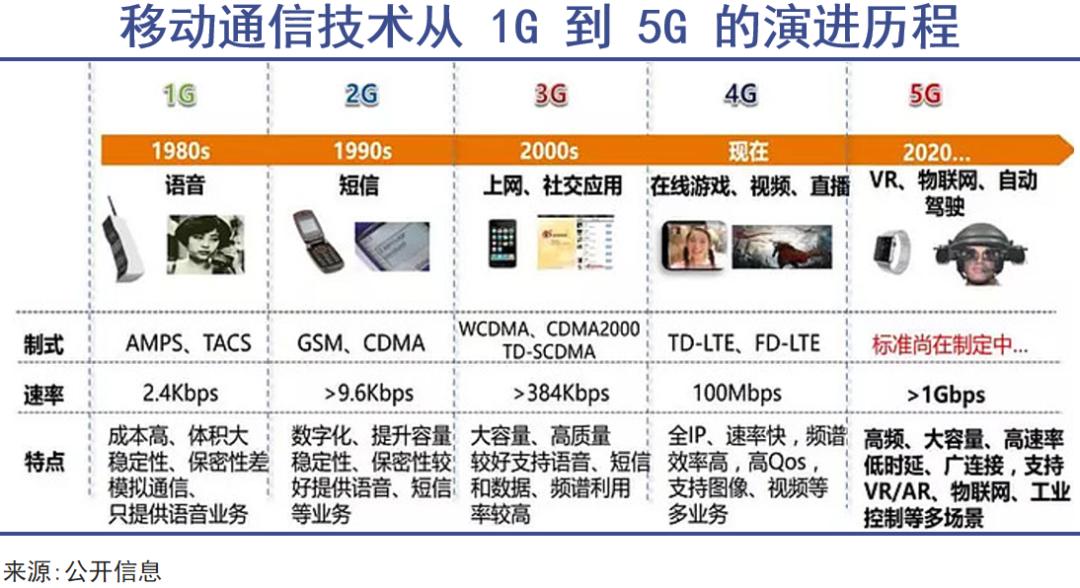
The new – generation communication technology really deserves such attention. Since the advent of the 1G network in the 1980s, mobile communication technology has been evolving at a pace of “one generation every ten years”, giving rise to world – class technology giants such as Motorola, Nokia, Ericsson, Qualcomm, Apple, Facebook, and Douyin.
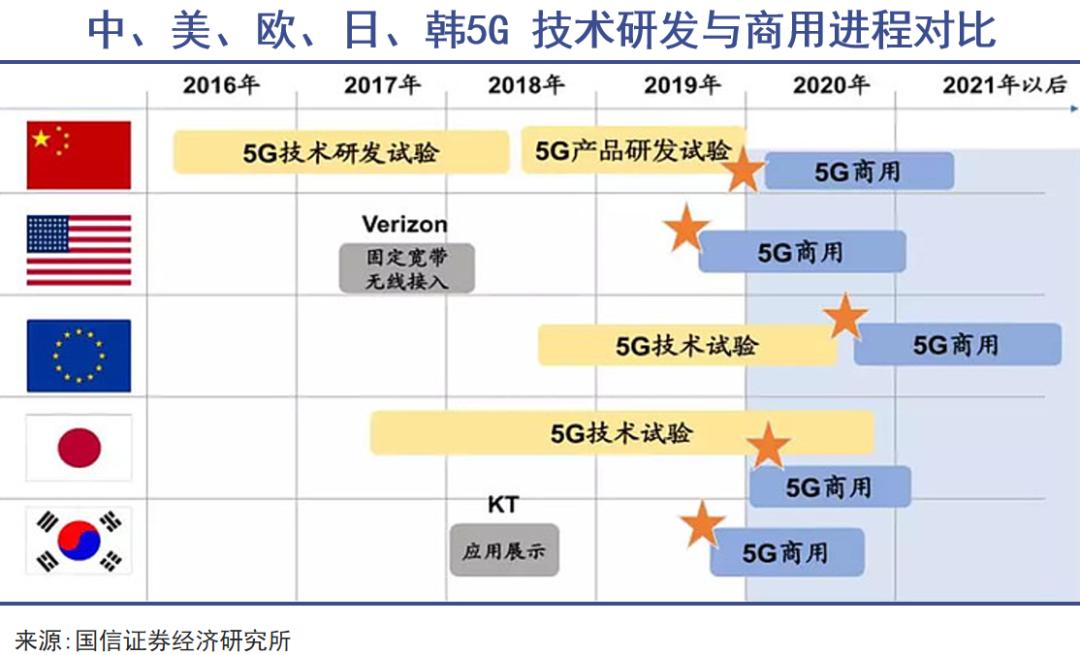
By 2019, South Korea, the United States, the United Kingdom, and Switzerland had all launched 5G services. The concept that “whoever can commercialize the 5G research results first will lead the new round of global industrial transformation” almost became a consensus among countries around the world at that time.
On the morning of June 6th of this year, the Ministry of Industry and Information Technology officially issued a 5G commercial license to the three major operators, China Telecom, China Mobile, China Unicom, and the dark – horse China Broadcasting Network, marking China’s official entry into the first year of 5G commercialization. This was one year ahead of the original plan, aiming to “seize the opportunity”.
The technological game between major powers was intense at that time. European and American countries chose to strictly block China’s 5G technology.
In March 2016, the U.S. Department of Commerce imposed export restrictions on ZTE. Two years later, the U.S. government prohibited ZTE from purchasing sensitive products containing U.S. technology. The U.S., Australia, India, and British Telecom also excluded Huawei and ZTE from the list of 5G cooperation.
On December 1st, 2018, Meng Wanzhou was arrested in Vancouver, Canada. The United States requested her extradition. After more than two years of trial, Meng Wanzhou finally returned to China in September 2021.
As a result, 5G became more closely linked to the competition between major powers, and the “number – one project” was vigorously launched. Operators didn’t hesitate in their investment. In 2023 alone, the four telecom companies invested 190.5 billion yuan in 5G.
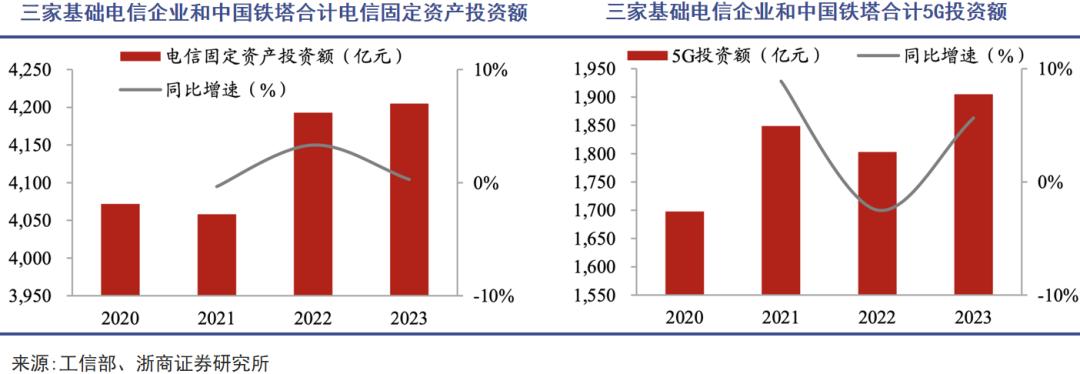
In 2024, according to the data from the Academy of Information and Communications Technology cited by the Ministry of Industry and Information Technology, in the five years since the commercialization of 5G, it has directly driven a total economic output of 5.6 trillion yuan and indirectly driven a total output of about 14 trillion yuan.
The new infrastructure campaign continues to advance, and 5G and related construction are the highlights. By the end of February this year, China had built 4.909 million 5G base stations, accounting for 70% of the world’s total. All townships and 95% of administrative villages in the country are covered by 5G, and even 5G – A has covered more than 330 cities (by the end of 2025).
With an investment scale in the trillions, along with government subsidies, industrial fund investments, capital expenditures of the three major operators, and large – scale construction in related industries, new business forms such as the Internet +, cloud computing, and the Internet of Things have emerged crazily.
02
Disappointment
According to previous statements, compared with 4G, 5G features fast transmission, low latency, and wide connection coverage.
In an ideal state, the peak rate of 5G is 10 – 20Gbps, and users can experience a rate of 0.1Gbps – 1Gbps. Under ideal conditions, the maximum download speed can reach 2.5GB/s, more than 10 times faster than 4G.
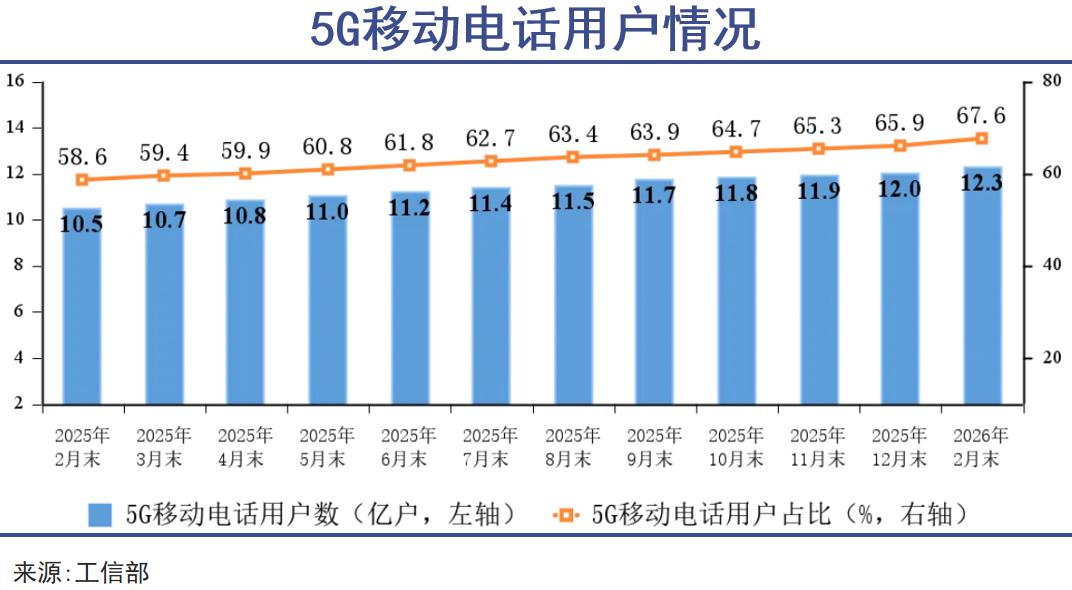
As of the end of February this year, the number of 5G mobile phone users has risen to 1.235 billion, a net increase of 30.44 million compared with the end of last year, accounting for 67.6% of all mobile phones.
In actual use, the theoretical “super – performance” of 5G is always difficult to fully realize. It’s like giving each user a super – car, but in the regular urban commuting scenario, they can’t really step on the accelerator.
Moreover, according to the real feelings of the vast majority of users, there isn’t much difference between 5G and 4G in terms of network speed, and there are also situations such as freezing, disconnection, and no signal. In January this year, Beijing News reported that Mr. Chen in Yancheng, Jiangsu, spent 129 yuan per month on a 5G package, but the network speed was only 35Mbps, while the operator marked the downstream rate as 500M.
He complained to the Jiangsu Provincial Communications Administration. Yancheng Telecom stated that 500M is the “peak rate”, which is a theoretical value based on the ideal laboratory environment.
According to the data from the Ministry of Industry and Information Technology, in the fourth quarter of last year, the average 5G network speed in China was 222.3Mbps, and that of 4G was 37.6Mbps (about 40M broadband). Even if switching to 4G, it is already sufficient for daily use.
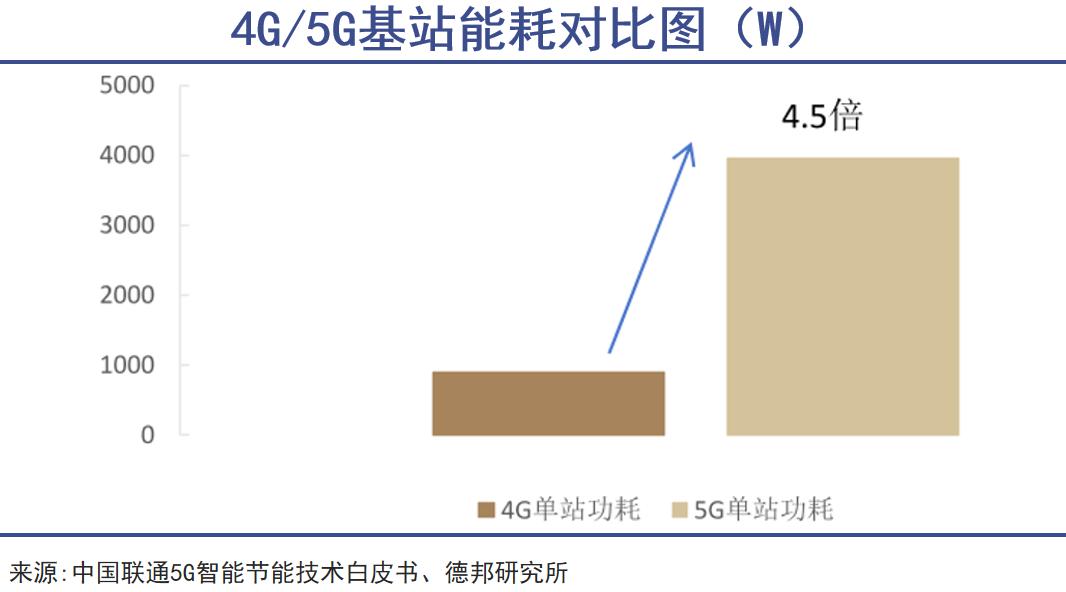
On the other hand, according to various public data, the energy consumption of a single 5G base station in actual operation is 4.5 times that of a 4G base station.
Based on the actual situation at that time, Miao Wei, the former Minister of Industry and Information Technology, once made a judgment at a press conference of the State Council Information Office, saying that 4G mobile phones are already sufficient for the vast majority of users. Wang Jianzhou, the former chairman of China Mobile, also said in 2019 that “the main function of people using 5G mobile phones at that time was to test the speed.”
Of course, both of them also said that the real application scenarios of 5G are mainly in the industrial Internet and the Internet of Vehicles. The characteristics of low latency and large – scale connection of 5G determine that it will play a huge role in the Internet of Things, artificial intelligence, the industrial field, and the medical field.
That is to say, the core application of 5G depends on the ToB end.
Lou Jiwei, the former Minister of Finance, expressed his concerns. In an exclusive interview with Caixin in November 2020, he said bluntly that hundreds of billions of investment have been made, the operating cost is extremely high, and there are no application scenarios. It will be a difficult problem to digest the cost in the future. The 5G technology should be used in the industrial Internet, but the current technology is not mature. Now it is going in another direction (civil mobile phone interconnection), and in fact, the actual effect of such investment is not significant.


After several years of construction, at the 2024 Global 6G Technology Conference, Wu Quanhua, an academician of the Chinese Academy of Engineering, expressed his summary view. He believes that 5G hoped to enter the industrial Internet, but underestimated the personalized needs among enterprises and the fragmented threshold of industrial intranet standards, making the consumer – oriented network architecture “neither here nor there” in the industrial scenario.
Previous news reports were full of all kinds of “science – fiction – like expectations” for 5G, such as telemedicine saving lives remotely, the full – scale deployment of intelligent driving, VR classrooms entering mountainous areas, the explosion of virtual reality games, and the connection of the meta – universe with the blockchain.
Especially telemedicine and autonomous driving were highly anticipated. However, considering the complex issues of network stability and user safety, large – scale industrial implementation has not occurred in these two areas.
There is no doubt that the 5G network, which once excited the whole society about the technology era, now seems to fall short of expectations.
03
Fading
In less than a decade, the 5G dividends have faded, and 6G + AI is about to rise. This is deeply reflected in the performance changes of operators.
In the newly released first – quarter report of 2026, the net profits of the three major operators all declined. China Unicom and China Telecom both decreased by more than 17%, and China Mobile’s net profit shrank by 4.21%. The revenues of the first two companies also decreased rarely. Although China Mobile’s total revenue increased slightly, its main business decreased by 1.1%.
In the long run, the performance changes of operators show a close positive correlation with the 5G dividend cycle. Taking the giant China Mobile as an example, the company’s net profit decreased by 9% in 2019, the year when the 5G license was issued. After that, the company’s revenue and profit increased steadily. However, in 2025, its net profit decreased for the first time in five years.
This performance change is closely related to the fluctuations in the core wireless Internet business.
After the commercialization of 5G in 2019, with the replacement of higher – value packages, the main business of operators had a wave of growth. China Mobile’s wireless Internet business increased from 385 billion yuan in 2019 to 395.9 billion yuan in 2022, but then began to decline. In 2025, it was only 369.1 billion yuan, less than that in 2019.
