
Introduction
The global beverage industry is undergoing a profound transformation as consumers increasingly prioritize health, wellness, and nutrition in their daily lives. Traditional sugary soft drinks are gradually losing favor among health-conscious consumers, while functional beverages that offer additional wellness benefits are gaining significant traction. Among these emerging beverage categories, kombucha has established itself as one of the fastest-growing and most dynamic segments.
Kombucha, a fermented tea beverage known for its probiotic content and digestive health benefits, has moved beyond niche health food stores to become a mainstream beverage choice available in supermarkets, cafes, convenience stores, and online retail platforms worldwide. Its popularity stems from a unique combination of wellness benefits, refreshing taste, natural ingredients, and innovative flavor profiles that appeal to modern consumers.
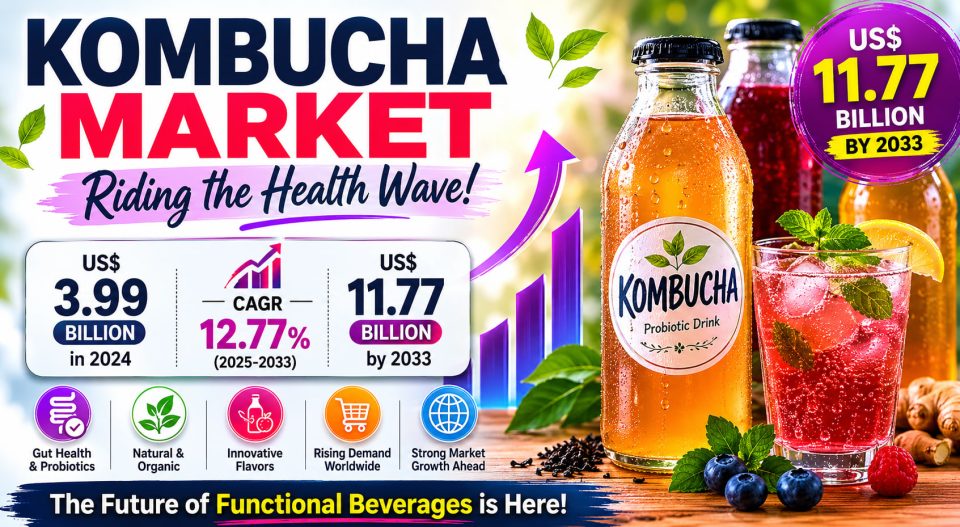
According to Renub Research, the Global Kombucha Market is expected to grow from US$ 3.99 Billion in 2024 to US$ 11.77 Billion by 2033, registering an impressive CAGR of 12.77% during the forecast period from 2025 to 2033. This remarkable growth reflects increasing consumer awareness regarding digestive health, growing demand for natural and organic products, and the expanding popularity of probiotic beverages across developed and emerging markets.
Understanding Kombucha and Its Health Appeal
Kombucha is a fermented tea beverage created by combining sweetened tea with a symbiotic culture of bacteria and yeast, commonly referred to as SCOBY. During the fermentation process, beneficial microorganisms transform sugars into organic acids, carbon dioxide, antioxidants, probiotics, and other compounds that contribute to kombucha’s distinctive taste and potential health benefits.
The beverage is widely recognized for supporting digestive wellness due to its probiotic content. Consumers increasingly associate kombucha with improved gut health, enhanced immunity, and better overall well-being. While scientific research continues to explore the full extent of kombucha’s health benefits, consumer perception regarding its positive effects has significantly contributed to market growth.
Unlike many traditional health beverages, kombucha successfully balances functionality with flavor. Available in numerous varieties featuring fruits, herbs, spices, and botanical ingredients, kombucha appeals to consumers seeking both wellness benefits and enjoyable drinking experiences.
Rising Health Consciousness Fuels Market Growth
One of the strongest drivers behind the global kombucha market is the growing focus on health and wellness. Consumers worldwide are becoming more aware of the importance of preventive healthcare and healthy lifestyle choices. As a result, demand for beverages that offer functional benefits beyond hydration continues to rise.
Gut health has emerged as a major wellness trend over the past decade. Scientific discussions surrounding the gut microbiome and its connection to digestion, immunity, and overall health have increased public awareness regarding the importance of maintaining a healthy digestive system.
Kombucha’s probiotic content positions it perfectly within this trend. Many consumers view the beverage as a convenient and enjoyable way to support digestive wellness while reducing consumption of sugary drinks and artificial beverages.
The COVID-19 pandemic further accelerated interest in health-supporting products. Consumers became more proactive about immunity and wellness, creating favorable conditions for functional beverages such as kombucha. This shift in consumer behavior continues to support long-term market growth.
Growing Preference for Natural and Organic Products
Modern consumers increasingly scrutinize ingredient labels and seek transparency from food and beverage manufacturers. This clean-label movement has significantly influenced purchasing decisions across the global food and beverage industry.
Kombucha naturally aligns with these evolving preferences. Many kombucha products feature organic teas, natural fruits, botanical extracts, and minimal processing techniques. The absence of artificial preservatives, synthetic additives, and excessive sweeteners appeals to consumers looking for healthier beverage options.
The organic food and beverage market has witnessed substantial growth globally, and kombucha manufacturers have successfully leveraged this trend by emphasizing premium ingredient sourcing and sustainable production practices.
As awareness regarding food quality and ingredient transparency continues to increase, demand for naturally fermented beverages such as kombucha is expected to remain strong.
Flavor Innovation Expands Consumer Appeal
One of the key reasons for kombucha’s success is continuous innovation in flavor development. Early kombucha products often appealed primarily to dedicated health enthusiasts. However, today’s market offers an extensive variety of flavor combinations designed to attract mainstream consumers.
Manufacturers regularly introduce innovative blends featuring tropical fruits, berries, citrus fruits, herbs, spices, flowers, and seasonal ingredients. These creative flavor profiles help overcome potential barriers for first-time consumers while encouraging repeat purchases among existing customers.
Limited-edition releases and seasonal offerings have become effective marketing tools. Such innovations create excitement within the category and help brands differentiate themselves in an increasingly competitive marketplace.
Flavor innovation has been particularly successful in attracting younger consumers who actively seek unique taste experiences and enjoy experimenting with new products. This trend continues to broaden the consumer base and strengthen overall market demand.
Millennials and Gen Z Drive Consumption Trends
Millennials and Generation Z consumers represent a significant growth engine for the kombucha industry. These demographics place strong emphasis on health, sustainability, authenticity, and premium product experiences.
Younger consumers are more likely to explore alternative beverages and prioritize wellness-oriented lifestyles. They actively seek products that align with their personal values, including clean ingredients, environmental responsibility, and nutritional benefits.
Social media platforms have played an important role in expanding kombucha’s popularity among these groups. Wellness influencers, nutrition experts, fitness enthusiasts, and lifestyle content creators frequently highlight kombucha as part of healthy daily routines.
The combination of visual branding, innovative packaging, and strong health associations has helped kombucha become particularly appealing to younger generations who influence broader consumer trends.
Expansion of Retail and E-Commerce Channels
The growing availability of kombucha across multiple distribution channels has significantly contributed to market expansion. What was once a specialty product found primarily in health food stores is now widely available through supermarkets, hypermarkets, convenience stores, cafes, restaurants, and online platforms.
Retail expansion has increased product visibility and improved consumer accessibility. Mainstream grocery chains now dedicate substantial shelf space to functional beverages, including kombucha, reflecting growing consumer demand.
E-commerce has emerged as another important growth driver. Online shopping platforms enable consumers to access a broader selection of brands and flavors than may be available in local stores. Subscription services and direct-to-consumer sales models further enhance convenience while strengthening customer relationships.
As digital commerce continues expanding globally, online channels are expected to play an increasingly important role in kombucha distribution.
Challenges Facing the Kombucha Market
Regulatory and Compliance Concerns
Despite its strong growth trajectory, the kombucha market faces several regulatory challenges. Since kombucha is produced through fermentation, alcohol content can naturally vary during production.
In many countries, beverages containing alcohol levels above specific thresholds are subject to stricter regulations regarding labeling, taxation, and distribution. Maintaining consistent alcohol levels requires sophisticated testing, quality control procedures, and production expertise.
Failure to meet regulatory requirements can lead to recalls, financial penalties, and reputational damage. As the market expands globally, manufacturers must navigate complex regulatory environments across different regions.
High Production Costs
Compared to conventional soft drinks, kombucha production involves a more complex manufacturing process. Fermentation requires controlled conditions, premium ingredients, skilled labor, and rigorous quality assurance measures.
Additionally, many kombucha products require refrigerated storage and transportation to preserve product quality and probiotic content. These cold-chain logistics increase operational costs throughout the supply chain.
As a result, kombucha often carries a premium price compared to traditional beverages. While health-conscious consumers may be willing to pay higher prices, affordability remains a challenge for broader market penetration.
Regional Market Analysis
United States Leads Global Consumption
The United States remains one of the largest and most mature kombucha markets globally. Growing awareness of probiotics, digestive health, and clean-label products has fueled widespread consumer adoption.
American consumers increasingly view kombucha as a healthier alternative to sugary sodas and energy drinks. Strong retail infrastructure, extensive product innovation, and widespread brand recognition continue supporting market growth across the country.
India Emerges as a High-Growth Opportunity
India’s kombucha market is experiencing rapid growth as urban consumers adopt healthier lifestyles and seek functional beverage alternatives. Rising disposable incomes, expanding wellness awareness, and increasing digital commerce are contributing to market expansion.
Domestic brands are actively introducing innovative flavors tailored to local preferences, helping increase consumer acceptance. Strategic partnerships and growing retail availability are further enhancing market accessibility.
As awareness regarding probiotics and digestive health continues to improve, India is expected to become one of the most promising growth markets for kombucha.
United Kingdom Shows Strong Demand
In the United Kingdom, consumer demand for healthier beverage options continues to grow. Increasing concerns regarding sugar consumption and overall wellness have encouraged consumers to explore alternatives such as kombucha.
The popularity of non-alcoholic premium beverages has also contributed to kombucha’s success. Innovative flavor offerings and expanding retail distribution networks continue strengthening the market’s position.
United Arab Emirates Experiences Rapid Growth
The UAE market is benefiting from rising health consciousness and growing interest in functional beverages. Consumers increasingly seek premium products that align with healthy lifestyle goals.
Kombucha’s probiotic benefits and refreshing taste profile make it an attractive option for wellness-focused consumers. Continued product innovation and expanding retail presence are expected to support future market growth.
Competitive Landscape Intensifies
The global kombucha market features a mix of established brands and emerging companies competing through product innovation, flavor development, branding, and distribution expansion.
Manufacturers are investing heavily in research and development to create differentiated offerings that meet evolving consumer preferences. Sustainability initiatives, premium ingredient sourcing, and digital marketing strategies have become important competitive tools.
As market growth accelerates, companies that successfully balance innovation, quality, affordability, and consumer trust will be best positioned to capture long-term opportunities.
10 Recent Developments by Leading Kombucha Companies
1. GT’s Living Foods
Expanded premium kombucha offerings while strengthening retail partnerships across major markets.
2. Remedy Drinks
Continued international expansion efforts to increase product availability and global brand recognition.
3. Lo Bros
Launched limited-edition Purple Grape Kombucha, targeting consumers seeking nostalgic flavors with functional benefits.
4. Brew Dr.
Introduced Just Peachy Kombucha featuring organic peaches and premium loose-leaf tea ingredients.
5. København Kombucha
Enhanced its premium product portfolio through artisanal fermentation and sustainability-focused initiatives.
6. GO Kombucha
Strengthened direct-to-consumer sales channels and digital customer engagement strategies.
7. VIGO KOMBUCHA
Expanded distribution partnerships to improve market penetration and consumer accessibility.
8. Brothers and Sisters
Introduced innovative flavor combinations designed to attract younger and health-conscious consumers.
9. BB Kombucha
Expanded retail presence across specialty stores and wellness-focused distribution networks.
10. Borécha
Partnered with airline operators to introduce kombucha products to a wider consumer audience.
Future Outlook for the Kombucha Industry
The future of the global kombucha market remains exceptionally promising. Consumer interest in wellness, digestive health, and functional beverages continues to grow, creating strong demand for probiotic-rich products.
Innovation will remain a critical success factor as brands compete to develop new flavors, formulations, and packaging solutions. Emerging markets across Asia-Pacific, Latin America, and the Middle East are expected to provide substantial growth opportunities as awareness and accessibility improve.
Technological advancements in production, supply chain management, and quality control will further support market development while helping manufacturers address cost-related challenges.
Final Thoughts
Kombucha has evolved from a niche fermented beverage into a global wellness phenomenon. Its combination of digestive health benefits, natural ingredients, refreshing flavors, and functional appeal aligns perfectly with modern consumer preferences.
With the global market projected to reach US$ 11.77 billion by 2033, kombucha is positioned to remain one of the most exciting segments within the broader functional beverage industry. Companies that continue investing in innovation, quality, sustainability, and consumer education will be well-positioned to capitalize on the growing demand for healthier beverage choices.
As health-conscious lifestyles become increasingly mainstream, kombucha’s role within the global beverage landscape is expected to expand significantly, creating opportunities for manufacturers, retailers, investors, and consumers alike.