

Emerging economies are increasingly using Chinese currency for cross-border trade as their dealings with China grow more diverse, said Kairat Kelimbetov, former Deputy Prime Minister of Kazakhstan and former governor of the National Bank of Kazakhstan.
In an interview with the China Global Television Network (CGTN) on the sidelines of the Tsinghua PBCSF Global Finance Forum in Chengdu City, southwest China’s Sichuan Province, Kelimbetov said that as Kazakhstan and China are strengthening cooperation across multiple sectors, Kazakhstan has established an offshore RMB clearing center to facilitate bilateral trade.
“We are exporting from China a lot, starting from telecom, high-tech industry productions, from 5G, smart cities. So for this, we need payments in Chinese currency. That’s why we create the RMB offshore clearing center, so when it’s exports-imports, people prefer work also in local currencies, let’s say. And I think Chinese currency becomes very popular in our part of the world,” he said.
Meanwhile, increased use of the RMB is paving the way for participation in Chinese financial markets.
“I think that we also have cooperation in capital markets recently with the sovereign wealth fund Samruk-Kazyna and the sovereign wealth fund of Baiterek. We also issue Panda bonds in the Hong Kong Stock Exchange. So I believe it’s also a good future when we can bring liquidity from the Chinese market — mainland and Hong Kong markets — to Central Asia to Kazakhstan,” said the former official.
Kelimbetov emphasized that China’s progress in green finance could also help emerging and developing economies address climate and energy needs.
“I think what China made in terms of the green finance, it’s a real revolution. So, I think we all worry about the problem of climate change. And so we’re now moving from the previous carbon centric economy to more alternative sources. I think in a very short period of time, China rebuilt the financial ecosystem. So the central banks kind of motivated the commercial banks to provide loans to the companies which are focusing on developing the energy, wind and solar energy power. And I think that we’ve seen it’s a great result from one side, but from the other side, the green financial system itself is also a good mechanism which we have to learn from China,” he said.
For the Global South, Kelimbetov said the opportunity is twofold. Green investment needs both capital and equipment. Since renewable energy equipment is often supplied by China, using Chinese liquidity through financial institutions can help countries finance projects while purchasing the technologies required to expand solar and wind capacity.
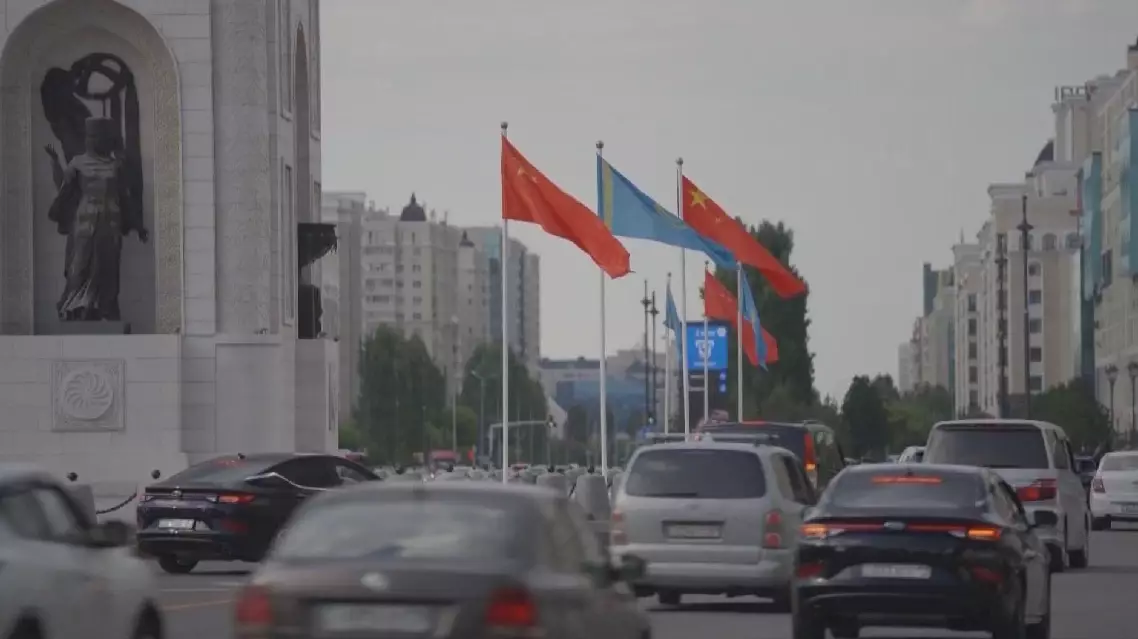
China’s yuan, financial systems offer viable alternatives for emerging markets: former Kazakh official
Russian President Vladimir Putin left Beijing on Wednesday night, concluding his state visit to China.
Zhang Guoqing, a member of the Political Bureau of the Communist Party of China Central Committee and Chinese vice premier, saw Putin off at the airport.
At the invitation of Chinese President Xi Jinping, Putin visited China from May 19 to 20. This was Putin’s 25th visit to China.
This year marks the 30th anniversary of the establishment of the China-Russia strategic partnership of coordination and the 25th anniversary of the signing of the China-Russia Treaty of Good-Neighborliness and Friendly Cooperation.
During their talks in Beijing on Wednesday, the two heads of state agreed to further extend the China-Russia Treaty of Good-Neighborliness and Friendly Cooperation.
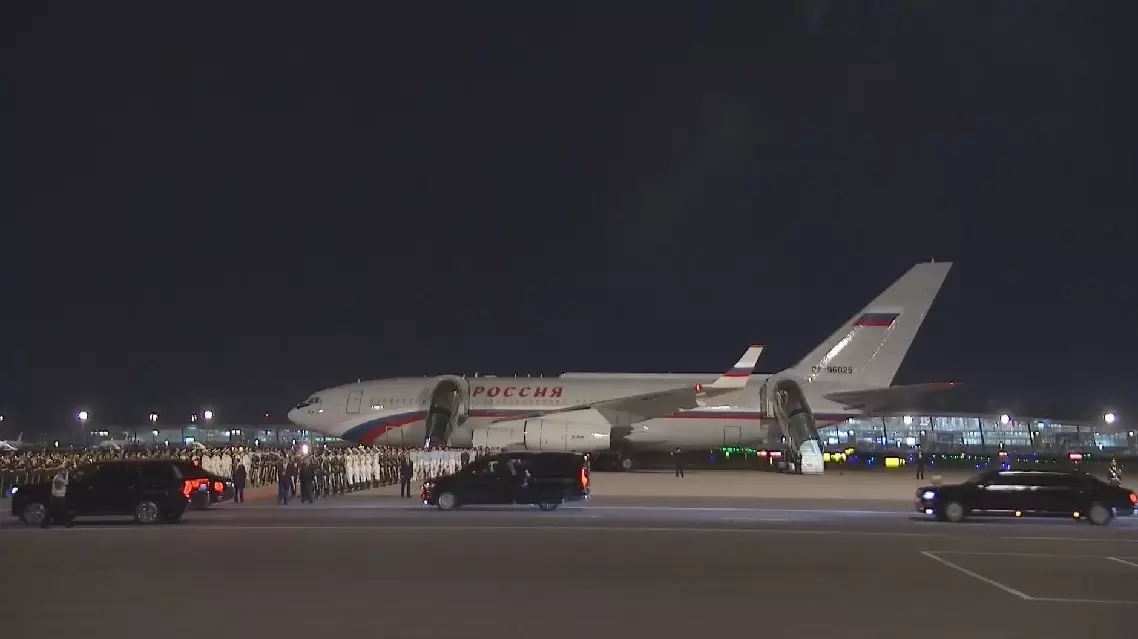
Putin wraps up China visit, leaves Beijing