
Authorities will examine whether speculative trading, offshore activity worsened won’s slide toward weakest level since 2009
South Korea’s central bank and financial regulator will launch their first joint inspection of major foreign exchange banks in 14 years, stepping up efforts to identify possible speculative trading behind the won’s sharp decline.
The move comes as the won-dollar exchange rate has remained above the 1,500 won level for nearly a month, with the Korean currency recently weakening beyond 1,550 won and approaching its lowest level since the 2009 global financial crisis.
The Bank of Korea and the Financial Supervisory Service said Wednesday they will conduct written reviews and on-site inspections to determine whether FX banks engaged in transactions that disrupted market stability or amplified one-way moves in the won-dollar exchange rate.
The two agencies, which have authority to conduct joint inspections under the Foreign Exchange Transactions Act, said they will look into whether banks sought undue gains for themselves or third parties by moving or fixing exchange rates, or engaged in trades that interfered with market functions and price discovery.
The move follows an emergency market meeting held Sunday after the won-dollar rate jumped to the 1,560 won level in the offshore nondeliverable forward market over the weekend, prompting authorities to warn against speculative trading and one-way bets.
At the meeting, Deputy Prime Minister and Finance Minister Koo Yun-cheol said the government “will not tolerate excessive volatility and one-way herd behavior,” adding that nondeliverable forward-driven herd behavior had been affecting the local foreign exchange market.
A nondeliverable forward is an offshore forward contract settled only by the exchange-rate difference, without actual delivery of won. Because overseas hedge funds and investors face restrictions in directly trading the won, nondeliverable forward markets in Singapore, Hong Kong and New York serve as key channels for won exposure.
The market is closely watched because offshore bets can spill over into Korea’s onshore FX market through banks’ hedging transactions. BOK Gov. Shin Hyun-song described the link late last month as a case where “the tail wags the dog,” saying overnight nondeliverable forward trading can ripple into the domestic market as dealers hedge their positions.
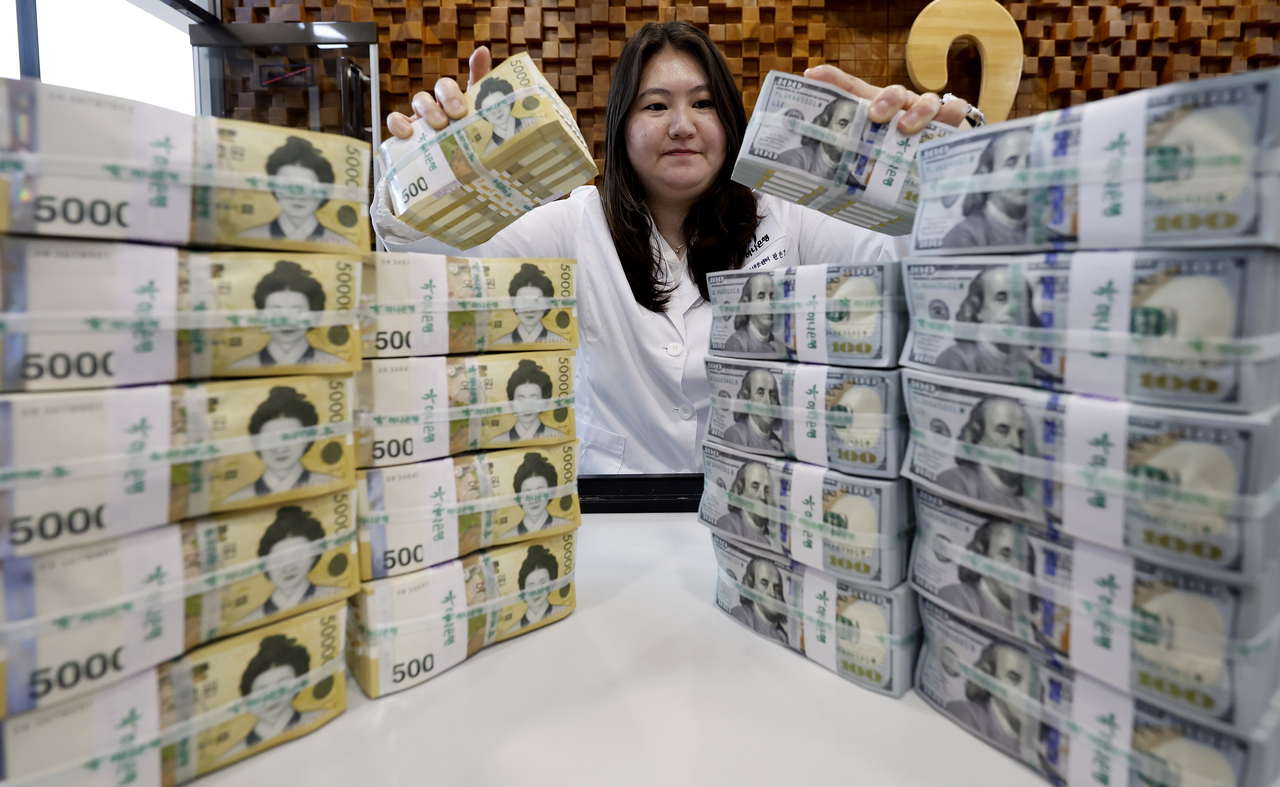
Joint inspections are usually reserved for periods of heightened financial or economic stress, when the FX market sees extreme volatility. The last such inspection was in 2012, when authorities were dealing with the opposite problem where the won appreciated rapidly.
This time, authorities are responding to sustained won depreciation, driven by external uncertainties including the Middle East conflict and US rate concerns, as well as supply-demand pressure from foreign investors’ portfolio rebalancing and profit-taking.
Market participants, however, were cautious about directly linking nondeliverable forward trades to the won’s sharp decline. One FX market official, who spoke on condition of anonymity, said the structure is “not clear-cut,” as offshore trades are mostly handled through foreign bank branches and bank hedging is largely systematic.
“It is difficult to say that bank hedging directly moves the spot market,” the official said. “Rather, hedging tends to increase when the spot market is already moving in one direction.”
The official added that hedging can still amplify pressure in a fast-moving market. “When the spot market rises sharply, hedging can add to upward pressure on the exchange rate, but it is difficult to measure the extent,” the official said.
A researcher at a foreign bank said recent won weakness appears to have been driven mainly by foreign investors’ stock-related flows, including profit-taking, portfolio rebalancing and currency hedging against their expanded Korean equity exposure.
“The risk is that foreign investors’ holdings have become much larger, and if they sell those positions over a short period, that becomes a risk for the won,” the researcher said. “That is what is happening now. Foreign investors are selling about 3 trillion won ($1.97 billion) just today, and that naturally affects the spot market and the won-dollar exchange rate.”
The local stock market has also been hit by sustained foreign outflows, with overseas investors offloading nearly 80 trillion won over more than three consecutive weeks.
The won-dollar rate has risen in pace, first breaching the 1,500 won mark intraday on May 15 and hovering above the level since. In the past six sessions, the won has failed to strengthen below 1,500 even intraday.
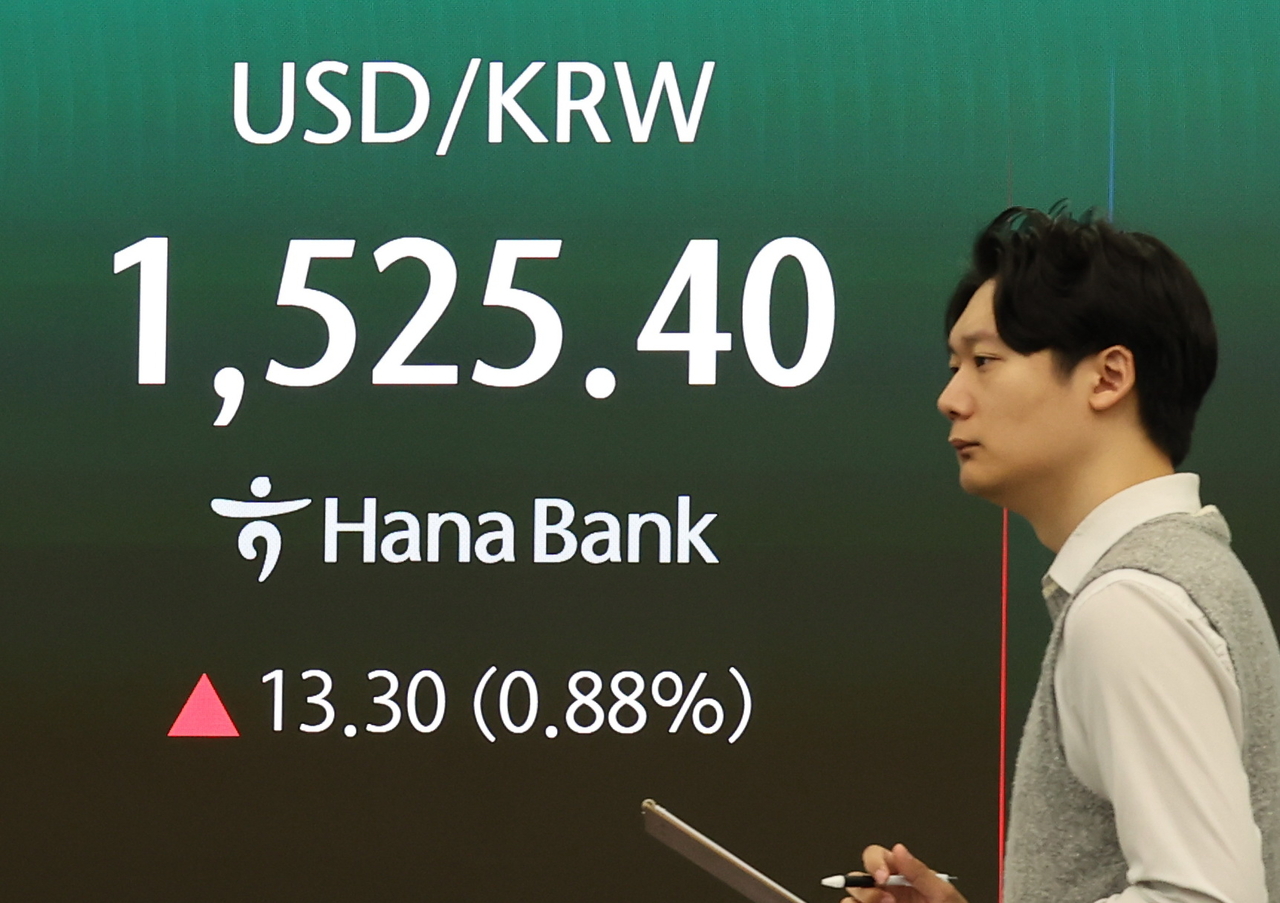
The won opened Wednesday at 1,525 won per dollar, 12.9 won weaker than the previous daytime close.
jwc@heraldcorp.com