
TLT Searches Spike as the Bond Rout Deepens

By IPO Edge Editorial Staff
The 30-year Treasury yield just punched above 5%, its highest since 2007, and long bonds have nowhere to hide.
The iShares 20+ Year Treasury Bond ETF (TLT) sits at the epicenter of that pain. It holds only the longest-dated government debt, which makes it brutally sensitive to every move in rates.
That sensitivity cuts both ways. The same duration crushing TLT today could supercharge it the moment the Fed pivots.
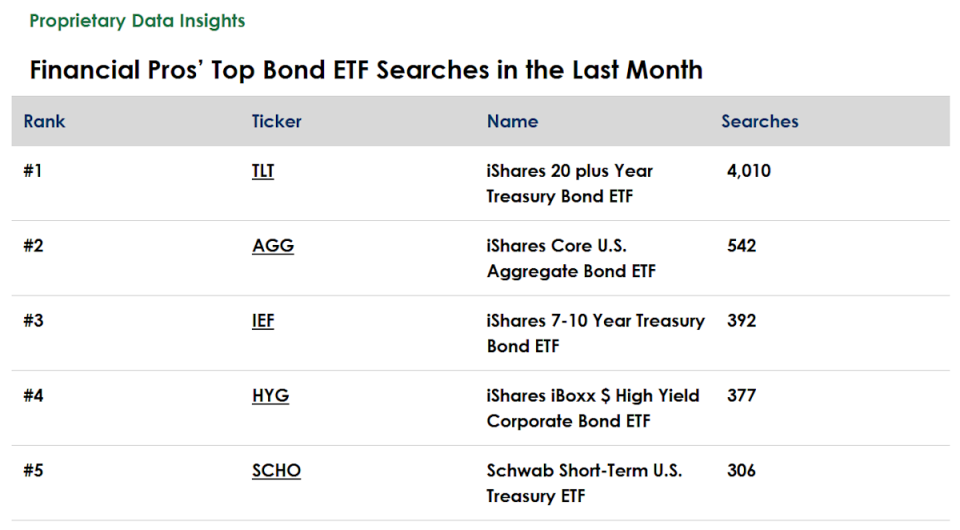
Our TrackStar data shows TLT crushing every other bond ETF in search volume, with more than 7x the lookups of second-place AGG. Pros are circling.
Some smell a bottom. Others see a falling knife. Let’s dig in.
Key Facts About TLT
TLT tracks the ICE U.S. Treasury 20+ Year Bond Index. The recipe is simple: own U.S. government bonds with at least two decades left until maturity, nothing else.
That purity is the whole point. With an effective duration north of 15 years, TLT trades like a leveraged bet on long-term rates without using any leverage at all.
The portfolio carries a weighted average maturity of roughly 25.8 years and a 30-day SEC yield near 5.0%. Investors are finally getting paid to wait.

Source: iShares
These are the safest bonds on earth from a credit standpoint, backed by the full faith of the U.S. Treasury. The risk here isn’t default. It’s interest-rate risk, and right now that risk is screaming.
When yields climb, long-bond prices fall hard, and TLT has felt every basis point of this year’s selloff. When yields eventually drop, that same math reverses with force.
Performance
The numbers are ugly, and there’s no sugarcoating them. TLT has handed investors a 28.5% loss over the past five years, a rare stretch of sustained pain for Treasuries.
The one-year total return sits at -0.4%, while the three-year mark shows -2.7% annualized. Long-duration debt has been the market’s punching bag since rates began their climb.
Even against its own benchmark, TLT has lagged slightly, returning -5.6% over five years versus the index at -5.5%. Tracking is tight, but the direction has been relentlessly down.
Source: iShares
The bigger story is structural. A widening federal deficit, sticky inflation, and shaky foreign demand for Treasuries have pushed long yields to levels unseen in nearly two decades.
Here’s the flip side. Every uptick in yield rebuilds the income cushion, and TLT now throws off close to 5% while investors wait for the cycle to turn.