
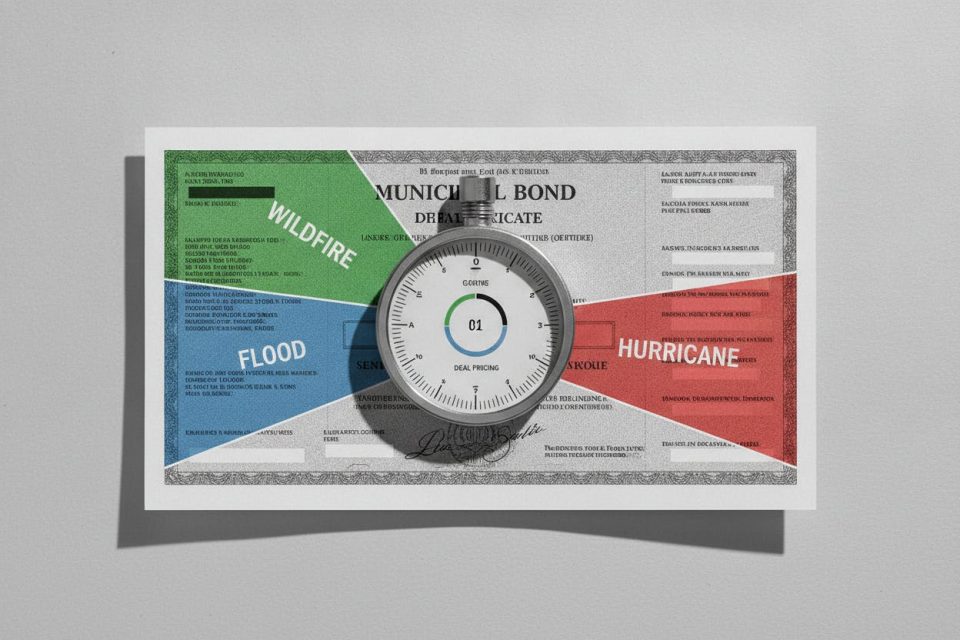
for wildfire and Berkeley, New Jersey at 4.9 for flood. Florida also shows up, with Palm Beach County at 4.3 for hurricane risk and Tampa Bay Water at 2.9 for combined physical risk. The point is less that climate threats are new, and more that they’re being standardized in a way that lets underwriters and investors compare bonds quickly – right when the bonds are being priced.
Why should I care?
For markets: ICE’s 2.0 threshold is turning climate risk into a faster muni screen.
When a third-party score sits next to a new issue, it can act like a shortcut for investors who need to filter a big calendar of deals. If more buyers hesitate – or if some portfolios have rules that limit exposure to “high-risk” labels – the issuer may need to offer a higher yield to attract demand, which is another way of saying higher borrowing costs. That’s why standout scores like Grossmont Union High School District’s 5.0 wildfire reading, Berkeley, New Jersey’s 4.9 flood score, or Palm Beach County’s 4.3 hurricane score can matter even if the bonds’ long-term credit story hasn’t changed overnight. And when overall muni demand is softer, a smaller buyer pool can make placement harder for the specific issuers ICE flagged.