
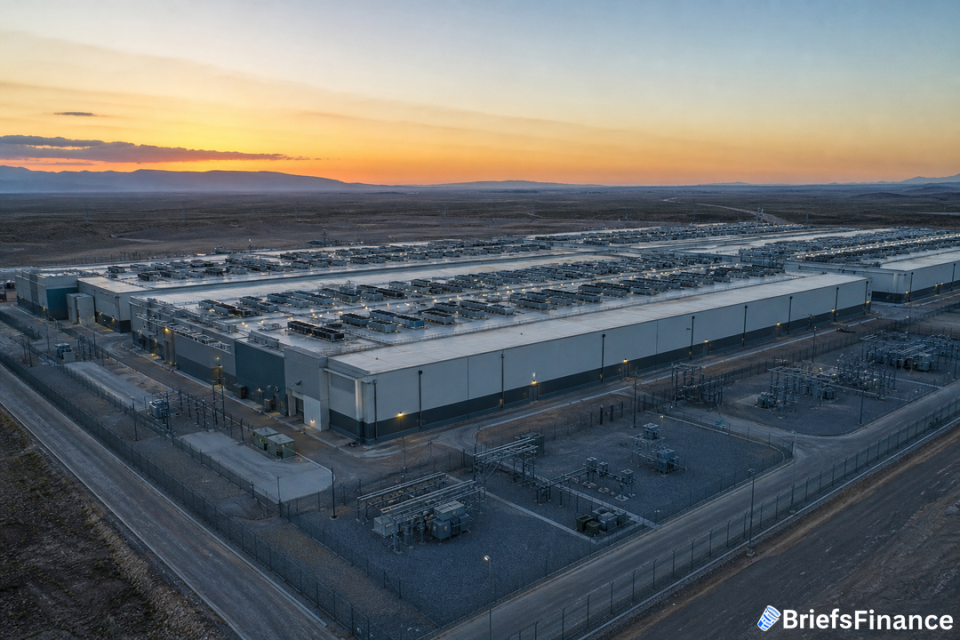
A data center debt deal tied to Microsoft is proving that even safe-looking bonds need a big payoff these days.
Demand topped $8 billion for the deal, which goes by the name “Project Odyssey.” That is more than twice the $3.9 billion amount the deal may be increased to.
The bond sale is being handled through subsidiaries of QTS Realty Trust, a company backed by the private equity firm Blackstone. The money will finance a data center project in Georgia, and the bonds carry a five-year maturity.
Here is where the deal gets interesting. The bonds are expected to carry an investment-grade rating, which is the stamp of safety that big institutions usually demand. But the return on offer is something else entirely. The interest coupon sits near the upper end of the 6% range, and since the bonds are being pitched at a discounted price, the expected yield lands in the low-to-mid 7% range.
For context, the return is comparable to what investors currently get from single-B-rated junk debt. In plain terms, investors are getting paid like they are taking on serious risk, even though the credit rating says otherwise.
“The deal could launch as early as Tuesday, though the timing can still shift,” a person familiar with the matter said. Citigroup, Goldman Sachs, JPMorgan Chase and Morgan Stanley all held investor calls about the offering last week.
If junk-level yields tempt you, consider a steadier path with the free Always Be Buying eBook.
Why the Sweetener
This is not the first time QTS has borrowed big money for Microsoft-related work. In April, QualityTech entities sold $4.6 billion of investment-grade bonds for Microsoft compute capacity, and peak demand for that offering came to about $12.5 billion.
But the financing climate has shifted. This year, Alphabet, Amazon and other large tech companies have issued a wave of new debt to fund AI infrastructure construction. That flood of supply has made investors pickier, and issuers have had to add sweeteners or rethink their plans to get deals done.
Goldman Sachs had also been testing demand for a possible $5.4 billion bond-and-loan package to help fund the same Georgia project. The structure of these deals often involves long-term leases with tech giants, which lets smaller companies like QTS borrow at better rates than they could on their own.
These deals are built around the steady revenue that comes from those long-term leases. A tenant like Microsoft agrees to pay for dedicated data center capacity over many years, giving the bond issuer a predictable stream of cash flow. That predictable revenue is why a smaller real estate company like QTS can obtain investment-grade ratings despite taking on large construction costs.
The bottom line: The gap between what a bond is rated and what it pays tells you a lot about how cautious lenders have become.
What It Means for Your Money
For everyday investors, this deal is a useful window into how the AI boom is being financed. The companies building the physical backbone of artificial intelligence are not just spending their own cash. They are borrowing heavily, and they are paying up to do it.
The fact that a Microsoft-linked project needs to offer junk-level returns to attract buyers says something about the mood in credit markets right now. Investors are not assuming the best. They want to be compensated for the possibility that something goes wrong.
That does not mean the AI buildout is in trouble. It means the easy money phase is over, and the people lending for it are demanding better terms. For your portfolio, the takeaway is simpler: when borrowing costs rise for even the safest corners of the AI trade, that pressure eventually shows up somewhere else.
