
KUALA LUMPUR 3 June — As Malaysians grapple with rising living costs, inflationary pressures following diesel subsidy rationalisation, and growing uncertainty arising from geopolitical tensions in the Gulf, a broader question is emerging: what enables a country not only to grow, but to remain resilient during periods of economic disruption?
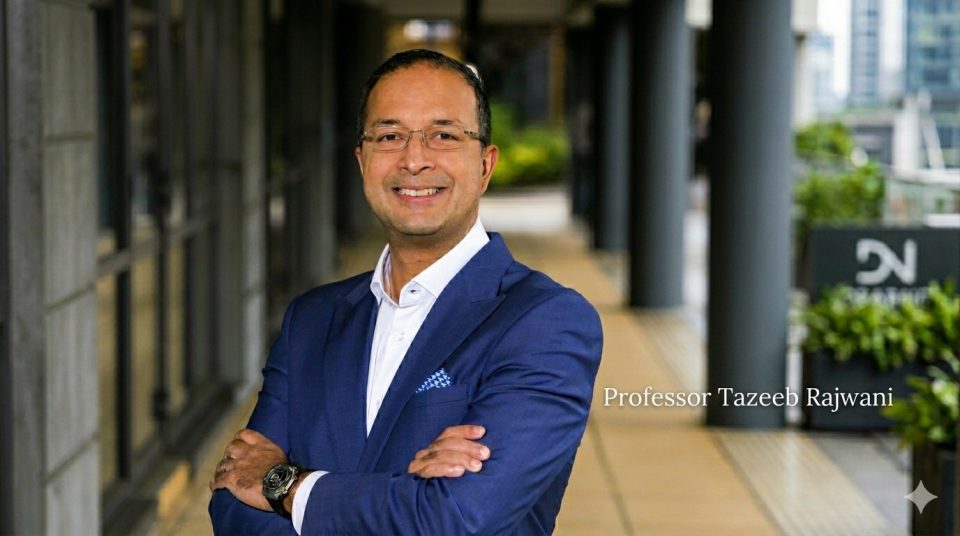
According to Professor Tazeeb Rajwani, Chair in International Business and Strategy at Surrey Business School, University of Surrey, Malaysia’s development journey offers lessons that extend beyond economic growth. It provides a blueprint for how emerging economies can build resilience against external shocks, geopolitical tensions, and volatile global markets.
For nations still climbing the development ladder, the search for a workable development model has rarely been straightforward. The East Asian Tigers industrialised rapidly but under very different global conditions. China’s rise was shaped by a scale few countries can replicate. The Gulf states benefited from abundant hydrocarbon wealth.
Malaysia, argues Rajwani, had few of these exceptional advantages, and that is precisely what makes its development story worth studying.
Rajwani identifies three transferable blueprints from Malaysia’s development trajectory—structural lessons he believes are directly applicable to emerging economies across Asia, Africa, and Central Asia at a time when the global trade architecture is being rapidly redrawn.
“These are not just Malaysian success stories,” he told DagangNews. “They are blueprints.”
Blueprint one: single window investment model
The first lesson centres on investment facilitation.
Malaysia’s highly coordinated, investor-friendly approach through the Malaysian Investment Development Authority (MIDA) demonstrates how a unified, single-window bureaucratic process can decisively shift a country’s ability to attract foreign direct investment.
For developing nations where approvals remain fragmented across multiple ministries with overlapping mandates, Rajwani argues this is the most immediately replicable of the three blueprints—one that demands institutional will more than capital outlay.
The principle is straightforward: reduce friction, provide certainty, and speak with one voice.
The compounding effect on investor confidence, he observes, is visible in Malaysia’s sustained foreign direct investment trajectory over five decades.
“Malaysia’s highly coordinated, investor-friendly approach through MIDA demonstrates how a unified, single-window process can decisively shift a country’s ability to attract FDI,” said Rajwani.
The broader implication for emerging economies is that investment competitiveness is not solely a function of cost or geography. It is, in large measure, a function of institutional design.
Blueprint two: masterclass in economic diplomacy
The second lesson is more complex, and perhaps more urgent at a time when conflict in the Gulf is disrupting energy markets, shipping costs are rising, and nations are increasingly being forced to navigate competing pressures from Washington and Beijing.
Malaysia has demonstrated a sustained ability to participate actively in overlapping trade agreements, including the Comprehensive and Progressive Agreement for Trans-Pacific Partnership (CPTPP) and the Regional Comprehensive Economic Partnership (RCEP), while maintaining strong bilateral ties across ideological divides.
Rajwani describes this as “a masterclass in economic diplomacy for smaller nations”.
At a time when Washington and Beijing are increasingly deploying economic statecraft as a tool of foreign policy—deploying, in his words, “carrots and sticks”—the nations most at risk are those that have not cultivated relationships on multiple sides simultaneously.
The key, Rajwani argues, is that Malaysia’s neutrality is not passive non-alignment.
It is an active, pragmatic economic tool, sustained by making Malaysia so indispensable to global supply chains that both superpowers find it in their own strategic interest to respect that neutrality rather than force a hard choice.
For developing economies beginning to map their trade and diplomatic positioning, the lesson is clear: build your indispensability first, then your leverage follows.
Blueprint three: sequence the climb, do not skip steps
The third blueprint may be the most instructive for commodity-dependent economies.
Malaysia’s systematic move from agriculture to commodities, then to manufacturing, and now to the digital economy is, in Rajwani’s assessment, an excellent case study of how to insulate a developing economy from commodity price shocks and ensure that each industrial phase builds the capabilities required for the next.
“These are not just Malaysian success stories. They are blueprints,” said Rajwani.
At a time when inflationary pressures are eroding purchasing power and governments are seeking new engines of growth, Malaysia’s push into the digital economy is increasingly viewed as a strategy to generate higher-value economic activity rather than relying solely on traditional industries.
The current phase—a major pivot towards digital infrastructure, with hyperscale data centre investments from global technology companies now anchoring Johor, Selangor, and the Klang Valley—represents the latest stage of this progression.
Rajwani acknowledges its strategic significance but flags a structural challenge that policymakers must confront directly.
Data centres, he notes, are capital-intensive but low in labour intensity. They consume vast amounts of water and energy, yet create relatively few long-term, high-skilled jobs once construction is completed.
To realise the full value of this investment wave, Malaysia must successfully transition these raw infrastructure assets into higher-value upstream activities such as artificial intelligence software development, local cloud services, and advanced chip design.
For developing nations watching Malaysia’s digital pivot closely, this is a cautionary footnote to an otherwise instructive story. Infrastructure investment is a necessary condition for the next stage of development, but it is not, by itself, sufficient.
Why the opportunity window is narrowing
The urgency of these lessons is becoming increasingly apparent.
The conflict in the Gulf has already pushed up energy prices and heightened concerns over the security of shipping routes through the Strait of Hormuz, a critical artery for global oil supplies. At the same time, businesses worldwide continue to adjust to supply chain disruptions, shifting trade patterns, and geopolitical tensions between the United States and China.
For countries such as Malaysia, the challenge is not merely sustaining growth, but protecting economic resilience in an environment where inflation, trade disruptions, and energy shocks can quickly affect businesses and households.
Rajwani’s broader point is that the conditions favouring countries that apply these lessons are time-sensitive.
Supply chains are restructuring rapidly in response to US-China tensions, energy market disruptions stemming from the Strait of Hormuz crisis, and accelerating friend-shoring mandates from major economies.
Nations that position themselves strategically over the next three to five years may secure structural advantages that compound over decades.
Malaysia’s development record, he argues, is proof that the trajectory is achievable not through exceptional natural endowments, but through consistent, sequenced policy choices made over a very long period.
At a time when governments worldwide are grappling with inflation, energy uncertainty, and shifting geopolitical realities, Malaysia’s experience suggests that resilience is rarely built overnight. It is the product of decades of consistent policy choices, institutional development, and economic adaptability.
That discipline, more than any single policy instrument, may be the lesson most worth exporting. – DagangNews.com
About the expert
Professor Tazeeb Rajwani is Chair in International Business and Strategy at Surrey Business School, University of Surrey, United Kingdom. He is also Visiting Professor at Cranfield School of Management, Co-Editor-in-Chief of Multinational Business Review, a member of the World Economic Forum expert network, and a Fellow of the Royal Society of Arts (FRSA). His research focuses on geopolitics, non-market strategy, and corporate political activity.