

Brazil has returned to the radar of global investors at a time of reorganization of flows to emerging markets, according to Augusto Urmeneta, president of Bank of America in Latin America.
According to the executive, the country has the conditions to stand out outside of China, driven by a significant consumer market, well-managed companies, and expectations of interest rate cuts.
In an interview with Brazil Journal, Urmeneta stated that Brazil is experiencing “one of the best moments” since 2011 to attract foreign capital.
See also
-
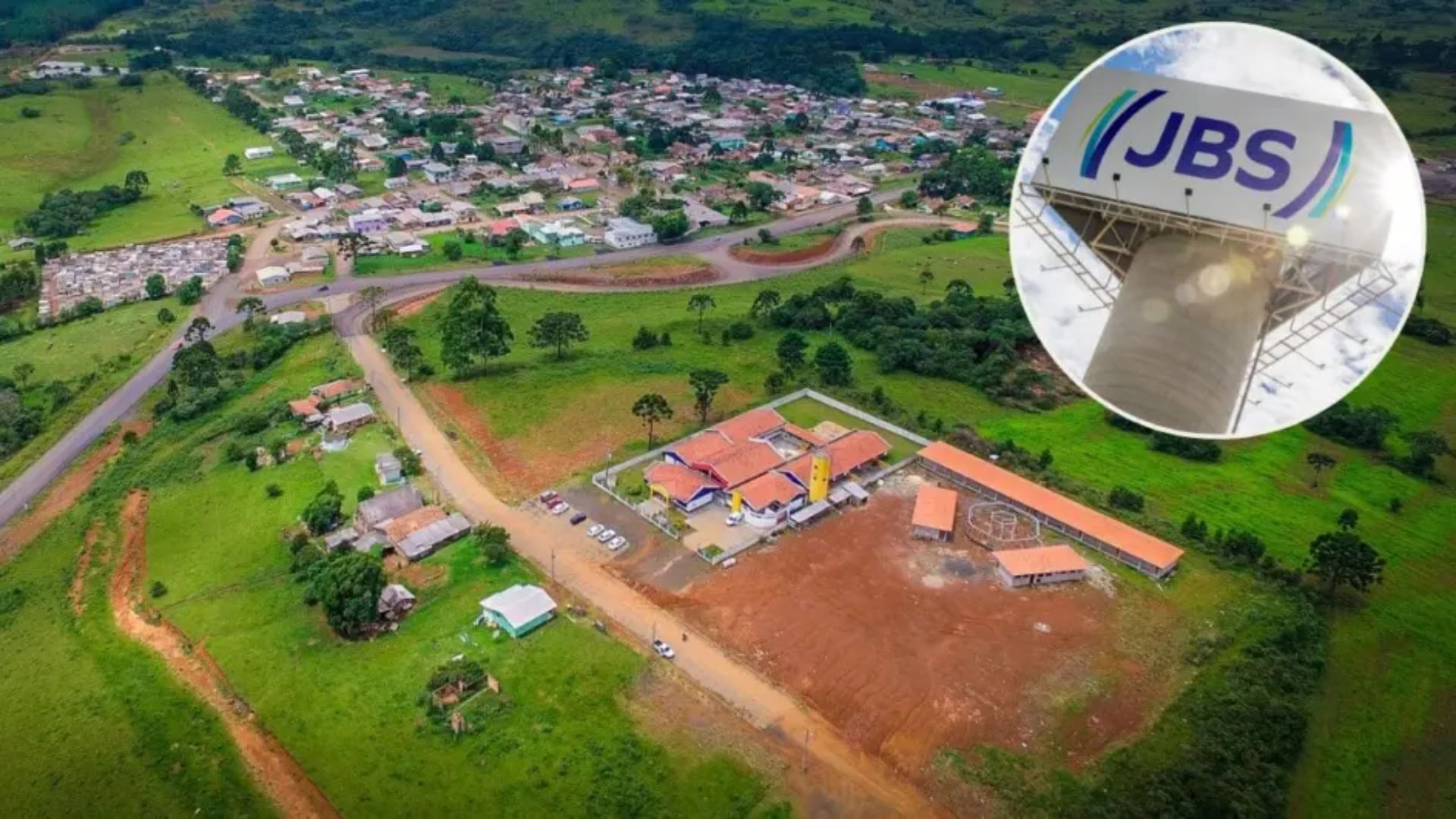
JBS confirms a million-dollar factory in a city with only 2,600 inhabitants: the new farm will have an investment of R$ 75 million, 24 giant barns, operations with 230,000 birds, and an impressive production of 48 million fertile eggs per year.
-
Petrobras announces R$ 37 billion in São Paulo until 2030, focusing on refining, gas, biofuels, and logistics, with Replan at the center of investments to expand S-10 diesel, reduce imports, and strengthen the infrastructure of the Port of Santos in the coming years in the state of São Paulo.

-
Lotofácil 3686 surprises by awarding three simple bets made with just 15 numbers, showing how R$ 3.50 tickets yielded R$ 466,000 each in a draw that had winners in Bahia, Minas Gerais, and Rio de Janeiro.

-
Caramuru sees profit fall by 69% in the first quarter of 2026 due to pressure on biodiesel, a drop in sales, a strengthened real against the dollar, and lower margins in a scenario that affected biofuels, agricultural commodities, and exports of the Brazilian company.

The assessment considers the increased interest of the United States in Latin America, investors’ search for alternatives outside China, and the volume of resources available in the international financial market.
According to Bank of America, there are about US$ 8 trillion invested in money market funds in the United States and another US$ 3 trillion in capital not yet invested by private equity funds.
At the same time, the flow to emerging markets excluding China reached US$ 96 billion, almost double that recorded the previous year, according to data cited by the bank.
“My view is that Brazil could end up being the main emerging market, excluding China, in this next phase,” said Urmeneta.
For him, foreign investors see the country with less pessimism than the local market, although he acknowledges the well-known problems of the Brazilian economy.
Brazil gains space among emerging markets
In the executive’s view, Latin America has become more strategically relevant to the United States, and Brazil stands out in the region by combining consumer scale, competitive companies, and an entrepreneurial environment.
Mexico, according to him, has industrial strength, but Brazil offers a broader domestic base for consumer-oriented businesses.
This repositioning occurs amid the diversification of global portfolios.
After years of concentration in American and Chinese assets, some investors have started to seek markets with attractive prices, sufficient liquidity, and solid business fundamentals.
Even so, Urmeneta notes that the entry of capital into Brazil has not become fully structural.
In his view, part of the current flow still has a tactical nature, mainly supported by the high real interest rate and the expectation of gains from the reduction of the Selic rate.
High Selic rate continues to pressure companies and the stock market
The basic interest rate remains one of the main obstacles to a broader recovery of the capital market.
In April 2026, the Copom reduced the Selic to 14.5% per year, after the start of the rate-cutting cycle in March, but monetary policy remained restrictive.
“It is not feasible to live with a Selic of 14.5% for a long time,” stated Urmeneta.
According to him, a more significant drop in interest rates tends to favor the return of local flows to the stock exchange and open space for a more consistent resumption of initial public offerings.
The executive cited the IPO of Compass as a sign that there is international demand for Brazilian companies when the investment thesis is clear.
The company raised R$ 3.2 billion in its debut on B3, in the first IPO of the Brazilian stock exchange in almost five years.
Latin American technology companies remain undervalued
Despite increased interest in emerging markets, money still arrives selectively to Brazilian and Latin American companies.
In the technology sector, Bank of America points out that companies in the region have accumulated a 17% drop since January, even with revenue and profit growth surpassing many global peers.
The explanation, according to Urmeneta, involves liquidity and the concentration of global interest in artificial intelligence in the United States.
Companies like Mercado Livre and Nubank have a greater ability to attract investors due to the size and more intense trading of their shares, while smaller companies face more difficulty.
Outside of technology, Latin America has benefited more from the commodities thesis and the prospect of interest rate reduction.
This movement favors sectors linked to infrastructure, energy, consumption, and financial services, as long as they present consistent fundamentals.
Fiscal scenario and elections remain on the market’s radar
The Brazilian presidential succession appears as a point of attention, but it does not alter, in Urmeneta’s view, the central point for investors: the fiscal challenge.
For him, any government will have to deal with the same public accounts restriction, regardless of the electoral outcome.
The executive stated that the market already knows Lula’s pattern of action.
In the event of a change in government, the scenario may improve or worsen, but the need for fiscal adjustment will remain present.
Even so, he said he sees Brazil as an opportunity.
In the assessment of the president of BofA in Latin America, foreign investors tend to give less weight to a potential fourth term of Lula than domestic investors.
The reason, according to him, lies in the perception that many Brazilian companies continue to be well-managed, even in difficult economic environments.
Private market reduces pressure for new IPOs
The resumption of IPOs, according to Urmeneta, should depend more on the drop in interest rates than on an immediate need for capital.
In recent years, the private market has grown and started to offer longer-term financing, allowing companies to postpone going public.
For the executive, this interval can help companies gain scale, consolidate sectors, and arrive at the public market more prepared.
Instead of a rush for IPOs, the cycle may include mergers, acquisitions, and other market operations.
Urmeneta also downplayed the comparison between the 2021 tech boom and the internet bubble of the 2000s.
For him, there were valuation exaggerations, but many Latin American companies had real products, revenue, and markets, unlike some companies without a solid operational model at the beginning of the century.
Artificial intelligence concentrates global investments
Artificial intelligence remains at the center of the competition for resources, especially in the United States.
The executive acknowledges that there is strong investment in data centers and infrastructure, but emphasizes that the main question is whether demand will remain high in the long term.
In Urmeneta’s assessment, the growing use of computers, cell phones, and digital services indicates that the need for computational capacity exists.
However, productivity gains have not yet clearly appeared in company balance sheets.
This gap between investment and result is seen as a risk of the current cycle.
Even so, the executive stated that artificial intelligence should transform the global economy, although it is still at the beginning of its impact on companies and markets.