
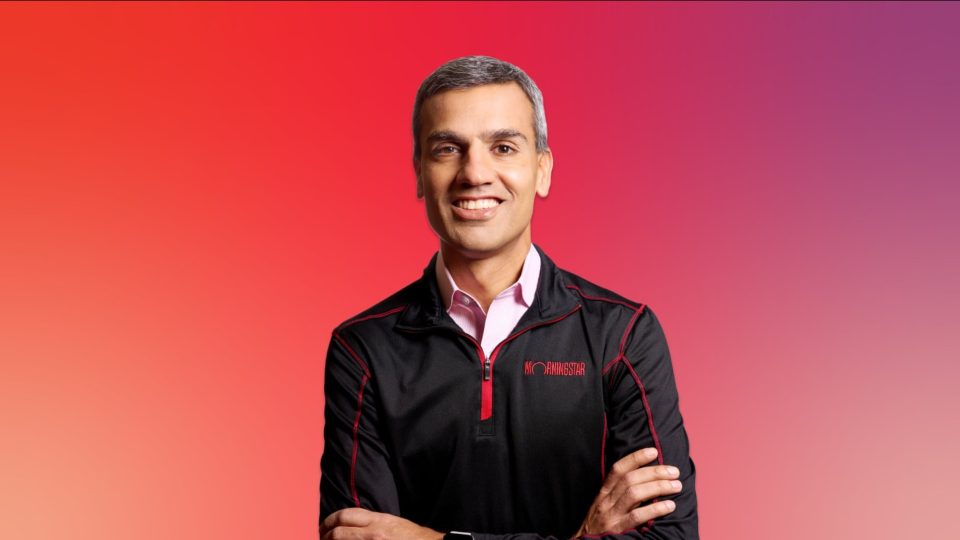
Kunal Kapoor: Hi everyone, and welcome to this latest episode of our LinkedIn series. I’m excited today to welcome Leyla Kunimoto, who’s the founder of Accredited Investor Insights. We’re going to spend our time today talking about a theme that should feel quite familiar to a number of you who’ve been following this series, which is the convergence of public and private markets. I know you’re probably getting it from all sides on this topic, but Layla is particularly unique, I think, in her ability to be candid on the topic, what’s good, what’s bad. And so, we’re going to try to open it up. As always, feel free to submit your questions over Zoom, and I will add them to my roster as the webinar kind of wears on. Leyla, welcome. Great to have you. Thanks for joining.
Leyla Kunimoto: Thank you for having me.
Kapoor: Absolutely. Let’s just start with a very high-level question. What are you seeing on this topic, and what’s exciting you about it, and maybe what’s giving you pause?
Kunimoto: Yeah. I think it’s really exciting times. We’re seeing a tectonic shift. The plates are shifting under our feet right now as we speak. And the convergence of private and public markets, I feel like it’s been going on for the past so many years, but over the past five years specifically, what we’re seeing is we’re seeing the opening up of access to retail investors. It’s becoming increasingly democratized, and it’s happening on both the public side and the private side. On the public side, we’re starting to see ETFs, liquid ETF wrappers around private assets. We’re starting to see some vehicles that are being listed on the public exchanges that hold SPVs that invest in privately held companies, and so on, and so forth. On the private side, we’ve seen just an explosion of products that are targeting retail investors, and increasingly, it’s becoming available. It used to be that you had to have certain qualifications to become an investor in those offerings, and it’s increasingly becoming widely available.
Kapoor: So, good, bad, thumbs-up, thumbs-down from you? What are you watching?
Kunimoto: I think overall, so fundamentally, I am firmly in the camp that more investment options are great. It’s always a good thing to have more on your investment menu.
Kapoor: Yeah. Access is good.
Kunimoto: Access is good. With that, I want to see transparency, and that’s where I think it’s a little bit lacking, to say the least. I want to see if offerings are broadly available, and I want them to be transparent. I want to be able to see what’s there.
Kapoor: What in particular do you think needs to become more transparent? We have a Morningstar view of this, but what’s your view of this?
Kunimoto: My view of this is difficult to answer. It’s I want to see transparency on the portfolio company level.
Kapoor: So, you want to know: What are the holdings?
Kunimoto: I want to know not just what the holdings are—a lot of the time I can tell what the holding is—I have no idea and no visibility into how those holdings are performing. If a private credit fund holds 200 different loans to privately held companies, I have no visibility into how those companies are performing.
Kapoor: Yeah. No visibility but a lot of promise because of access. Skeptics who are looking at this are just saying that the timing is all wrong and the lack of visibility is actually bad for this kind of opening up to the retail channel, whether it’s advisors making it accessible, or even individuals suddenly having access to it.
Kunimoto: That is the concern. Valuations are opaque. The holdings are opaque themselves. Valuations are internally, it’s internal models, so we have to trust. There’s a lot of opacity around this space.
Kapoor: Believe it or not, Leyla, when I first came to Morningstar, the public mutual fund industry was also quite opaque. I feel like we’re playing this movie back again. I think one of the things that was really important in the public space is that the holdings of mutual funds, and the markets in general, really surged. With that sort of widespread ownership, particularly in retirement plans, it changed the playing field. It feels to me like the trigger is still not quite sorted out for private markets. Do you think there’s going to be a trigger?
Kunimoto: I think there’s going to be a trigger. I think the trigger is going to be the ability to trade those assets daily. So, however that’s solved, and there’s a couple of very big, very smart companies that are trying to solve for that. Once we’re able to trade stakes in privately held funds on a daily basis, that’s the key that is going to open the access to our retirement accounts.
Kapoor: You sort of just touched the holy grail of what some people would say is a really bad idea, right? The feedback I hear, and I think some of it is justified, is people say, well, the whole magic of the private investing space is that it is illiquid, that you can’t, on your emotions, kind of make a rash decision every day. Even in our own research on public markets, investors tend to do well when things are locked up, and they’re not trading them. So you’re optimistic, but the path you’re suggesting for adoption, I mean, there might be some caution around that if there’s going to be daily trading suddenly.
Kunimoto: There is a fundamental disconnect. The assets are illiquid, but the wrappers—it’s really hard to sell to a retired guy. It’s really hard to sell a traditional private equity drawdown fund where the money is locked up for 10 years, and you have no visibility to what’s happening. The money’s going to come to you someday in chunks, right? That’s a tall order. The industry came up with the answer, and the answer is semiliquid funds or ETF wrappers around those illiquid assets. The fundamental issue doesn’t go away. The assets inside are illiquid, but investors want liquidity on the other end. That’s where, right now, the industry has solved it by offering liquidity from the fund manager.
Kapoor: OK. But there’s a lot of work to be done on that, and we’ll have to sort of see how it plays out. I think, underlining your comments, and this is my belief too, is that this is not a cyclical shift, it’s a structural shift, and we’re in the early stages of what that might look like.
Kunimoto: 100% agree with you. It’s structural. It’s been happening, and it’s just going to continue happening on the same path.
Kapoor: Do you think it’s going to happen faster in certain asset classes and sectors?
Kunimoto: Yeah, I think so. We’ve seen private credit, and it was a good asset class to kind of put into semiliquid things, of all asset classes of the private markets universe. Private credit was probably the most suited for those semiliquid features, but we’ve seen private credit kind of take off with the retail investors. Other asset classes, venture capital is just hard. There are not as many offerings. That’s going to be a harder thing and a slower thing, in my opinion. But yeah, some will be faster.
Kapoor: Do you think expenses should come down as part of this?
Kunimoto: Oh, 100%. The fees are a thing of beauty in private funds. I mean, you compare that to a mutual fund.
Kapoor: For those who manage it. Yeah.
Kunimoto: Yes.
Kapoor: Yeah. It’s kind of the old way. Let’s double-click on what happens if you actually end up including these in a portfolio. What might portfolio construction look like? What are you telling advisors? You just told me earlier that you were talking to some RIAs earlier this week, registered investment advisors. What are you telling them?
Kunimoto: I am telling them to be very mindful about liquidity. I think semiliquid is a misnomer. These things should be called mostly illiquid. Liquidity is an option, and that option is contingent upon what all the other market participants are doing in that particular space. It becomes illiquid the moment you need liquidity the most or the moment you want liquidity the most. I think that’s going to be the front and center conversation around liquidity, but I also think that these offerings do offer access to certain things that are not available perhaps in the public markets at the moment. For somebody who’s looking to diversify, it is an option.
Kapoor: I want to come back to that thought on diversification, because I think it’s an important one to talk about. We have a good question here, though, that kind of builds on something that you were talking about. Victor’s asking that if we do start to think about daily valuations in this space, as you’re advocating for, how do you actually get confidence around the validation and backtesting off those daily valuations? Huge issue.
Kunimoto: Huge, massive issue. The daily valuations and the price at which those assets are going to transact are two different things, right? I can value my house at whatever I want to value it. It doesn’t mean that I can go to the market and I’m going to find an immediate buyer at that price. As long as there is, I think this hinges upon somebody being the market maker. If somebody’s giving me the daily valuation, they need to be able to buy assets at that value, right? Otherwise, it becomes a meaningless number. If the daily valuation is 100, but you and I trade that same asset at 75, does it matter what the valuation is, right? If the price is not. It’s a big issue. It’s a massive issue, and we’ll see how it’s sold.
Kapoor: One type of vehicle that is getting a little bit more coverage in the news is what’s called an evergreen vehicle. Can you talk a little bit about what those are and what your thoughts are on evergreens? Because I imagine that’s among the first type of vehicle a lot of advisors are going to come across.
Kunimoto: Yeah. This is the gateway to private markets for a lot of advisors and their clients. In the olden days, like 20 years ago, private equity was done, and offered to investors in drawdown funds. Money is locked up. There is absolutely no liquidity during those 10 years. Evergreen vehicles have been around for a while, a little over a decade. They have really boomed over the past five years, since 2020 or so. Those vehicles offer periodic liquidity. That liquidity is optional. A lot of the time, it’s up to the fund manager to offer that liquidity, and it’s typically capped at 5% of outstanding shares. Hypothetically, as an investor, I can buy those shares at the valuation that the fund manager provides, and exit them after a certain period of time at the valuation that the fund manager provides. The liquidity mechanism is solved by the fund manager, unlike the public markets, where you and I can trade shares in a company, and the company’s management has nothing to do with it.
That’s kind of the nuts and bolts of those structures. You can put any asset inside. You can put anything inside that structure. You can put private equity, you can put venture capital, you can put private credit, any number of assets, any kind of exotic assets into those. Some of those assets are better suited for the structure than others.
Kapoor: Perhaps one way to think about it, in particular when I say some are better suited, like what is better suited for that type of structure? If you’re an advisor or retail investor looking at these things for the first time, what should be in an evergreen fund that makes sense?
Kunimoto: I think of all things, private credit actually makes the most sense because there is natural liquidity in the assets. Private credit, what we talk about is direct lending. Those loans pay off, those loans generate cash yield. They’re more liquid and there’s higher turnover. Private equity funds inside an evergreen structure, all those funds are locked up for 10 years. How do you generate that 5% liquidity? As a fund manager, you have to contort yourself into something, either hold a large position of liquid assets to meet that 5% quarterly redemption, or you have to start selling assets, and selling assets is not always the best answer.
Kapoor: That’s interesting, and I think useful. There’s another question I have here on valuations from Justin, and he says there’s only one definition of valuation: Fair market value, which is the estimated price of an asset in an open-market setting. If private funds are carrying assets at valuations that buyers are not willing to pay, then by definition, the manager is not carrying the value at fair market value. I think it’s as much a statement as a question.
Kunimoto: Justin, I 100% agree with you. To me, the value is what I can sell, widget, or whatever asset, currently, right? But that’s not how private markets work.
Kapoor: Yeah. I think all this will be super interesting and worth watching, but you said earlier that one of the reasons, maybe, for taking the plunge was diversification. Let me just say that I agree with you, but let me just also say that the skeptic in me right now says that all asset classes seem more correlated than ever before; everything has done relatively well, and these major asset classes have done relatively well the last 10, 15 years. There seems less diversification benefit than I would have normally said there existed. Do you agree with that? How should people think about diversification and, really, maybe bringing private credit into a portfolio, given that you’re particularly high on that in the structure?
Kunimoto: I agree with you that there’s a high degree of correlation. Private markets, because of the way things are valued, because valuations are done internally, they’re done infrequently. They’re not done daily; they’re done quarterly. They’re done looking backward into your portfolio, oftentimes, or the valuations in private assets are artificially smoothed out, right? You get this nice, smooth line; everything goes up without the jagged line that you get in the public markets, but there is a degree of correlation. I think to diversify, you have to really seek out assets that you currently don’t have in your portfolio. Private markets do provide an ability to access smaller companies at scale, whether you want to be in an equity position or in a debt position to those companies. There’s a valid point in that. For me, it’s really hard to get exposure to an HVAC roll-up in three states via the public markets. That’s the diversification play. To what extent you are going to benefit as an investor is a huge, massive question mark.
Kapoor: Yeah. No, that makes sense. Here’s another question that I think is interesting. It’s a little technical. Maybe when you’re answering it, if you could just also just help with a little bit of the jargon, I think our listeners will kind of appreciate it. The question is: If a PE portfolio and a PC portfolio (private credit portfolio) have affiliated GPs, general partners, and overlapping portfolio companies, how would the conflicts of interest be addressed, especially when the companies become credit distressed, causing battles between equity and debt stakeholders?
Kunimoto: Humongous issue, humongous. And what we’re seeing—so, let me explain for listeners who maybe are not as familiar with this asset class, private credit lends money to privately held companies. A lot of those borrowers are owned by private equity. They’re backed by private equity firms. When you look at the composition of major asset managers, the brand names that we all heard about, the trillion-dollar asset managers, they have both the private credit and the private equity arm. Larger deals, let’s say multi-billion-dollar take private assets; when a private equity company goes out and buys a public company for several billion dollars, they will typically have every single brand-name asset manager, private credit manager, issue a loan to buy that company because those buyouts are typically leveraged. You have a lot of … When you look at the universe, there’s a lot of inner correlation.
Companies are often owned by a private equity manager, and the loan that’s done to that company, is often like every other major private credit manager owns the same loan. There’s a conflict of interest in each, like hypothetically, the equity wants to protect their interests. The debt holders want to protect theirs. How this is done, we have no visibility from the outside. This is all in agreements. Those agreements are private. We hear this postrestructuring. As investors, we only know what’s happening after the deal is done, after the loan is restructured. Opacity.
Kapoor: Leyla, I mean, on the one hand, you’re saying this may make sense. On the other hand, you’re making a pretty good argument for why it’s so complicated and difficult to navigate. I want to kind of come back to that because I do think that is fundamental to the question at heart about whether investors should use these vehicles or not, but what data and analytics would really help bridge that gap?
Kunimoto: Great question. I think the gap is bridged first, the first step on that bridge is education and understanding what you’re investing in, what asset class you’re buying, what you’re doing in the first place on a very high level, right? This is different. This is fundamentally different from public markets. In public markets and public equities, you’re buying shares in companies. That’s all you’re doing. In private markets, you can get access to some esoteric things. The first step is the education bit. The second step is that we need to see, as an investor, I think more data is good, but you need to know what to do with that data. It’s like you can dump everything into an LLM and get an answer that isn’t correct because you don’t know what you’re asking. The same thing is happening. You can have a lot of data and not know what it means.
Kapoor: This sounds like a job for Morningstar. No, truly enough. The language that stretches across public and private markets, because I think that’s one of the challenges. The language is so different that it provides issues when people are really thinking about comparability between markets and portfolio building. I think we’ve got to bridge that gap for adoption to increase and for accountability of managers to be higher.
Kunimoto: Yeah.
Kapoor: Here’s another question for you that I think is interesting from Rohit, which is that given the current global situation, for investors who are basically looking for safe or guaranteed returns, this is not the place to be playing, correct?
Kunimoto: This is not the place to be playing, no. This is higher on the risk spectrum than a lot of other things.
Kapoor: Yeah. Yeah. Agreed. What I’m hearing from you and I’m trying to put this together is it’s an interesting space, put it in a diversified portfolio, treat it as long-dated assets that maybe you don’t want to find liquidity in, even if there is more trading in the future that happens, but the potential for it to add a little value to your portfolio from a diversification and alpha perspective is pretty good. I want to ask you, how do you actually measure outperformance? Can you do it here?
Kunimoto: It’s a catch-22. You make too much of your portfolio locked and closed, and you put too much of it, and you have liquidity issues because these things are fundamentally not liquid. You put too little and any outperformance, like if you have a 5% allocation, even if that 5% outperforms the rest of your portfolio by 5 percentage points, it doesn’t make the weather inside your portfolio, right? I think, fundamentally, the space—again, until we fix the liquidity issue—the space is really for investors who have a higher net worth, but at the same time have a long time horizon to take advantage of that long duration of assets. If you’re in retirement and have a high net worth, I don’t know if you want to be locking up your capital for too long and allocating too much to it because you don’t know what your liquidity needs are going to be.
Kapoor: Yeah. Let me ask you, and there’s some more questions coming in, but I have a couple that I want to ask you as well. How do you use some of these vehicles in your own portfolio? How have you thought about it, and what are some of the mistakes you’ve made, pitfalls that you would kind of warn others off of?
Kunimoto: In my own portfolio, I have exposure to drawdown funds with really liquid assets. I have exposure to more liquid assets, private assets via public markets. I am fundamentally a value investor. Given the option, I would rather buy my shoes on sale at 20% off than pay full price. Public markets give us the option to access some of those assets sometimes at a discount, and that’s a wonderful thing. I like buying things at a 20% discount. Who doesn’t, right? I mean, that’s the easiest thing on Earth. I think the opportunities I have seen, I think the exciting part is going to be when some of these private funds start listing on public exchanges. We have seen several examples of that, and that’s kind of the last resort for those funds to provide liquidity to their investors. If you’re on the outside, that provides opportunities to buy stakes in those funds in the public markets at a discount. Sometimes they’re mispriced. Sometimes there’s opportunities that emerge for very short periods of time. Those are great.
Kapoor: It sounds like you have some exposure, but it’s not over the top, and you’ve kind of used it moderately.
Kunimoto: Opportunistically, I look at those things. My overall exposure is probably 10%, and I’m not looking to increase that.
Kapoor: Yeah. Well, we’re almost at the end here, and so I want to ask you one final question before we wrap up. If you had to make a prediction of how this space looks in five years, what happens between now and then? If you’re an investor, what are the things you should care about if you’re going to really be investing in this space, as in like, what needs to happen for it to be a positive outcome for you?
Kunimoto: Two things are going to happen in the next five years. Thing number one’s going to happen soon. It’s this is going to show up in our 401(k)s. The rails are already in place, and that train has taken off. The number one thing investors should go and do right now is go into their 401(k), look at their target-date fund if they have an allocation, and look at what’s inside that target-date fund, and then do the same exercise in five years. I think there’s going to be differences, right, in what’s offered.
Kapoor: Yeah, it’s a great point.
Kunimoto: The number two thing that’s going to happen is I think there is going to be an unlock around the liquidity and daily trading. Once we’re able to daily trade those funds between investor-to-investor instead of investor to the fund manager—whether it’s via intermediary or not is TBD—but once that happens, that’s going to attract a lot more retail capital into the space. The one thing that investors need to monitor is developments in that space. Again, go educate yourself. It’s coming. We all know it’s coming. We can see it.
Kapoor: Certainly, some things do need to happen from a regulatory perspective for these things to become available in 401(k)s, but you’re right, the rails are in there, and we’ll see how they kind of show up. Lots to watch in this space. I’m glad you joined me today. I do think like it’s an important access issue, and I’m kind of aligned with you on that. I do think most investors should be a little bit cautious as they are approaching the space. I don’t think there’s a need to rush the gates, so to speak, and to be thoughtful about what it’s really doing in your portfolio if you’re going to add it. But thanks, Leyla, for being here. I enjoyed the conversation and look forward to continuing to follow you and some of your thoughts in the space. Thanks for being here.
Kunimoto: Thank you for having me. Thank you.
Kapoor: All right. Have a good day, everybody. Thanks for joining.