
Private capital’s problems are more perception than reality.
Executives returned to that claim repeatedly this week, as they gathered in Berlin for SuperReturn, the leading European conference for the $11 trillion (€9.5 trillion) private equity and private credit industries.
‘Private markets are dead’: AI set to upend the investment fund industry
Artificial intelligence won’t demolish the software industry, so beloved of private equity firms and direct lenders. Individual investors are heading for the exits anticipating problems that don’t exist. And breathless media coverage about the resultant withdrawal curbs is making it all worse, they argued.
But tensions were also clear, reflecting the many real-world pressures facing buyout firms, credit funds and their investors.
The 6,000-plus attendees, some of whom paid more than $12,000 per a ticket, also heard plenty of talk about winners and losers. These ranged from the businesses that will sink or swim in the AI era, to a likely shrinking of the private equity world.
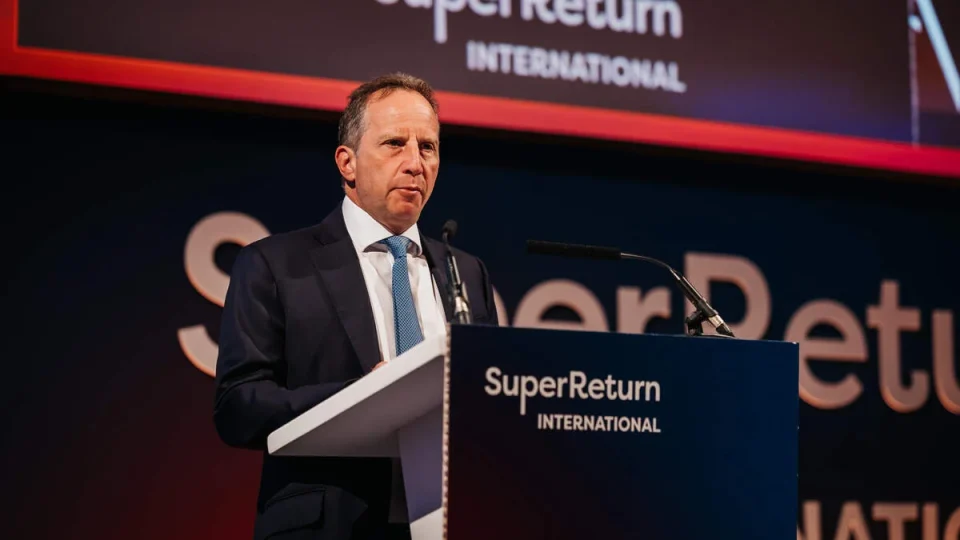
Anthony Fobel of Arcmont Asset Management set the tone with an opening address in which he showed a slide of negative headlines. He said the performance of private credit portfolios is “almost directly the opposite of what we’re reading.”
“Contrary to much of the recent press coverage, the message here is very clear,” added Fobel, Arcmont’s founder and chief executive officer. “Institutional support for the asset class remains rock solid.”
Luxembourg fund industry stronger than ever, despite turbulence
Remarks such as these show how private capital fears it is losing in the court of public opinion, and is fighting to regain control of the narrative.
The mavens of the $1.8 trillion (€1.6 trillion) private credit industry, a comparative newcomer that grew rapidly after the global financial crisis, in particular aren’t used to the intense scrutiny it now faces. Their counterparts in private equity ended 2025 with $3.8 trillion of unsold assets and another year of meager payouts to end-investors, or limited partners.
Berlin dentists’ pension fund wipes out half its assets after risky bets go sour
Adding to the bunker mentality: street protests near the Intercontinental Hotel where the event was being held — not all related to SuperReturn — and a heavy police presence.
“€50 trillion in Berlin. But not a cent for you. NOSUPERRETURN,” read one sign, apparently referring to the total dollars in assets managed by LPs at the event.
‘Like fish’
One major topic was the wave of withdrawal requests at private credit vehicles, largely from the wealthy retail investors that have helped fuel recent growth. Apollo Global Management, Blackstone, Blue Owl Capital and Cliffwater are among firms that have gated, or restricted, redemptions.
What retail investors need to know about ‘semi‑liquid’ private equity funds
“I was told by my media people that I’m not allowed to make fun of the press. So I’m not going to do that,” said Apollo’s co-president, Scott Kleinman. He defended caps on withdrawals as “a feature, not a bug” of so-called semi-liquid funds.
Blair Jacobson, co-president of Ares Management, was among those laying some blame on individual investor psychology. That sentiment was echoed by Ted Koenig, the CEO of Monroe Capital.
“Retail investors are like fish,” Koenig said. “They swim in schools, they all come in together and they all tend to go out together.”
The clamor to pull out funds is no longer confined to private credit, with Partners Group Holdings of Switzerland facing similar pressures in so-called evergreen private equity vehicles. Partners Chairman Steffen Meister told the SuperReturn crowd that gating was “not unusual these days,” and his firm was 80% backed by institutional investors anyway.
Speaking privately, some at the conference said the same issue would likely confront other retail-backed private equity funds before long.
There were telling moments that reflected the stresses facing the industry. Acting as a moderator, Arcmont’s Fobel told Blue Owl’s Nicole Drapkin it was “very brave for you to come on this panel.”
Slash bank capital rules to fund Europe’s future, industry lobby urges
The different camps sniped at each other, too. Private credit managers kept hammering home one line in Berlin: when a software bet blows up, the buyout fund takes the first loss. Private equity figures, meanwhile, shot back that they don’t have capped upside the way lenders do — meaning big wins on other investments can offset such losses.
The message from private credit is unhelpful for the wider private markets industry, attendees said, because it could encourage affluent individual investors to also consider exiting private equity funds.
‘Bumpy road’
Divergence came up again and again.
“Private equity is in a new era of haves and have-nots,” said Mustafa Siddiqui, the founder and CEO of SQ Capital, an investment firm that specializes in buying stakes in buyout funds from limited partners.
“You no longer have this rocket fuel from negative rates and rising multiples, which made everybody look like a star,” Siddiqui said in an interview.
Some private equity managers will have to raise smaller funds or “go away,” after super-low borrowing costs led the industry astray, Kleinman of Apollo said.
Hong Kong hedge fund managers set for pay bump in tax plan
His colleague Natalia Tsitoura, the firm’s head of private debt origination for Europe, said credit managers with diversified portfolios will be winners.
But it would be a “a bumpy road” for others, she said. She pointed to firms that “have been more reckless” about buying riskier instruments such as subordinated capital and pay-in-kind debt that lets issuers skip cash interest payments.
The industry’s challenges also stood in contrast to ebullient public markets, as Elon Musk’s SpaceX rushed toward an initial public offering at a $1.8 trillion valuation — roughly the same size as the entire private credit market.
Orlando Bravo of Thoma Bravo, the software-focused private equity firm, said it could take nine months to a year for the IPO market to fully reopen to companies like those in his portfolio, after SpaceX and other huge AI-related IPOs.
“That’s a guess,” he told Bloomberg TV. “So many things are up in the air.”