
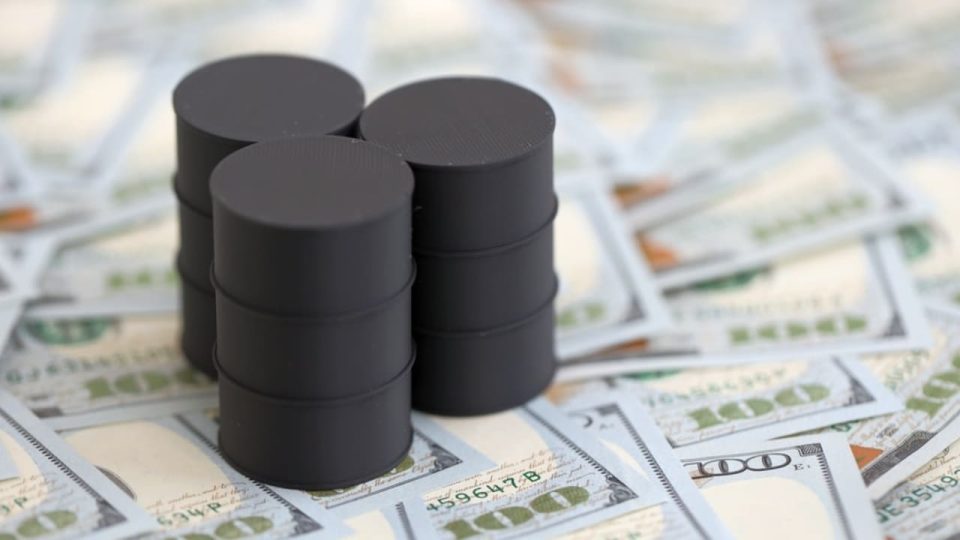
Oil is one of the most consequential commodities for the modern world. Unlike other asset or industry classifications, it is not just a sector or financial instrument; it is a physical resource that has shaped entire industries, supply chains, and international relations. For most of the past century, it evolved as a key commodity linked to the global economy, affecting shipping routes, logistical paths, and more.
Rather than merely a source of energy, oil has often been described as a centrepiece of structural change that has helped to connect trade centres with resource regions to refashion the landscape of economic development across the world.
The Middle East and the Transformation of Resources
The Middle East has been central to this process. The source of some of the largest and most productive oil reserves during the twentieth century, the region underwent a major shift in production and output. There were a large number of countries and states where economies that were originally based on agriculture or relatively small-scale trade grew in scale and size as oil production took off. Cities grew, populations expanded, infrastructure was developed, and new institutions sprang up to collect and allocate government revenues driven by resource production.
The Role of Oil in Global Economies
In turn, as oil became a more embedded part of industrial and economic structures, it became a universal reference point for news and media commentaries. Changes and movements in oil prices are often interpreted as a reflection of the broader economy, indicating any number of things from inflation, supply constraints, to geopolitical and conflict risk.
Within this context, references on how to invest in oil.wti might be casually mentioned when describing different crude benchmarks or terms and classifications. Here, the hope is to provide a sense of how to refer to oil and its critical function within the context of news and reporting, as opposed to giving advice or guidance.
Behind the Reporting: Financial Infrastructure
Commodity reporting in the modern day exists upon a large financial apparatus, with layers of data providers, analysis systems, and research tools providing the context to interpret changes in pricing and market behaviour.
Here and elsewhere, XTB and platforms like that can serve as a touchstone for referencing market data and educational materials for the understanding of commodity performance. In that comparable way, they act as a source of information as opposed to a be-all, end-all instrument for how and why commodity prices move.
Additionally, financial instruments on their own surround commodities. One example might be in trading Contracts for Difference (CFDs) in commodity sectors. A CFD is a form of trading in which the commodity is not owned outright, but in which a trader is trading on the change in value of an underlying asset. While often practiced with the use of borrowed funds, or leverage, for the purposes of making a trade, CFDs will amplify gains and losses in trade. As such, they are often considered complex instruments and come with a high risk of losing money rapidly due to leverage. In other words, CFDs may not be appropriate for all investors.
Historical Data and Market Interpretation
Commodity markets often get analyzed by utilizing historical perspectives such as price movements and the market’s reactions to key economic or geopolitical events, and the reinforcement that markets have inherent tendencies to act in certain ways under some conditions.
But, it is always important to remember that the past is no indication of the future. The price is, after all, a function of a series of complex decisions such as production and technology choices, policy and regulations, and a wide set of demands across the global economy at any given point in time. So what trended in the past is at best a description and not a prediction.
A Changing Energy Landscape
As energy has continued its systems-level evolution, oil has remained a powerful lens through which to understand global markets and now commodities. Its central role in forming the economic foundations of the nations of the Middle East, and its importance in the way the world now understands its own economies, have a lasting place in any conversation about the world and how it is changing.
This article was written in cooperation with Hani Abuagla, Milad Azar and Dorsaf Gaidi