
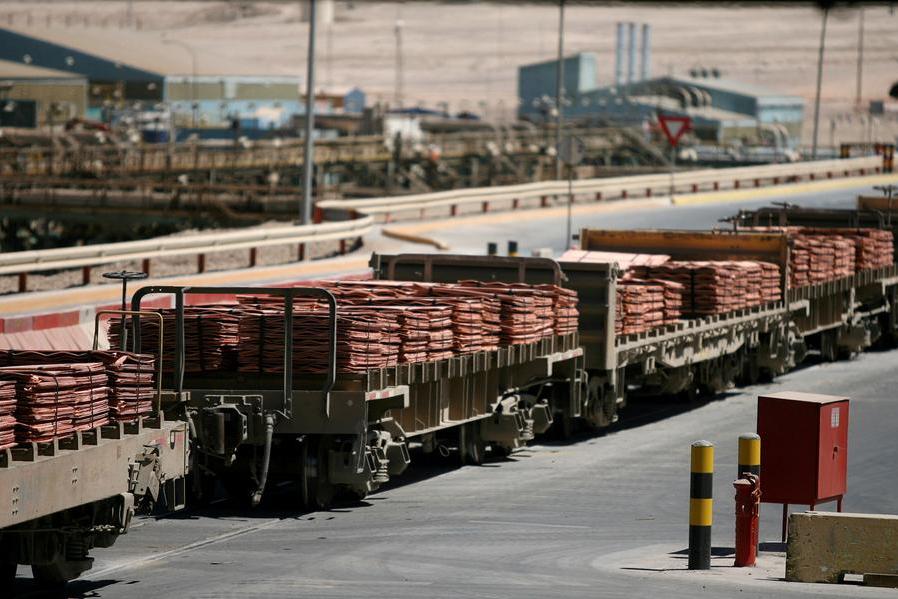
Copper prices edged lower on Friday as investors waited for more news about a potential deal to extend a ceasefire in Iran and as the dollar firmed. Three-month copper on the London Metal Exchange dipped 0.3% to $13,655.50 a metric ton in official open-outcry trading after gaining 1.3% in the previous session. LME copper rebounded on Thursday on the back of news that the U.S. and Iran reached an agreement to extend their ceasefire and lift restrictions on shipping through the Strait of Hormuz.
But President Donald Trump has yet to approve it and Iranian state media said it had not been finalized.
“Copper is drifting lower today, it seems like we’ve got some profit-taking. We’ve certainly had a small uptrend for the last two weeks, but it’s stalling a bit,” said Ole Hansen, head of commodity strategy at Saxo Bank in Copenhagen.
LME copper is on track to add about 5% this month, the second straight month of gains, largely on hopes for a deal to end the Iran war and signs of firmer demand.
Copper was also supported by the continued flow of metal to the U.S. as traders took advantage of a slight premium of U.S. futures over those in London.
U.S. Comex copper futures dipped 0.2% to $6.44 a lb, bringing the premium of Comex over LME copper to 3.7% or $511 a ton.
“If you take copper out of the market into the U.S. then that helps to tighten the overall global market, so it’s difficult not to paint a picture of underpinned and supported prices going forward,” Hansen said. LME aluminium gained 0.7% in official activity to $3,684.50 a ton, and the premium of the LME cash contract over the three-month futures climbed to $97 a ton, the highest since February 2007, highlighting worries about potential shortages the Iran war is causing in the Gulf, which accounts for about 9% of global output. Among other metals, LME zinc added 0.1% to $3,555 and lead rose 0.3% to $2,024 while tin and nickel were little changed at $55,100 and $19,100 respectively.
(Reporting by Eric Onstad; Additional reporting by Noel John in Bengaluru; Editing by Jan Harvey and Tomasz Janowski)