
The war in Iran has already driven up the prices of several commodities. In a context where the fluidity of international trade can no longer be taken for granted, identifying the dependencies of exposed companies and sectors has become essential.
In the near future, both sides have every interest in ending the conflict. However, a lasting truce is proving difficult to meet. Negotiations are still stalling on heavy issues: uranium enrichment, the Strait of Hormuz and sanctions relief.
Should the situation drag on, one must look beyond oil. Tensions will fuel inflation while weighing on the margins of certain companies, sometimes in sectors where the link to the Middle East is less obvious.
Even setting aside oil or a potential fuel shortage in the coming weeks, several more specialized commodities deserve attention. The most concerning for equity markets is undoubtedly helium. This gas is closely linked to the semiconductor industry, and markets do not need further sources of anxiety in a sector that is almost single-handedly supporting market growth.
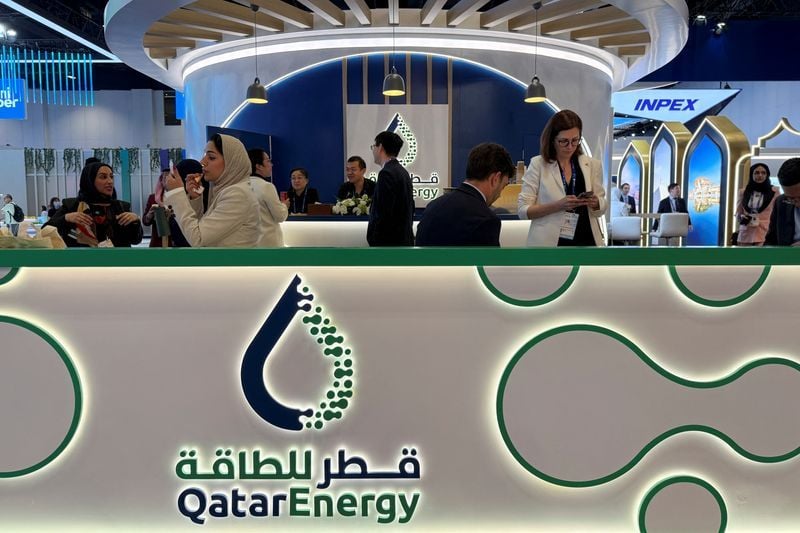
Admittedly, helium sales rely primarily on long-term contracts. However, disruptions affecting Qatari gas facilities and the Strait of Hormuz are already starting to be felt. Qatar accounts for about 1/3 of what is a narrow but critical market. While the United States remains the world’s leading producer, some Asian economies are highly dependent on Qatari gas. South Korea, for instance, imports approximately 2/3 of its helium from Qatar.
Helium is indispensable at several stages of chip manufacturing. It is primarily used for its cooling properties, as it conducts and transfers heat efficiently. The stakes therefore extend beyond semiconductors alone; the entire electronics supply chain could be affected. The real problem lies in the lack of credible substitutes and the difficulties of long-term storage.
Major gas suppliers, such as Air Liquide, Linde, or Air Products, currently possess significant pricing power that will positively impact margins as the conflict persists. However, they also face short-term operational constraints in diversifying their supplies. See on this subject: Air Liquide, helium and the Middle East conflict | MarketScreener
Regarding South Korean firms, SK Hynix and Samsung Electronics, which supply about 2/3 of the world’s memory chips, Reuters reported a few weeks ago that they had enough inventory to last until June. They added, however, that they are paying premiums to secure their stocks. In Taiwan, the Ministry of Economic Affairs has been reassuring about the state of reserves, although several companies told Reuters that an impact on production was being felt.
It is therefore not an immediate risk. However, two points must be monitored: the impact on margins and, above all, the possibility of production cuts if tensions are prolonged.
The current trend implies a focus on the semiconductor industry, which underpins the entire electronics universe, but helium is useful to other industries as well.

( Source: Reuters )
In a very different category, pistachios are also affected. The trend of “Dubai” chocolate bars, filled with pistachio, has exploded on social media. Major chocolatiers have pounced on the phenomenon.
This fad has boosted the margins of certain brands, such as Lindt, with a bar sold for €9.99 per 150 grams, amounting to €66.67 per kilo. Pistachio is in vogue beyond chocolate; Starbucks‘ pistachio coffee is also performing very well, as are Haagen-Dazs pistachio ice creams, for example.
According to Bloomberg, the price of pistachios reached $4.57 per pound in March, i.e. an 8-year high. Iran represents about 1/5 of global production and 1/3 of exports. The United States remains the top producer, but its harvest was lower than expected last year, reducing available supply.
The price increase is thus due to a double pressure: demand boosted by consumer trends on one side, and supply weakened by geopolitical and agricultural tensions on the other.
Another commodity under pressure is sulfur. Its importance is less visible, but its effects can be considerable. It is used in fertilizer production, as well as in certain copper and nickel production chains.
The Middle East accounts for about a quarter of global sulfur production. Sulfur is mainly used in fertilizers, and several countries, including China, are currently restricting sulfuric acid exports to protect their agricultural sectors. Prices are rising, reaching historic highs, and industrial players using sulfur for other purposes are being heavily impacted.
For nickel, the shock is primarily a cost shock. Indonesia, which produces more than half of the world’s nickel, imports about 75% of its sulfur from the Middle East, while its HPAL plants consume large quantities to produce battery-grade nickel for electric vehicle manufacturers. Reuters reports that some nickel producers have already reduced their operating rates. Macquarie, an Australian financial institution, estimates that the surge in sulfur adds about 29% to 38% per ton to the production cost of Indonesian HPAL nickel.
For copper, the risk involves rising costs on one hand and falling volumes on the other. Sulfuric acid is essential to the solvent extraction process, which accounts for about 1/5 of global copper production.
Iran is also a major exporter of chemicals, notably methanol, with nearly a quarter of global production. More broadly, industrial players are exposed to oil and gas derivatives: urea, used in fertilizers, and naphtha, essential for plastic production.
Asia is the primary region affected, led by China. According to La Tribune, Beijing imports 1.2 million barrels of Iranian oil daily, 800,000 barrels of liquefied petroleum gas, and comparable volumes of naphtha. To this is added approximately 740,000 barrels of methanol per month.
Oil obviously remains the primary channel for transmitting the shock. However, it would be reductive to stop there. Helium, pistachios, sulfur, methanol, urea, or naphtha—the war in Iran serves as a reminder that critical dependencies are often more discreet than one might imagine.