
The summer of 2026 has delivered two unmistakable signals. The Narendra Modi government risks drawing the wrong lessons from them.
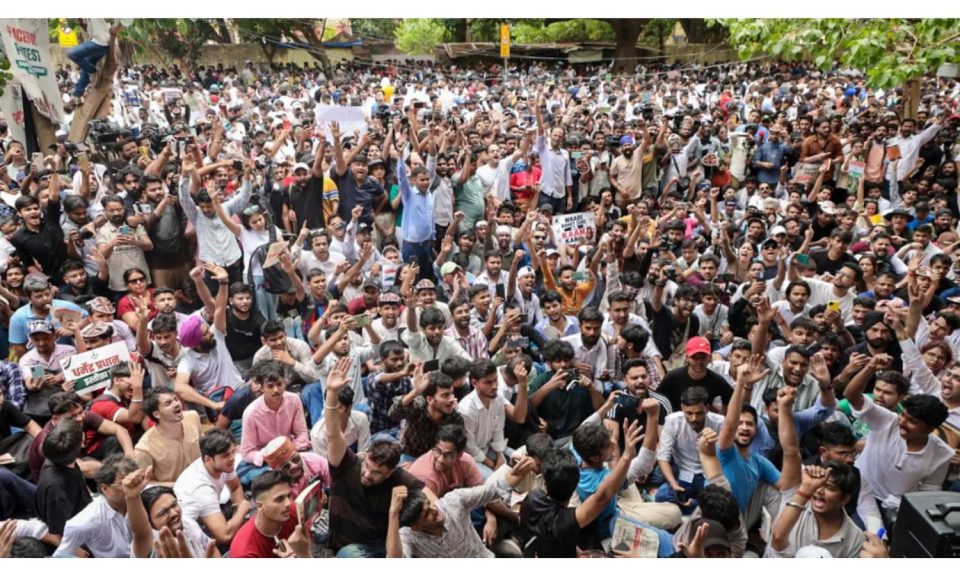
Within weeks, the Cockroach Janta Party (CJP) evolved from an online satirical platform into a nationwide protest that culminated in the resignation of education minister Dharmendra Pradhan. Days later, Prashant Kishor’s Jan Suraaj Party wrested Bihar’s Bankipur Assembly seat — a BJP stronghold since 1995 — by over 19,000 votes. Both episodes are being framed primarily as a communication failure: The youth, especially Gen Z, it is argued, needs reels, hip vocabulary and Instagram bonding.
That diagnosis is tidy. It is also incomplete and potentially self-defeating.
What actually worked for the Cockroach Janta Party and for Kishor was simpler, more direct, and far more awkward for the status quo.
They treated youth discontent as material and legitimate, not as a branding challenge to be managed with better packaging. They named the concrete failures that millions of young Indians experience daily — a coaching economy that drains family savings while offering no guarantee of fairness and a broken examination system riddled with repeated paper leaks. It forced over two million Neet aspirants to retake an already high-stakes test and led to student suicides. Add the crushing weight of graduate unemployment several times the overall rate; and the routine humiliation of forced migration for work that leaves entire districts hollowed out.
They spoke of dignity — the basic expectation that years of much-advocated aspiration should not end in paper-leak chaos or the necessity of leaving home simply to survive. They operated largely as outsiders. The CJP was not a registered political party. Neither does it intend to become one in the near future, preferring to remain a pressure group. It did not lean on traditional political machinery or mainstream media that large sections of young people have already abandoned. Its founder, Abhijeet Dipke, a 30-year-old who studied political communications at Boston University, built the movement in the digital spaces Gen Z actually inhabits — like Instagram — where it rapidly amassed millions of followers before translating online anger into physical presence at Delhi’s Jantar Mantar, India’s most iconic protest site.
Protesters brought diapers and cockroach masks as props. The police lathi-charged, teargassed and used pellet guns when protesters tried to march towards Parliament. That only swelled the numbers, with every blow recorded and disseminated on social media. The CJP-led protesters and All India Students’ Association (AISA) activists, including the extremely articulate Neha Bora, made the cockroach cool and brought education centre-stage.
Kishor’s Bankipur campaign followed a different idiom, but similar logic. Running as an outsider against both the BJP and the RJD, he framed the byelection as a referendum on education, employment and migration. Rebuilding the school system was a core campaign theme. After a door-to-door campaign, Jan Suraaj won decisively.
The scramble that followed — and that may intensify — reveals more anxiety than understanding among CJP’s prime targets.
The BJP’s Gen Z outreach promos, for example, mimic youth vocabulary. They have pivoted around gym workout and video messages from Prime Minister Narendra Modi.
The problem: the scale of the discontent extends beyond memes, digital spaces where these messages circulate.
The broken education system is just the tip of the iceberg in a country where half the population is below 25.
India’s Gen Z population (over 370 million) is not a homogenous group but there is a common thread tying disparate sensibilities together — a large cohort of digitally native young people is entering adulthood amid high graduate unemployment, intense competition for limited professional seats, and a persistent gap between the aspirations the system has spent years advertising — demographic dividend, skill India, rising opportunity — and the opportunities it actually provides.
The anger is real, visible, and already consequential. After the CJP-led protests, India’s schoolchildren also found their voice: 1,500 students held a six-hour sit-in demanding better school facilities in Sarvodaya Inter College in Fatehpur, UP. In Barmer, Rajasthan, students locked the gates of the Government Senior Secondary School and staged a sit-in, demanding immediate deployment of teachers until permanent appointments are made. In Jharkhand, many aspiring to sit for local competitive exams for government jobs are in protest mode. They are demanding a CBI probe into alleged exam irregularities and paper leaks.
Polished attempts by those suddenly wanting to cosy up to Gen Z through performative youthfulness risk registering as forced or cringe. Trying to woo Gen Z with better content is the low-cost, low-risk response. It allows the political class to believe the problem is primarily one of messaging. Confronting the harder requirement — that a generation expects concrete progress on integrity of exams, creation of jobs that match educational credentials, and a reduction in forced migration — is more difficult and more necessary. Style may capture temporary attention on timelines and reels. Delivery is what will decide whether the pressures visible this summer remain episodic or become a recurring test of the system’s credibility.
Those in power are now visibly struggling to understand the new protest playbook.
As CJP founder Abhijeet Dipke told a TV journalist: “What happened in India was really fascinating… because in India, whenever you saw people protesting, they were very serious, very monotonous. They had this serious tone and polished language. This was the first time where a political movement was started through satire, through memes, with humour.”
This could be politically clever precisely because it refuses the binary of solemn rage versus empty performance. It keeps the moral high ground while refusing to be solemn.
The commentariat is busy decoding how the recent youth protests will shape India’s political landscape. The socio-cultural consequences are quieter, but possibly more durable and consequential. Indian society is deeply hierarchical in everyday practice. Age, position, institutional rank and the expectation of deference still structure most interactions. Public mocking or casual dismissal of powerful older figures has traditionally been rare. When it does happen, it is framed as illegitimate.
What the CJP protests made visible is a generation that treats that deference as optional. The most powerful have been openly mocked. A partial renegotiation is underway on who is allowed to speak, in what register, and with what degree of assumed superiority. That is the deeper disruption — the old language of authority is losing its automatic power over a generation that is increasingly willing to unapologetically question and challenge it. The CJP, as one visible face of that shift, will also be publicly judged by the same demand for delivery it has helped articulate.
The writer focuses on development issues in India and the emerging economies. She can be reached at patralekha.chatterjee
@gmail.com.