
Cash is still producing enormous income
Berkshire’s enormous cash balance is no longer just a defensive buffer. With short-term Treasury yields still elevated, they have become a significant source of earnings.
Based on current yields, Berkshire is generating roughly $13 billion a year from its cash and Treasury holdings, an amount that is meaningful even for a company of Berkshire’s size. Barron’s estimates that every 25-basis-point increase in the Federal Reserve’s benchmark rate could add nearly $1 billion in annual interest income.
Instead of facing pressure to deploy cash quickly, Berkshire can earn substantial income while preserving the flexibility to act if valuations become more attractive.
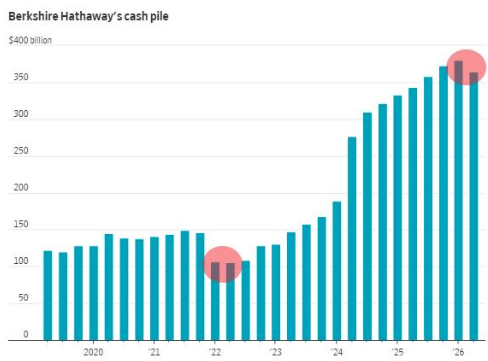
Berkshire’s cash pile shrinks
Berkshire ended the June quarter with $365.5 billion in cash and Treasury bills, down from a record $397.4 billion in the previous quarter. The decline of roughly 8% was modest relative to the company’s size, but it marked the first sequential reduction in Berkshire’s cash position in four years, making it a meaningful change in a trend that had become increasingly one-sided.
Berkshire’s cash balance had continued to climb as the company generated more cash than was willing to deploy into acquisitions, equities, or other investments. The latest quarter does not necessarily mean that Buffett has suddenly become aggressive, nor does it point to a major deal on its own. However, it does suggest that the steady upward march in liquidity may be easing.
Investors are paying less attention to the size of the decline and more attention to what it could signal about Berkshire’s capital-allocation posture. The reduction may reflect share repurchases, investment activity, or ordinary movements in operating cash flows and Treasury holdings, but after four years of uninterrupted growth, even a relatively small decline is enough to raise the question of whether Berkshire is becoming slightly more willing to put some of its enormous cash reserves to work.
Source: Berkshire Hathaway
Higher rates remain a tailwind
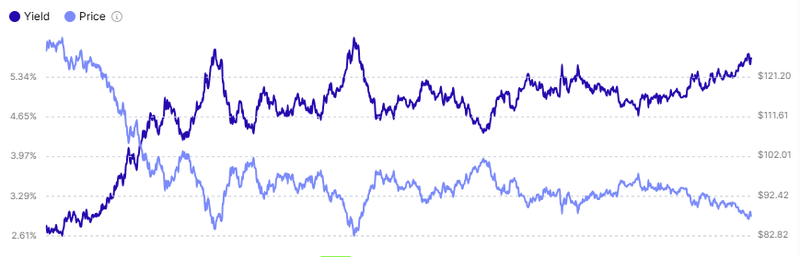
Investment-grade corporate bonds yielding around 5.6% are changing the way investors think about opportunity cost. Only a few years ago, cash and high-quality bonds offered very little income, which pushed many investors toward equities and other risk assets in search of better returns.
Today, the picture is different. Berkshire can hold Treasury bills, earn roughly 5%, keep its balance sheet highly liquid, and still generate billions of dollars in annual interest income. That makes the hurdle for buying stocks, corporate bonds, or entire businesses much higher than it was during the era of near-zero interest rates.
Berkshire’s large cash position does not necessarily signal a bearish view on the market. It may simply reflect Buffett’s view that safe assets are offering unusually attractive returns while preserving the flexibility to act if valuations become more compelling later.
Corporate bonds are becoming part of the comparison
Investment-grade corporate bonds yielding around 5.6% are changing the way investors think about opportunity cost.
For Berkshire, that means the hurdle for deploying billions of dollars into stocks or acquisitions is much higher than it was when cash earned almost nothing. Buffett can keep money in Treasury bills, earn roughly 5%, preserve liquidity, and wait for better opportunities.
Viewed that way, Berkshire’s cash balance is not necessarily a bearish signal. It may simply reflect a market in which safe assets are offering returns that are unusually competitive with many riskier investments.
Source: Public.com