
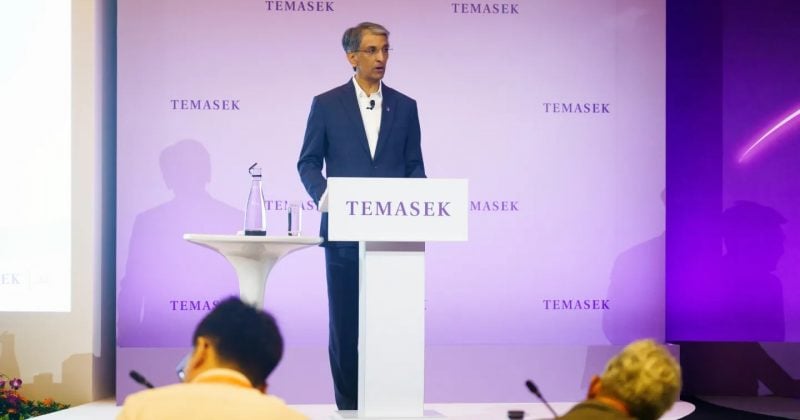
Some breakups are forever. Four years after watching $275 million evaporate in the FTX implosion, Singapore’s state-owned investment giant Temasek Holdings has made its position on cryptocurrency crystal clear: not interested, not now, possibly not ever.
The firm, which manages a portfolio valued at roughly $521 billion as of mid-2026, has not made a single direct cryptocurrency investment since its FTX stake was written down to zero in November 2022. Instead, Temasek’s forward-looking strategy is laser-focused on artificial intelligence and infrastructure, two themes that notably do not include digital tokens.
The FTX wound that never healed
To understand Temasek’s crypto aversion, you have to understand just how badly the FTX bet went. The firm invested $210 million for a roughly 1% stake in FTX International and another $65 million for about 1.5% of FTX US. That $275 million total was written down to exactly zero when Sam Bankman-Fried’s exchange imploded in spectacular fashion.
Temasek’s defense at the time was telling. The firm clarified that it had “no direct exposure in cryptocurrencies” and characterized the FTX investment as a bet on exchange infrastructure, not on crypto itself. That distinction between “crypto infrastructure” and “crypto” has become the cornerstone of Temasek’s entire digital asset philosophy since then.
Indirect exposure, maximum caution
Temasek maintains indirect exposure through holdings in blockchain and Web3 companies like Animoca Brands and Amber Group. But there’s a bright, unmistakable line between owning equity in companies that build on blockchain technology and owning the tokens themselves.
In July 2023, Temasek’s chief investment officer stated that the firm was “not looking to invest in crypto firms right now” and cited regulatory uncertainties as the primary reason. The firm’s strategy updates for 2025 and 2026 contain no mention of direct allocations to digital assets or tokens. The priorities are AI and infrastructure. Crypto didn’t make the cut.
What this means for the broader market
Temasek’s CIO specifically cited regulatory uncertainty as the reason for staying away. Until governments around the world establish clear, consistent frameworks for digital assets, firms that manage public money are going to keep crypto in the “too hard” basket.
Bitcoin ETFs have attracted significant inflows, and several major financial institutions have launched digital asset products. But there’s a meaningful difference between a BlackRock ETF wrapper that gives retail investors crypto exposure and a sovereign wealth fund putting hundreds of millions directly into tokens. Temasek’s stance suggests that for the largest, most conservative pools of capital on the planet, crypto still hasn’t crossed the credibility threshold.