
Honda’s 86% market share in Vietnam means the electric transition will largely follow whichever infrastructure standard it backs
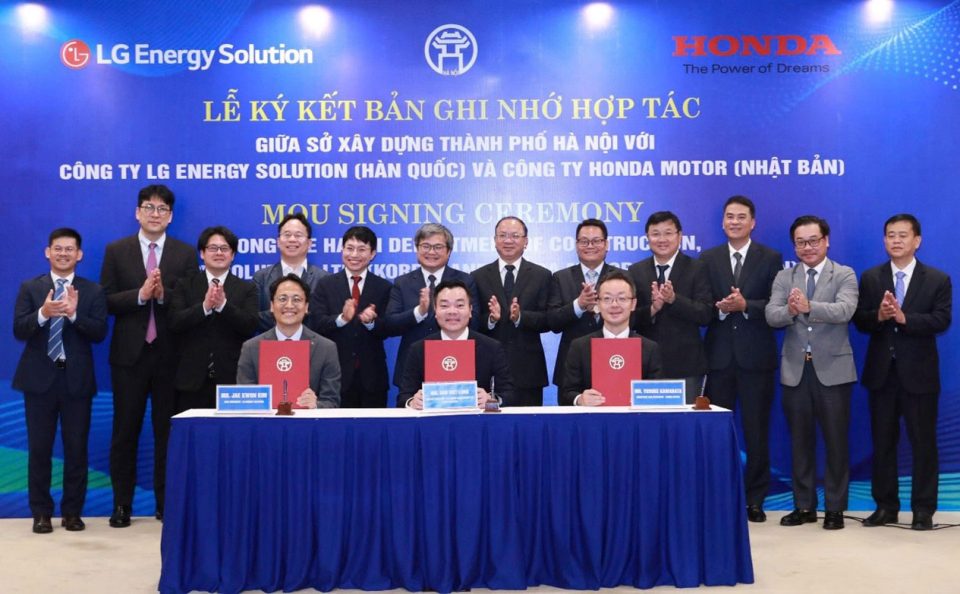
LG Energy Solution, Honda, and the City of Hanoi have signed a three-party memorandum of understanding to develop battery-swapping infrastructure for electric two-wheelers in Vietnam’s capital. The agreement will launch a pilot programme with around 50 Battery Swapping Stations (BSS) and 500 battery-swappable electric two-wheelers across the city.
LG Energy Solution will supply its cylindrical 2170 batteries and manage infrastructure oversight, operational solutions, and lifecycle safety under the pilot. Honda, which held an 86% share of Vietnam’s motorcycle market in 2025, will provide the vehicles and battery exchange units, with the City of Hanoi contributing permitting and policy support.
With around 80 million two-wheelers in use nationally in 2025, of which roughly 4% were electric, Vietnam represents one of the world’s largest and least-penetrated markets for electric two-wheelers. Hanoi has announced phased restrictions on internal combustion engine motorcycles in urban areas beginning in July 2026 and extending through 2030, creating a regulatory context for the BSS rollout.
In a statement, LG Energy Solution said: “Vietnam is one of the most important markets for the transition to electric two-wheelers in the region. We will continue contributing to the development of the country’s eco-friendly transportation infrastructure, leveraging our differentiated battery technologies to significantly enhance safety, usage time, and battery lifespan.”
Truong Viet Dung, Vice Mayor of Hanoi, added: “Korea and Japan are leading countries in battery-swapping stations for electric two-wheelers. We look forward to expanding BSS infrastructure in Hanoi through the technological expertise of LG Energy Solution and Honda.”
Why this matters:
• The pilot scale is modest but the strategic logic is sound. Fifty stations and 500 vehicles will not transform Hanoi’s mobility landscape, but that is not the point. Honda holds 86% of Vietnam’s motorcycle market and LG Energy Solution brings battery supply and lifecycle management; together they are staking out platform and standards territory in a market of 80 million two-wheelers where electric penetration sits at around 4%. The pilot is a land-grab for infrastructure standards before the transition accelerates, not a solution in itself.
• Battery swapping fits Hanoi’s constraints in ways that conventional charging does not. High population density, narrow streets, limited residential charging access and a culture of high-frequency daily use make a two-minute swap far more practical than hours-long charging for the typical Hanoi rider. The economics also matter: decoupling the battery from the vehicle purchase price directly addresses the affordability barrier that has slowed adoption among lower-income commuters and delivery riders who use two-wheelers most intensively.
• The regulatory backdrop makes the timing awkward. Hanoi’s original ICE ban has been scaled back to a limited weekend pilot in select central zones following industry and public pushback, which removes some of the urgency that made this partnership newsworthy. The Vietnamese government’s 2045 national phase-out target remains, but the near-term policy environment is softer than it appeared when the MoU was being negotiated, and Honda’s own lobbying against the ban sits in visible tension with its participation in the swapping ecosystem it would eventually replace.