
GLEN CARBON, Ill. (First Alert 4) – A major shift is coming to the St. Louis-area grocery market as Meijer, a Michigan-based superstore chain, prepares to open its first two locations in the Metro East next year.
The expansion into Glen Carbon and O’Fallon, Illinois, marks a significant push by Meijer, which currently operates 270 locations across the Midwest. The move is set to bring intense new competition to a region long dominated by local mainstays Schnucks and Dierbergs.
“At those two locations, we feel there’s a need to be part of the community, and we’re looking forward to growing there,” said Bobby Warren, Meijer’s market director for Central Illinois. “We’re in the whole state of Illinois, and we’re still expanding.”
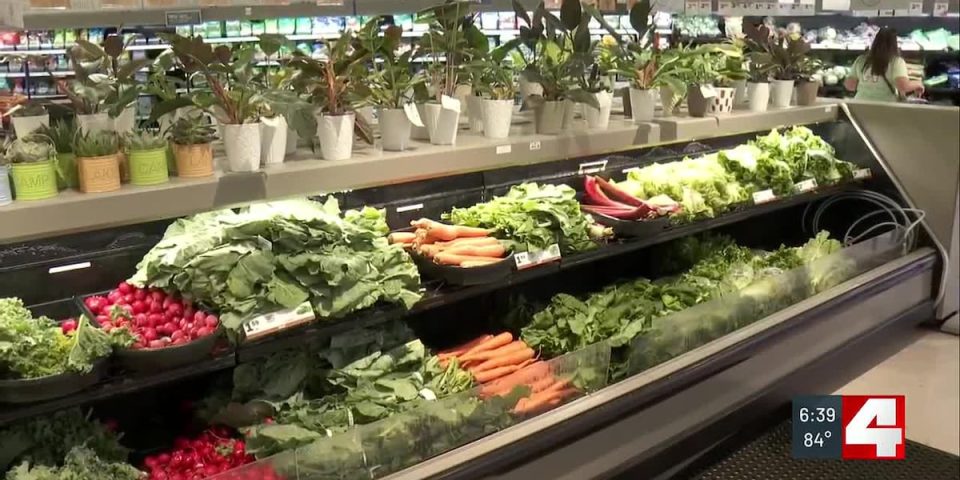
Meijer is known for its “one-stop-shop” model, combining a full-service supermarket with a department store footprint. Inside, shoppers can find fresh-cut meats, produce, and bakery items alongside clothing, home goods, and even the chain’s iconic “Sandy the Horse” penny kiddie ride.
When asked what drew the company to the Metro East, Warren emphasized the chain’s unique local value. “We felt like we could bring the Meijer value to the community, the shopping experience to that community, and just who we are,” Warren said.
While Meijer has invested in the Fresh Thyme market chain—which operates several St. Louis locations, including one at the Foundry—the parent company has not yet announced plans to cross the river into Missouri.
The Battle for ‘Share of Stomach’
Other grocery stores in the area have been expanding their footprint, competing for consumers in St. Louis.
Dierbergs recently opened a new location in University City, while a nearby Target features one of the retailer’s largest grocery footprints. Meanwhile, Schnucks has broken ground on a state-of-the-art facility in Creve Coeur to replace a 60-year-old building.
Schnucks CEO Ted Schnuck, great-grandson of the company’s founder, now oversees approximately 115 regional stores.
“Grocery is intensely competitive. Everyone has to eat,” Schnuck said. “So there’s a lot of players, from traditional competitors to quick-service restaurants, deliveries, and others that are trying to get that ‘share of stomach.’ That means we have to reinvent ourselves every day to make sure we’re giving customers the best possible experience.”
A recent analysis by consumer research firms NielsenIQ and Bain & Company found that U.S. grocery prices are still up as much as 3% compared to 2025.
These sustained high prices have altered consumer behavior, leading to a 1.8% drop in total units sold nationwide. Surveys show that 28% of Americans are trying to cut back on grocery spending, 56% are shifting to lower-priced brands, and 22% are exploring alternative retailers to hunt down the best deals.
“There’s a lot of competition in the grocery market,” said Raphael Thomadsen, a professor at Washington University’s Olin School of Business. “You have to be very aggressive to compete there.”
Thomadsen believes Meijer is testing the waters with its initial Metro East stores. “If they can succeed in the first couple of stores, they’ll expand,” he said.
Thomadsen noted that major grocers typically target rapidly developing, underserved suburban pockets with incoming housing. However, St. Louis’s urban core presents a different set of challenges and opportunities.
While major grocers operate select urban outlets, Thomadsen pointed to “odd spacing” in the city that leaves certain neighborhoods underserved by major supermarkets. This gap opens the door for smaller, specialized independent operators.
That is exactly where local entrepreneur Corey James sees his opening. James, who already owns two restaurants on Washington Avenue, is preparing to open Dorsa Market in downtown St. Louis later this year.
“We’ll have very fresh produce,” James said, emphasizing his desire to build a more walkable community. “We want more traffic down here when it comes to families, for it to become a walkable neighborhood, and this is what it’s becoming.”
Back at Meijer, Warren believes that expanding choices will ultimately benefit the consumer. “Now, when you walk into grocery stores, you’re seeing a lot of innovative things,” Warren said. “We’ll be there trying to make a difference and bring value to the customers.”
Copyright 2026 KMOV. All rights reserved.