
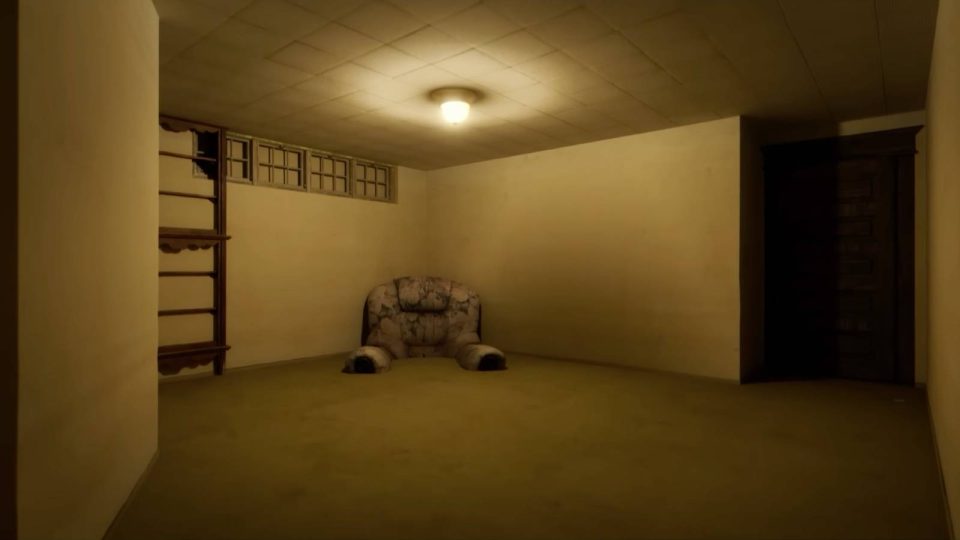
A24’s Backrooms has completely redefined the boundaries of modern horror. In just six days, the film grossed over $100 million domestically, becoming A24’s highest-grossing domestic release and establishing 20-year-old Kane Parsons as the youngest director to secure a No. 1 debut in North America.
The success of Backrooms — as well as Obsession, Iron Lung, and Bring Her Back before it — signals a new willingness in Hollywood to back younger creators and fresher ideas. It transforms the future of internet-born cinema from a matter of “if” to an absolute inevitability: if indie digital culture can out-gross legacy studio franchises, which viral myth will Hollywood fast-track next?
Born from mid-2000s forum slang for copied-and-pasted text, creepypastas are the internet’s version of campfire stories, catapulted into the mainstream by Slender Man in 2009. These collaborative urban legends often begin with a single image or an already-existing short story that evolves through countless retellings across forums, wikis, and YouTube rabbit holes. Creepypastas have existed in one form or another since the late 1990s, but only now has Hollywood found a reason to take them seriously.
If Backrooms proved internet folklore can conquer the box office, these are the stories Hollywood should adapt next.
10
Ted the Caver

Widely considered one of the very first creepypastas to hit the net — long before the term even existed — “Ted the Caver” is a chilling tale of spelunking gone wrong. The story is presented in a diary-style blog written by Ted Hegemann, an American caver documenting his expeditions into an undiscovered part of a local cave system, called “Floyd’s Tomb.”
The entries are at first vague, noting unsettling noises, screams, and scratches emanating from deep within the cave system. As the story progresses, hallucinations and other supernatural elements begin to emerge in Ted’s writing. Ted and his fellow explorers are fortunate to get out alive, explaining in a final post that they will return to the site with a gun. However, the blog post was never updated.
Since the story’s inception in 2001, Hollywood has already mastered the suffocating embrace of cave systems in features like As Above, So Below and The Descent, but “Ted the Caver” works by way of its blog-entry format. It’s essentially found-footage horror in prose form, which could be the perfect way of starting a film version of the creepypasta: a curious netizen finds a long-lost blog and goes searching for the same cave, only to meet their doom.
9
BEN Drowned

The Legend of Zelda: Majora’s Mask is a masterpiece, celebrated for its ingenious use of time loops, emotional depth, and surreal atmosphere. It’s already considered one of Nintendo’s most unsettling video games, but what happens when you imbue early internet folklore and real-world death into the mix? You get “BEN Drowned.”
Created by Alex Hall (referred to online as “Jadusable”), BEN Drowned follows a college student who buys a used copy of Majora’s Mask at a garage sale. But, after booting it up, the corrupted NPCs and text, backward-playing music, and mysteriously changing save files make it clear the game cartridge is no ordinary Major’s Mask. The college student eventually discovers a drowned twelve-year-old boy named Ben at the center of the enigma.
Trapped inside the game cartridge, Ben’s only solace is terrorizing the player both in-game and across the internet. It would be tricky, but BEN Drowned could be terrifying if done well as a feature film — though Nintendo signing off on one is a different matter entirely.
8
The Russian Sleep Experiment

In the late 1940s in Soviet Russia, a group of five political prisoners were sealed in chambers and experimented on using stimulant-based gases to maddening extremes. The five men were promised their freedom so long as they stayed awake for 30 days, but their captivity eventually devolved into extreme violence, cannibalism, and self-mutilation.
The Russian Sleep Experiment sounds plausible precisely because it feels disturbingly possible, but it’s a totally fictional story written by the anonymous Creepypasta Wiki user “OrangeSoda.” Similar to how Ted the Caver feels real by way of its blog format, the Russian Sleep Experiment is also consistently mistaken for being a real historical event. The story spread rapidly online, largely because many believed it was a real declassified military document at the time.
The image included in the story features a nightmare-inducing, skeletonized test subject seated on a bed in black-and-white. But the figure, nicknamed Spazm, is just a battery-operated Halloween prop sold by Morbid Enterprises in 2005.
7
Caledon Local 21 (1999)

We’ve all stumbled upon random TV channels when we were kids. Filled with static noise, a local council meeting, low-budget sitcoms, or advertisements for ShamWow, there were always such strangely fascinating broadcasts littering the fringes of the TV directory. But the one Elliot accidentally stumbled upon in 1999 was more than strange.
Called Caledon Local 21, the channel was relatively tame if not slightly unnerving in its general content. One of its featured programs was Mr. Bear’s Cellar, a talk show hosted by an enigmatic man wearing a crude bear suit, the titular Mr. Bear, who frequently invited children to mail him letters and to come visit his physical cellar.
Only later, when he was much older, would Elliot discover that “Mr. Bear” was actually a murderous cult leader who used the broadcast to lure local children to his home for horrific ritualistic sacrifices. A film adaptation may be difficult to pull off as the creator of the story, Camden Lamont, is known to be very protective of the property, but given Parsons’s recent success with Backrooms, Lamont might be persuaded to reconsider.
6
The Holders

Long before the Backrooms, and even well before the SCP Foundation, there was The Holders. Less a single story than a sprawling mythos of cursed objects, the 2007 web series is one of the internet’s very first widespread collaborative horror fiction projects. Like the SCP Foundation and the Backrooms that followed, The Holders served as a loosely tied cosmology of concepts centered around a collection of 2,538 mysterious objects.
According to the overarching story, 2,000 of the objects have been completely lost, leaving 538 dangerous objects remaining for characters, often called “Seekers,” to find. Almost every narrative entry follows a similar pattern: a Seeker faces terrifying psychological or physical trials where failure leads to a fate worse than death. If they are successful and survive the ordeal, they are rewarded with an audience before a Holder, horrific entities cradling the object in question, an item that is only ever relinquished if the Seeker asks the right question.
The Holders is probably one of the most original internet horror concepts that could work either as a feature film series or even a TV show, which might be a better option given the volume of objects on hand.
5
Psychosis
As a computer programmer who works entirely from his basement apartment, John doesn’t get outside much. His connection to the outside world exists almost entirely through digital communication. But over time, John starts to notice strange distortions in his routine phone calls and emails. For instance, Amy’s speech patterns start to feel deeply artificial and background noises never actually match her environment.
Before long, John becomes convinced that an unknown, technological entity has taken over the outside world and is mimicking his loved ones by using digital signals to trick him into opening his front door. To protect himself, he boards up his apartment, destroys his electronics, and cuts off all contact with the outside world. Then, John writes down his thoughts on paper to maintain his sanity, which is how the creepypasta came into existence.
The premise isn’t entirely new — think Black Swan or Repulsion— but Psychosis still captures the defining fear of technology at the heart of the digital age.
4
The Dionaea House

Before earning an Oscar nomination for his screenplay work, Eric Heisserer first made a name for himself in internet horror circles with The Dionaea House. Loosely told through compiled, frantic emails between Eric and Mark, the story centers on their desperate search to uncover what happened to their mutual friend, Andrew, who committed a double murder at a diner and then shot himself.
Even stranger is that the tragedy appears to have begun after Andrew house-sat an unsettling property owned by his stepfather — a strange, manipulative house that actively drives its inhabitants to madness.
3
The Left/Right Game
When a group of paranormal investigators decide to play a strange, ritualistic driving game, everything seems fine on the surface. The rules are fairly simple: Get into a vehicle, take the first available left turn, the next available right, the next available left, and repeat this sequence indefinitely. But for Alice Sharma and the crew of random ghost hunters she joined, the seemingly benign turning pattern eventually leads to a terrifying parallel dimension known as “The Road.”
As the convoy travels deeper into the nightmarish landscape, they encounter bizarre phenomena, horrifying entities, and unsettling towns, all as the fabric of reality begins to break and the explorers vanish one by one. Unlike internet-centric creepypastas born from haunted blog posts or horrifying emails, the Left/Right Game finds its terror in the physical world, inevitably making every dark street a potential gateway to something far more sinister.
2
Anansi’s Goatman Story

Originally posted as a 4chan greentext thread in 2012 by an anonymous user with the name “Anansi,” the Goatman Story is a masterclass in slow-burning psychological terror. The narrative expertly blends modern creepypasta tropes with classic folk horror elements. It follows a 16-year-old narrator from Chicago visiting family in rural Huntsville, Alabama. During a camping trip on a remote, forested property, the narrator and a group of local teenagers learn of a sinister folk legend surrounding the “Goatman,” a creature capable of shapeshifting and infiltrating groups of people.
While the creature invites comparisons to the Navajo’s skinwalker legends, Anansi’s Goatman carves out its own identity. Anansi’s monster behaves like an ancient, inhuman anomaly, trading traditional folklore for a deeply modern sense of biological and psychological dread.
The suffocating paranoia of Anansi’s Goatman Story makes it ripe for a modern A24-style psychological horror film similar to The Witch and The Ritual. A film adaptation could exploit the uncanny-valley effect brilliantly, trading cheap jump-scares for a claustrophobic, slow-burn thriller where the audience — and the characters — are constantly counting each body in the frame, desperate to spot the fake among them.
1
Penpal

There are plenty of amazing creepypastas that wriggle their way into the folds of our minds, much like the Backrooms itself, but few can match the reputation of Penpal, widely regarded as one of the greatest creepypastas ever written. Posted on r/nosleep in 2011 by author Dathan Auerbach (under the username 1000Vultures), Penpal is a first-person story told through the eyes of an unnamed narrator as he reconstructs his disjointed childhood memories only to realize a deeply unsettling truth.
Penpal quickly became a phenomenon, to the point where Auerbach successfully crowdfunded and self-published an expanded novel version of the original creepypasta just a year after it was posted. Unlike other classic internet urban legends, Penpal derives its horror from real-world plausibility, masterfully capturing the innocence of childhood nostalgia and slowly distorting it into a claustrophobic nightmare. The story practically begs for adaptation as a dark psychological thriller in the guise of something like Longlegs meets Prisoners, leaning on the narrator’s increasingly disturbed state as the truth becomes clear.
Still here? Play our interactive game and see if you can escape the Backrooms:
Four questions, one right answer.
Which movie is this?