
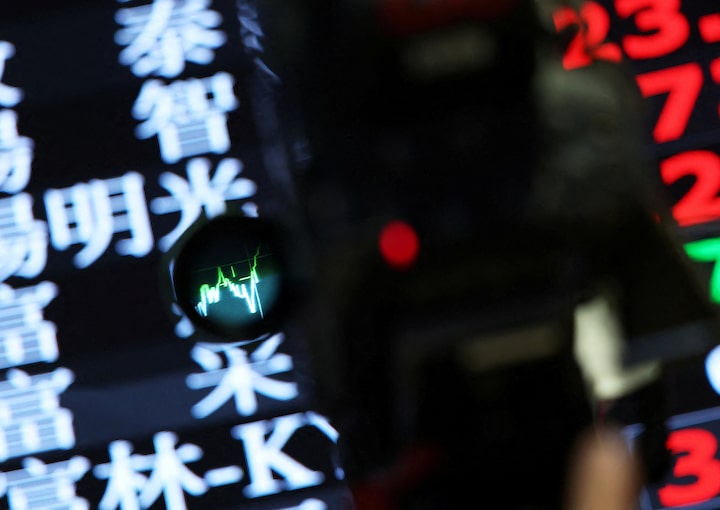
Global investors are staging a massive, multibillion-dollar retreat from some of the world’s biggest tech hubs, sending shockwaves through emerging markets.
Foreign portfolios bled a staggering $46.1 billion from emerging market equities in June alone, marking the second consecutive month of overall losses for developing economies, according to fresh data from the Institute of International Finance (IIF), News.Az reports, citing Reuters.
The epicenter of the exodus? South Korea and Taiwan. Foreign investors pulled an unprecedented $30.5 billion from South Korean stocks—marking the country’s largest single-month outflow in over 25 years. Meanwhile, Taiwan’s tech-heavy equity market shed $18.3 billion. China also saw a stark reversal of fortune, with equity outflows hitting $14 billion, erasing the previous month’s gains.
Market analysts attribute the panic to a perfect storm of global anxieties. A increasingly hawkish U.S. Federal Reserve under new chairman Kevin Warsh, volatile oil prices, and growing uncertainty surrounding China’s economy have caused investors to rapidly lower their risk tolerance. Weaker earnings confidence in the tech sector has further fueled the rush to the exits.
Interestingly, the data reveals a dramatic split in investor behavior. While Wall Street is ditching emerging market stocks, it hasn’t completely abandoned these regions. Foreign capital actually pumped $28.3 billion into emerging market bonds last month, proving that while investors are terrified of equity volatility, they are still willing to lend cash.
“The first-half message is clear,” noted IIF chief economist Jonathan Fortun. Emerging markets are still managing to attract global capital in aggregate, but only because steady debt inflows are barely masking a massive, persistent liquidation of stocks.