
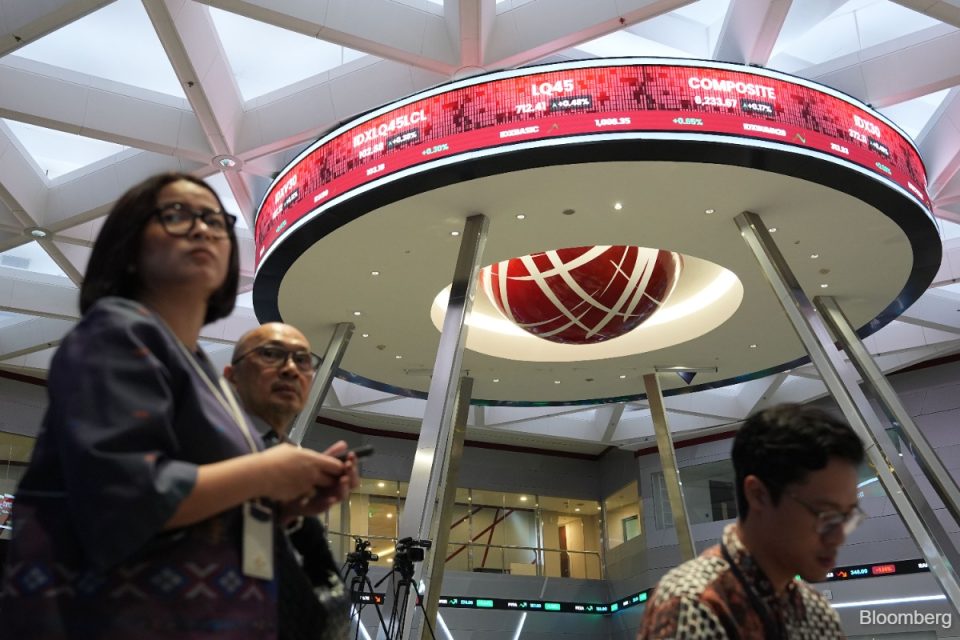
BENGALURU (July 8): South Korean equities extended losses on Wednesday amid volatility in chipmakers, with the benchmark dropping more than 20% from June’s record close, signalling that the market is in bear territory, while Indonesian stocks tumbled after S&P Dow Jones warned of a possible downgrade to frontier status.
Indonesia’s benchmark equity gauge fell 1.5%, snapping a five-day rally, after S&P Dow Jones Indices warned Indonesia risks a downgrade to frontier from emerging status due to market transparency issues.
That is the latest setback for Southeast Asia’s top economy, which has been placed under review by MSCI since January, and ramps up the pressure on authorities to deliver visible reforms that address disclosure and transparency concerns.
The government’s immediate priority should be to accelerate structural reforms that enhance market quality and credibility, said Fakhrul Fulvian, the chief economist of Trimegah Sekuritas Indonesia.
“This includes increasing effective free float and reducing high ownership concentration to improve liquidity and price discovery, strengthening disclosure requirements for beneficial ownership and significant shareholdings, and ensuring that market regulations remain transparent, predictable, and consistent with international best practices.”
Jeffrey Hendrik, the chief executive of Indonesia’s stock exchange, said the bourse will have constructive discussions with the related S&P Dow Jones indices to investigate the concerns raised.
In South Korea, the benchmark Kospi ended 5% lower at 7,246.70, its lowest close since May 20, after triggering a “sidecar” trading curb during the session.
The benchmark dropped more than 20% from a record close of 9,114.55 on June 22, a threshold commonly considered confirmation that a market is in bearish territory.
Over the past three sessions, the gauge has shed more than 10% and nearly 15% in six sessions this month.
The won appreciated to a one-month high after dollar-selling related to a US share sale by chipmaker SK Hynix emerged in the country’s dollar-won forwards market, according to sources familiar to Reuters.
In Southeast Asia, Singapore’s FTSE Straits Times scaled yet another record high, with banks OCBC, DBS and UOB gaining between 1.7% and 5%. All three banks touched their record highs during trading.
“Banks are well positioned to retain their leading position in the Singapore market, largely supported by consistent and good dividend payouts and share buy-back programmes,” said OCBC in a research note late last week.
Meanwhile, fresh US strikes on Iran and sanctions on Iranian oil threatened the fragile Middle East ceasefire, pushing crude prices higher and denting appetite for emerging-market assets reliant on energy imports.
The US dollar, last down 0.2%, edged to its highest level in a week after the US resumed strikes against Iran, as investors sought refuge in the global safe-haven currency.
The Indonesian rupiah broke past 18,000 for the second time this week. The ringgit and the Thai baht inched lower.
Highlights:
- Indonesia’s 10-year yield jumped to 7.295%, with the spread with one-year yields at -71.7 basis points
- Thai monetary policy settings are supporting an economic recovery, the central bank’s minutes showed
- South Korea to closely watch risks around current stock market volatility