
Malaysian Government Securities (MGS) and Government Investment Issues (GII) traded within a narrow range this week as resilient domestic economic fundamentals and stable monetary policy helped offset renewed geopolitical concerns stemming from the Middle East, however this positive environment did not stop foreign investors in selling large chunks of local bonds, according to Kenanga Research.
The research house said MGS and GII yields were mixed during the week, moving between 1.8 basis points lower and 1.0 basis point higher.
The benchmark 10-year MGS yield edged down 0.1 basis point to 3.629%, while the 10-year GII yield rose 0.6 basis point to 3.627%.
Kenanga said domestic bond yields remained largely range-bound, albeit with a slight upward bias, as investors weighed renewed tensions in the Middle East and firmer global oil prices.
However, Malaysia’s economic resilience continued to underpin investor confidence.
The research house highlighted stronger industrial activity, with industrial production expanding 8.4% year-on-year in May, slightly higher than April’s 8.2% growth.
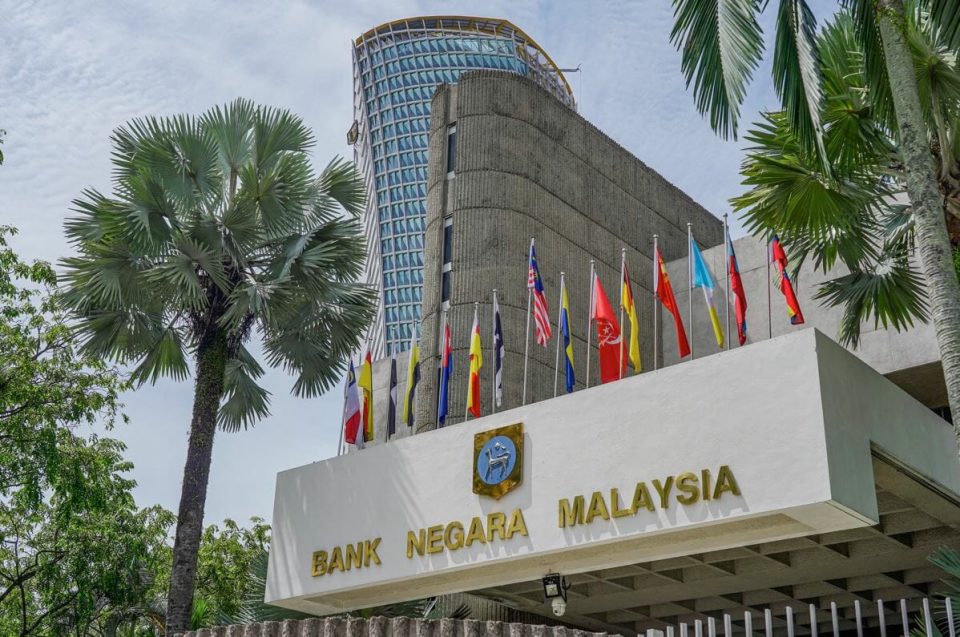
At the same time, Bank Negara Malaysia’s decision to maintain the Overnight Policy Rate (OPR) at 2.75% during its July monetary policy meeting reinforced expectations of continued policy stability.
Foreign investor sentiment towards Malaysian fixed income also improved, with RM4.9 billion in net foreign inflows recorded in June, signalling renewed confidence in the country’s economic outlook despite heightened global uncertainty.
Despite the stronger monthly inflows, Kenanga noted that foreign investors remained net sellers of Malaysian government bonds during the latest week, with outflows amounting to RM4.2 billion.
Foreign investors also extended their selling of Malaysian equities for an eighth consecutive week, recording net outflows of RM400 million.
Looking ahead, Kenanga expects Malaysian government bond yields to remain broadly range-bound, with a mild upward bias at the longer end of the yield curve as investors continue monitoring developments surrounding US-Iran relations and broader geopolitical risks in the Middle East.
Nevertheless, the research house believes Malaysia’s stable monetary policy and resilient macroeconomic conditions should continue supporting demand for short- and intermediate-tenor MGS and GII securities, helping cushion the impact of external volatility.