
Dar es Salaam. Tanzania’s corporate bond market has crossed the Sh2 trillion mark, marking a structural milestone in the country’s capital markets as private-sector debt issuance accelerates alongside sustained investor demand for shilling-denominated instruments.
Bank of Tanzania data shows outstanding corporate bonds rose sharply from Sh757.1 billion in 2024 to Sh1.9 trillion in 2025, reflecting one of the fastest expansions in the fixed-income segment in recent years.
The additional issuance activity in early 2026, including new listings and strong oversubscriptions, has now pushed the market beyond the Sh2 trillion threshold.
The milestone was underscored during the May 20, 2026 listing of Equity for Tanzania Limited (EFTA)’s corporate bond on the Dar es Salaam Stock Exchange (DSE), a transaction that further reinforced investor appetite for private-sector credit instruments.
EFTA raised Sh33.04 billion, more than double its Sh15 billion target, representing a subscription rate of 220.24 percent.
The offer, which ran from February 10 to March 16, 2026, attracted strong participation from both retail and institutional investors, with overwhelming domestic dominance.
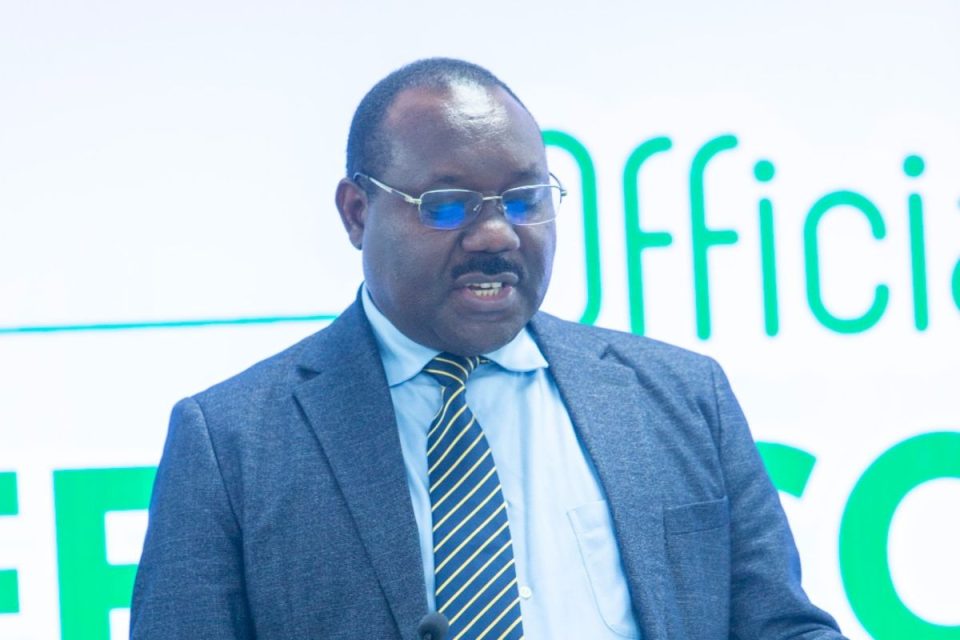
Capital Markets and Securities Authority (CMSA) director general, Nicodemus Mkama, said EFTA’s issuance has contributed to the continued expansion of Tanzania’s corporate bond market beyond 2025 levels.
“EFTA’s success, achieving 220.24 percent of its goal by raising Sh33 billion instead of the expected Sh15 billion, is a significant milestone for the first and second quarters of 2026,” Mkama said.
“This achievement has helped increase the total value of corporate and institutional bond investments to Sh2.03 trillion, from Sh1.9 trillion.”
He said the government’s objective is to deepen access to capital for productive sectors of the economy, ensuring financial markets play a larger role in private-sector development and infrastructure financing.
EFTA’s managing director, Nicomed Bohay, said the strong uptake reflects confidence in the company’s leasing-based financing model and a broader shift in funding preferences toward local currency debt.
“These results reflect trust in the EFTA business model and Tanzania’s capital markets,” Bohay said.
He added, “We are deliberately diversifying funding sources by moving away from foreign currency loans in USD and euro and instead securing long-term financing in Tanzanian shillings.”
Mr Bohay said that the proceeds will be deployed into financing productive equipment across agriculture, transport, mining and construction sectors, supporting mechanization and logistics expansion.
CMSA said EFTA has become the first financial-sector firm to raise capital through a publicly listed leasing bond on the DSE, marking a structural innovation in Tanzania’s debt capital market.
The regulator highlighted that 99.4 percent of investors were local, with retail investors accounting for 95.4 percent and institutional investors 4.5 percent — a distribution that reflects deepening retail participation in capital markets.
CMSA attributed strong demand to a combination of policy and technological reforms, including the removal of withholding tax on bond interest income and the reduction of minimum investment thresholds from Sh1 million to Sh500,000.
The changes significantly widened access for youth and women investors, while digital platforms such as CRDB Bank’s SimBanking application simplified subscription and payment processes.
Public financial education campaigns, including social media outreach and financial literacy programmes, also played a key role in expanding awareness and participation, CMSA said.
The EFTA listing adds to a growing pipeline of corporate debt issuances between 2025 and 2026 that have reshaped Tanzania’s fixed-income landscape.
In late 2024 to early 2025, Azania Bank Plc issued its Bondi Yangu retail bond, raising Sh63.27 billion at a 12.5 percent coupon rate.
This was followed in February 2025 by CRDB Bank’s Samia Infrastructure Bond, which raised Sh323.09 billion, one of the largest infrastructure-linked issuances in the market.
CRDB returned to the market in October 2025 with its Al Barakha Sukuk bond, raising Sh125.4 billion, while Tanzania Commercial Bank’s STAWI Bond added another Sh140 billion in November 2025.
Together, these transactions reflect increasing diversification in Tanzania’s capital markets, including retail bonds, infrastructure financing instruments, and Islamic finance structures.
Dar es Salaam Stock Exchange (DSE)’s Chief Executive Officer Peter Nalitolela said capital markets in Tanzania have experienced sustained growth over the past five years, driven by successive issuances and innovation in capital-raising mechanisms.
“Over the last five years, capital markets in Tanzania have experienced impressive growth in terms of successive issuances and the introduction of innovative ways of raising capital,” he said.
He added that EFTA’s bond success extends beyond financial markets, given its alignment with national development priorities.
“EFTA’s bond success goes beyond capital markets because the bond perfectly aligns with the country’s goals and development agenda,” Nalitolela said. “It supports SME financing, agricultural financing and expanding financial inclusion.”
He linked the development to Tanzania Development Vision 2050, which targets a resilient and inclusive economy driven by industrialisation and technology, with ambitions of achieving a $1 trillion GDP economy supported in part by deeper capital markets.
He also noted that mechanisation of agriculture, including financing for equipment such as power chillers and farm machinery is central to transforming productivity in the sector.
While government securities remain the dominant segment of the fixed-income market, corporate bonds are emerging as the fastest-growing asset class, signaling a gradual rebalancing toward private-sector financing.
The growth also indicates rising investor confidence in domestic credit markets and improving depth in Tanzania’s capital market infrastructure.
credit markets and improving depth in Tanzania’s capital market infrastructure.