
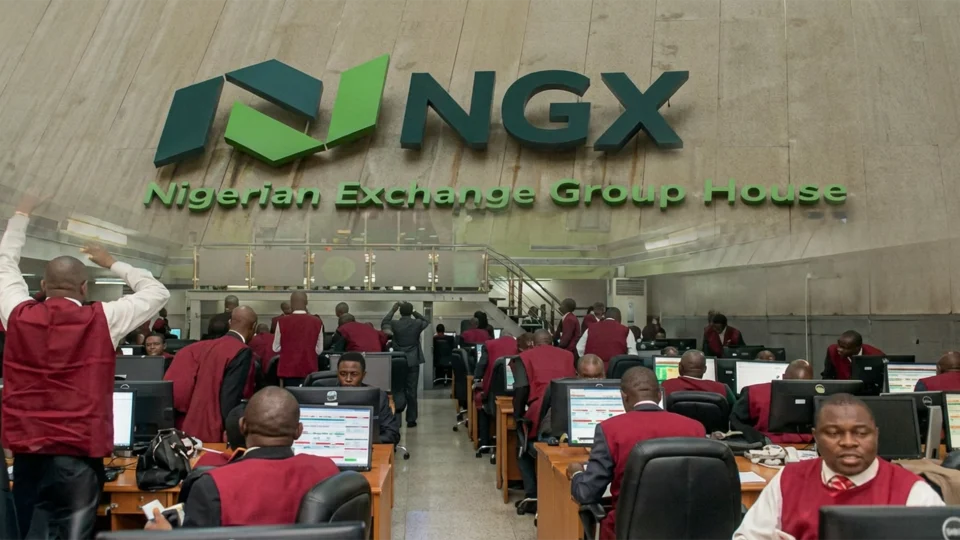
Nigeria Exchange Group (NGX)
Domestic investors’ participation in the Nigerian Exchange Limited (NGX) soared significantly in April 2026 as total transactions rose by 3.35 per cent to N1.8 trillion, up from N1.744 trillion recorded in March 2026.
Also, market depth and liquidity showed a stronger performance within 12 months, with total transactions rising by 274.05 per cent from N482 billion recorded in April 2025.
According to the Domestic and Foreign Portfolio Investment Report of the exchange released yesterday, the domestic investors continued to dominate trading activity, accounting for about 72 per cent more transactions than foreign investors.
Further breakdown of the report indicated that domestic transactions increased by 6.84 per cent month-on-month to N1.6 trillion in April from N1.5 trillion in March.
The improved performance was largely attributed to rising retail participation and sustained institutional positioning in equities.
Further breakdown of the report showed that foreign portfolio transactions declined by 14.2 per cent to N247.78 billion from N288.82 billion in the preceding month, an indication of cautious offshore sentiment amid global uncertainty as well as selective capital allocation to emerging markets.
Within the domestic segment, retail investors recorded a sharp 26.3 per cent increase in activity to N683.74 billion from N541.37 billion in March, indicating growing participation from individual investors leveraging improved access to the market.
However, institutional domestic transactions declined by 4.69 per cent to N871 billion from N914.23 billion, suggesting a more measured approach by fund managers and corporate investors during the period.
Despite the mixed monthly dynamics, institutional investors still slightly outperformed retail participants, maintaining their traditional dominance in overall domestic market flows.
Analysts noted that this balance reflects a maturing market structure where both retail enthusiasm and institutional discipline continue to shape trading outcomes.
Market analysts said the continued dominance of domestic investors, which now account for approximately 86.7 per cent of total transactions as of April 2026, compared to 13.3 per cent from foreign investors, signals a structural shift in Nigeria’s capital market away from heavy reliance on offshore capital.
They argued that this trend has helped cushion the market against external shocks but also highlights persistent challenges in attracting sustained foreign portfolio inflows.
According to analysts at Cordros Capital, the rise in domestic transactions reflects strong local liquidity conditions and growing confidence among Nigerian investors, particularly in a high-yield fixed-income environment that is gradually spilling over into equities.
They noted that while foreign participation remains subdued, improved macroeconomic stability could support a gradual return of offshore inflows in the medium term.
Similarly, analysts at Vetiva Capital Management stated that the decline in foreign transactions during April aligns with broader global risk-off sentiment and selective exposure to emerging markets.
However, they emphasised that Nigeria’s relatively attractive valuations and improving policy clarity could support renewed foreign interest if FX stability is sustained.