
The most ambitious cryptocurrency legislation in American history was supposed to be signed into law today. America’s 250th birthday passed instead with the Digital Asset Market Clarity Act sitting at position 423 on the Senate Legislative Calendar, the Trump administration’s announced target came and went without a ceremony, and the pre-August window that analysts across Wall Street and policy circles have called the last realistic gate for 2026 passage is now fully open — and already three days shorter than it was.
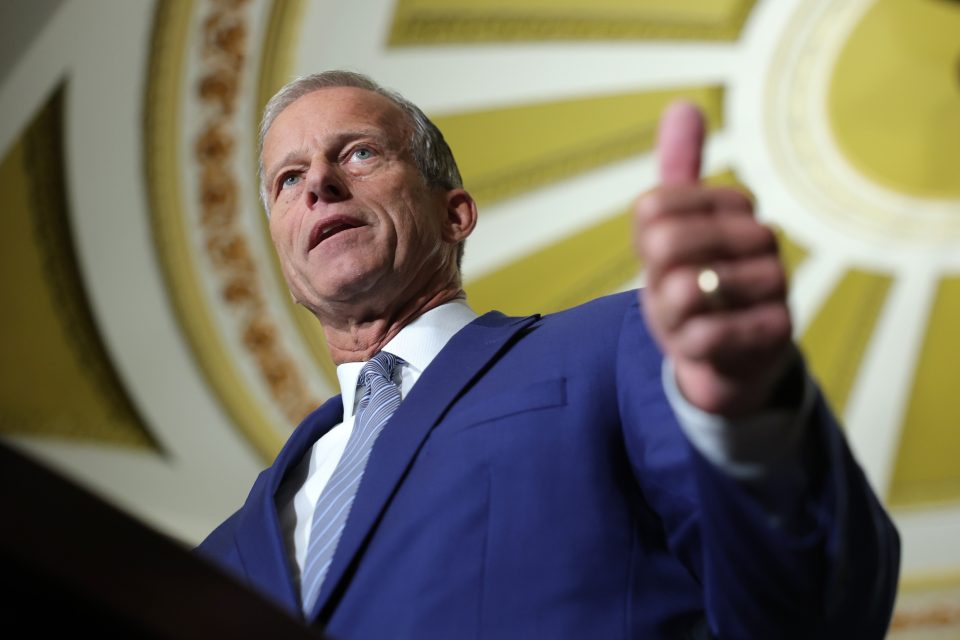
The bill is not dead. Senate Majority Leader John Thune has not abandoned it. The prediction markets, which priced the CLARITY Act’s 2026 passage at 82% in February and watched that estimate recede to the 42-50% range through June, have not called the race. What has changed is the geometry of the remaining path: the Senate returns from its July 4 recess on July 13, roughly three usable Senate weeks remain before the chamber disperses for August, and the three fights that have blocked the cloture votes needed to pass the bill remain unresolved as of this morning.
How the Bill Got Here
The CLARITY Act (H.R. 3633) passed the House on July 17, 2025, by a 294-134 margin — the strongest congressional endorsement of digital asset legislation in US history, with more than 70 Democrats crossing the aisle. The Senate Banking Committee advanced the bill 15-9 on May 14, 2026, with committee Chairman Tim Scott of South Carolina and two Democrats, Senators Ruben Gallego of Arizona and Angela Alsobrooks of Maryland, joining all 13 Republicans. On June 1, the bill was formally placed on the Senate Legislative Calendar under General Orders as Calendar No. 423, making it eligible for a full floor vote.
That calendar placement was significant. The bill had cleared more formal legislative gates than any comparable crypto measure before it. But calendar eligibility is not a floor vote. From Calendar No. 423, the CLARITY Act still needs a cloture motion to end any filibuster, a 60-vote majority to invoke it, formal reconciliation of the Senate Banking Committee text with the Senate Agriculture Committee’s companion measure, and a presidential signature. None of those steps have been completed. The first — cloture — is where the bill’s arithmetic becomes genuinely unforgiving.
Senate rules require 60 votes to cut off debate and bring legislation to a final vote. Republicans hold 53 seats. Two Republicans, Senators Josh Hawley of Missouri and Rand Paul of Kentucky, are expected to oppose the bill on substantive grounds, which in a worst-case scenario leaves the Republican side at 51. That means the bill needs between seven and nine Democratic votes to reach the 60-vote threshold. At present, only two Democrats — Gallego and Alsobrooks — have voted for the bill in committee, and both have attached conditions to any floor support.
What Seven Democratic Votes Actually Cost
Those conditions are not uniform, but they converge on the same three disputes. Each unresolved fight represents votes that exist in principle and are absent in practice.
Fight One: The president’s $1.4 billion. On July 1, 2026, the Office of Government Ethics released President Donald Trump’s 927-page annual financial disclosure for 2025. The filing showed Trump earned approximately $1.4 billion in cryptocurrency-related income during the first year of his second term — including more than $500 million from World Liberty Financial token sales, $635 million in royalties from $TRUMP meme coin licensing agreements, and additional equity and stablecoin proceeds. That figure is the largest personal crypto-income disclosure in US presidential history.
For Democrats who had already been demanding conflict-of-interest provisions in the CLARITY Act, the disclosure transformed an abstract ethics principle into a concrete, billion-dollar fact. An ethics amendment offered by Senator Chris Van Hollen failed 11-13 in the Banking Committee, with all Republicans voting it down. Senators Kirsten Gillibrand — among the most crypto-friendly Democrats in the chamber — and Alsobrooks have since stated publicly that enforceable language covering government officials’ crypto holdings is a prerequisite for their floor support. The White House has opposed any provision specifically targeting the president’s personal holdings. Republican counterproposals have either been characterized as circular or too weak to satisfy the standard Democrats are applying.
The result is a negotiating impasse at the exact point where the president’s signature is both most needed and most conflicted: Democrats need ethics protections as a condition of giving Trump the legislative win he publicly wanted by July 4, while the White House opposes the provision that would make that win possible.
Fight Two: Developer protections and law enforcement. Section 604 of the bill incorporates the Blockchain Regulatory Certainty Act and shields non-custodial software developers and node operators from money-transmitter registration and Bank Secrecy Act obligations. The logic: writing and publishing open-source code that doesn’t control customer funds shouldn’t carry the same regulatory burden as operating a financial intermediary. For the DeFi protocol ecosystem — where developers currently face sustained legal uncertainty — Section 604 represents the bill’s most practically significant innovation.
The National District Attorneys’ Association disagrees. In a letter to Senate leadership, the NDAA argued that Section 604’s developer protections would materially impair law enforcement’s ability to investigate and prosecute criminal activity involving cryptocurrency. The National Sheriffs’ Association and the International Association of Chiefs of Police have raised similar concerns. The White House Crypto Council convened representatives from these groups in an attempt to find resolution, producing the first-ever endorsement of the CLARITY Act from a law enforcement organization — the National Organization of Black Law Enforcement Executives — but the core dispute over the scope of Section 604 remained unresolved heading into the recess.
Fight Three: Stablecoin yield and the banking lobby. The third fight is narrower but has drawn the most sustained institutional lobbying. It concerns how the CLARITY Act governs stablecoin rewards on exchanges and custodians. Coinbase earns approximately $1.35 billion annually in USDC rewards revenue; whether that revenue survives the bill’s final text depends on language that the American Bankers Association and allied trade groups argue creates a loophole allowing digital asset platforms to offer interest-equivalent yields outside the GENIUS Act’s prohibition on issuer-paid interest. Crypto participants counter that activity-based rewards from DeFi protocols are structurally different from deposit interest, and that conflating them would restrict a legitimate financial activity without addressing systemic risk. That line remains one of the most actively renegotiated provisions in the bill.
What the Cloture Clock Actually Means
The Senate’s return from recess on July 13 does not mean the CLARITY Act immediately moves to a floor vote. For cloture to be filed, Senate Majority Leader Thune must schedule the motion, which requires him to prioritize the bill above competing demands on floor time that include a long-term FISA Section 702 reauthorization, the annual National Defense Authorization Act, and the unresolved standoff over the SAVE Act that consumed Senate calendar time in late June. Each of those items has genuine legislative urgency and a constituency that will resist displacement.
Senate Rule XXII governs the sequence once cloture is filed: the vote occurs no earlier than the second day of session after the motion is made; if 60 votes are secured, a 30-hour clock begins running before the final passage vote. That clock covers all activity on the bill, including quorum calls and procedural motions, not just floor debate. A bill requiring multiple cloture motions — one on the motion to proceed, one on the bill itself — can consume the better part of a week of Senate floor time under the standard procedure.
Brian Gardner, chief Washington policy strategist at Stifel, has written that the bill “probably needs to get through the Senate by the end of July, preferably in June” — adding that if the Senate misses the August recess, the bill’s prospects “would deteriorate materially.” Beacon Policy Advisors has been more direct: missing the August recess doesn’t just delay the bill; it potentially ends the 2026 path, because the fall calendar runs directly into the November midterm elections, and members become less willing to cast complex financial votes the closer the election gets.
Galaxy Research head Alex Thorn cut his 2026 passage estimate to 60% in early June, citing the calendar rather than the substance as the primary risk. Senator Bill Hagerty has placed his base-case scenario at a floor vote in the weeks after the July 13 return. Arca portfolio manager David Nage, who spent a week meeting with Senate offices in mid-June, assessed the bill as “80-85% finished” on substance — with the residual gap driven by political optics rather than genuine policy disagreement. The challenge is that political optics have their own timeline.
What the Bill Would Actually Do
The CLARITY Act would resolve a jurisdictional ambiguity that has defined a decade of enforcement-driven crypto regulation in the United States — one that the SEC and CFTC’s joint crypto taxonomy on March 17, 2026 has already partially addressed at the agency level, but only through reversible administrative action rather than statute.
Under the bill, a digital asset whose blockchain network has achieved “decentralized control” — meaning no single person or group can unilaterally alter the network — qualifies as a “digital commodity” subject to CFTC authority in spot markets. Bitcoin clears this bar; Ether would depend on a maturity test. Tokens whose value still depends on the issuer’s ongoing entrepreneurial efforts remain under SEC jurisdiction as “investment contract assets” until the network matures. The practical effect of this mechanism is to convert the current enforcement-by-interpretation regime — where the SEC or CFTC claims jurisdiction after the fact based on contested legal theories — into a predictable statutory classification that institutional capital can plan around.
The significance of converting agency guidance into statute is not cosmetic. The March 2026 SEC/CFTC joint interpretation established a working token taxonomy and was described by both chairmen as a major step toward clarity. But interpretive guidance can be reversed by a future administration in months; a statute cannot. For institutional investors, the question is not whether clarity exists today but whether it survives a change in administration — and only the CLARITY Act can provide that durability.
Section 604’s developer protections would shield non-custodial builders from money-transmitter registration and Bank Secrecy Act obligations when a network lacks a controlling intermediary. Title II would establish a fundraising exemption for certain token offerings on mature blockchains, allowing projects to raise capital through a tailored disclosure regime — a defined legal path that does not currently exist. Exchanges, brokers, and dealers would register under CFTC standards. The bill also allocates funds to combat illicit cryptocurrency activity.
Paired with the GENIUS Act — which established the issuer-level framework for payment stablecoins and was signed into law on July 18, 2025 — the combined result would be the most complete end-to-end federal digital asset framework any major economy has attempted. The GENIUS Act’s own rulemaking deadline falls on July 18, 2026, the same week the Senate begins its post-recess floor work.
What Europe Just Did
The CLARITY Act missed its July 4 target three days after the EU’s Markets in Crypto-Assets regulation reached full enforcement. MiCA’s full EU enforcement deadline — the conclusion of its 18-month transitional period for crypto service providers — expired July 1, 2026, consolidating licensing authority across all 27 EU member states and ending the patchwork of national registrations that previously governed crypto in Europe.
Of the more than 1,200 firms that had operated under national crypto registrations, approximately 244 secured full MiCA authorization before the deadline — roughly 20% of the field. The rest are now legally prohibited from serving EU clients without authorization. Major exchanges including Kraken and Coinbase (via Ireland) obtained licenses; Binance withdrew its Greek application and is pursuing authorization through another member state.
The contrast is structural. MiCA is a single statute covering 27 member states with passporting rights. The US approach, if CLARITY passes alongside GENIUS, would be a divided framework split across two agencies, two asset-type categories, and implementing rules that agencies have said would take until 2027 or later to finalize. Treasury Secretary Scott Bessent has framed the competitive pressure in explicit terms, arguing in Bessent’s Wall Street Journal op-ed on crypto relocation that crypto companies and blockchain developers are relocating to Singapore and Abu Dhabi because sustained US regulatory ambiguity has made staying difficult.
Hong Kong’s stablecoin licensing regime and Singapore’s expanded digital asset framework have each moved faster than the US this year. The July 4 date was not a deadline in any formal legislative sense — it was a political target, an aspirational marker set by the White House to create momentum. But the week in which MiCA became fully effective is an uncomfortable backdrop for a bill that hasn’t yet scheduled a cloture vote.
What Prediction Markets and Analysts Are Pricing
Polymarket, which has tracked the CLARITY Act’s 2026 signing odds since January, showed the contract in the 42-50% range as of early July — down from 74% a month earlier, and from 82% in February. The 32-point decline from the February peak to the current range tracks almost precisely with the period when the ethics impasse became the primary obstacle and the July 4 signing window shifted from plausible to passed.
The spread between analyst forecasts is wide enough to reflect genuine uncertainty, not divergent methodologies. Galaxy Research prices 2026 passage at 60%. Stifel has written that the bill probably passes if it clears the Senate before the end of July, and probably doesn’t if it misses August. Astraea Law has projected August enactment while flagging reconciliation risk. Senator Lummis has held to the position that an August signing remains achievable — while attaching a warning that failure before August could push the next viable legislative window to 2030, when a new Congress would have to rebuild the bipartisan coalition from scratch.
The institutional money has also begun to speak. Standard Chartered has estimated that XRP ETF inflows could reach $8 billion if the bill codifies XRP’s commodity classification into statute. JPMorgan analysts have described passage as a positive catalyst for digital assets broadly, citing regulatory clarity as a prerequisite for institutional scaling. A major digital asset firm placed a multi-million-dollar institutional bet on 2026 passage on Polymarket. The persistence of odds well below certainty, even with that institutional interest, reflects how much the outcome depends on scheduling decisions that no amount of analysis can fully resolve.
What Comes Next
The Senate returns July 13. For the bill to survive its 2026 window, a specific sequence needs to happen in a specific order.
First, the Senate Banking Committee text must be reconciled with the Senate Agriculture Committee’s Digital Commodity Intermediaries Act — a staff-level process that covers CFTC-related commodity provisions and has not yet concluded. Second, the ethics, Section 604, and stablecoin yield disputes must reach resolution sufficient to bring at least five additional Democrats to the floor beyond Gallego and Alsobrooks. Third, Majority Leader Thune must prioritize the bill in a floor schedule already crowded by FISA, the NDAA, and the SAVE Act standoff. Fourth, the House needs to follow through on Rep. Dusty Johnson’s June 18 commitment to fast-track any reconciliation with the House-passed version before the August recess.
House Financial Services Committee hearings are scheduled for July 14 and July 17, with the latter held in New York — a deliberate venue choice designed to anchor the bill to institutional finance. Those hearings are not themselves procedural gates, but they provide the bill’s backers a public platform during the exact window when the pre-recess path either opens or closes.
SEC Commissioner Hester Peirce said on July 1 that she remains optimistic the bill will clear the Senate this summer. Digital Chamber CEO Cody Carbone has framed the floor math with characteristic precision: the deal will be completed before the floor vote is called, because the majority will only bring the bill to the floor once they are confident they have 60.
That confidence has not yet been demonstrated publicly. As of this morning, the bill that was supposed to be signed today sits at Calendar No. 423, the Senate is in recess, and the most consequential three weeks in American digital asset policy begin July 13.
Frequently Asked Questions
Will the CLARITY Act still pass in 2026 after missing the July 4 deadline?
Passage in 2026 remains possible but depends entirely on the Senate acting before the August recess, which typically begins in early August. Analysts at Stifel, Beacon Policy Advisors, and Galaxy Research all characterize the pre-August window as the last realistic gate for 2026. If the Senate misses it, the fall calendar collides with the November midterm elections, and the political appetite for complex financial legislation typically shrinks as campaign season intensifies. Senator Lummis has warned that a failed 2026 window could push the next viable opportunity to 2030. Prediction markets currently price 2026 passage at 42-50%.
What specifically do Democrats need before they will vote yes on cloture?
The three conditions that Democratic senators have attached publicly to floor support are: enforceable ethics language governing crypto holdings by government officials, specifically including the president — a provision the White House opposes; satisfactory resolution of Section 604’s developer-protection scope, which law enforcement groups argue creates enforcement gaps for criminal crypto activity; and stablecoin yield language that satisfies their concern about allowing deposit-equivalent returns outside the GENIUS Act’s framework. Senators Gillibrand and Alsobrooks have each stated publicly that ethics language is a condition of their vote, not a preference.
If the bill doesn’t pass, does that leave crypto completely unregulated?
No, but it leaves the regulatory framework fragile rather than durable. The SEC and CFTC issued joint interpretive guidance on March 17, 2026, establishing a five-category token taxonomy that provides meaningful clarity for market participants today. The CLARITY Act’s most significant remaining value is converting that guidance into statute — which would survive a change in administration — rather than leaving market participants dependent on reversible agency interpretation. Without statutory authority, a future administration could undo the current guidance with minimal process. Token projects would also continue to lack the defined capital-raising path that Title II would provide, and DeFi developers would remain in the legal gray area that Section 604 would resolve.
What does the $1.4 billion Trump crypto disclosure mean for the bill’s chances?
The July 1, 2026 disclosure — the most detailed financial filing in presidential history at 927 pages — confirmed that crypto is now the single largest source of President Trump’s income, totaling approximately $1.4 billion for 2025 across meme coin royalties, World Liberty Financial token sales, and related equity proceeds. For Democrats who had already been demanding conflict-of-interest protections in the CLARITY Act, the disclosure replaced an abstract concern with a specific, sourced number. It sharpened the ethics demand rather than creating it — but in a negotiation where every Democratic vote matters, it raised the price of those votes. The White House has denied any conflict of interest and stated that Trump’s investments are managed without his direct involvement.