
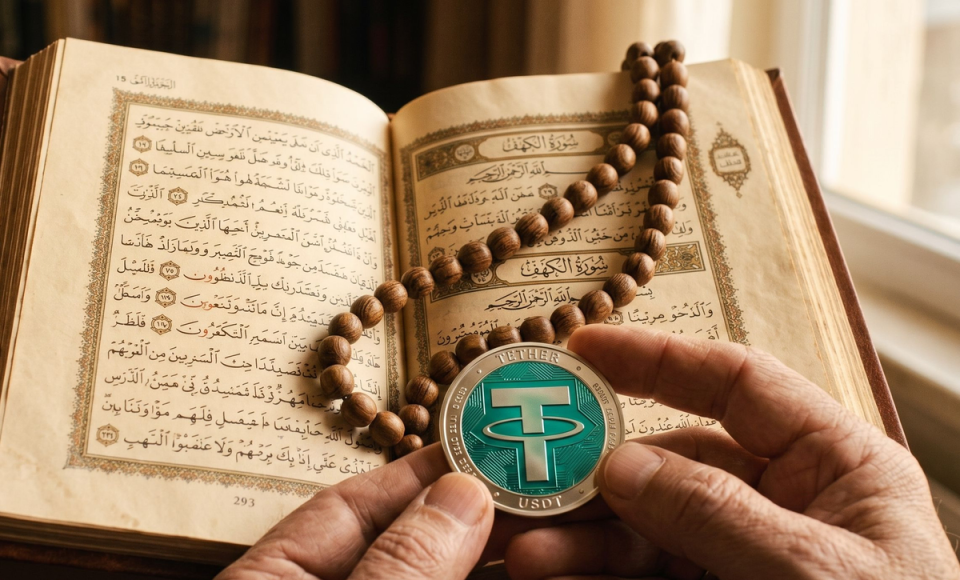
- Pakistan’s crypto chief wants more talks after Islamic scholars rejected crypto payments, including Tether (CRYPTO:USDT).
- The ruling does not change Pakistan’s crypto licensing rules.
- Pakistan will keep building its regulated crypto market while reviewing digital assets under technical and Shariah assessments.
Pakistan’s crypto chief has called for more talks after Islamic scholars ruled that payments using Tether (CRYPTO:USDT) and other cryptocurrencies are not allowed under their interpretation of Islamic law.
The ruling came from Darul Ifta at Jamia Darul Uloom Karachi, which said cryptocurrencies are not recognised as wealth under its interpretation of Shariah law.
“Careful technical assessment alongside rigorous Shariah examination,” said Pakistan Crypto Council chief Bilal Bin Saqib.
The ruling was signed by Mufti Taqi Usmani and five other scholars on June 10, 2026, while Saqib called for separate reviews of blockchain, stablecoins and tokenised assets.
Pakistan is still rolling out the Virtual Assets Act 2026, and regulators have not changed any crypto licensing rules after the ruling.
The Virtual Assets Act created the Pakistan Virtual Assets Regulatory Authority (PVARA), which licenses crypto exchanges, brokers, custodians and other service providers, while banks can serve licensed firms under strict rules.
Pakistan is also studying the tokenisation of US$2 billion in state assets and the use of stablecoins for cross-border payments, although both projects still need regulatory approval.