
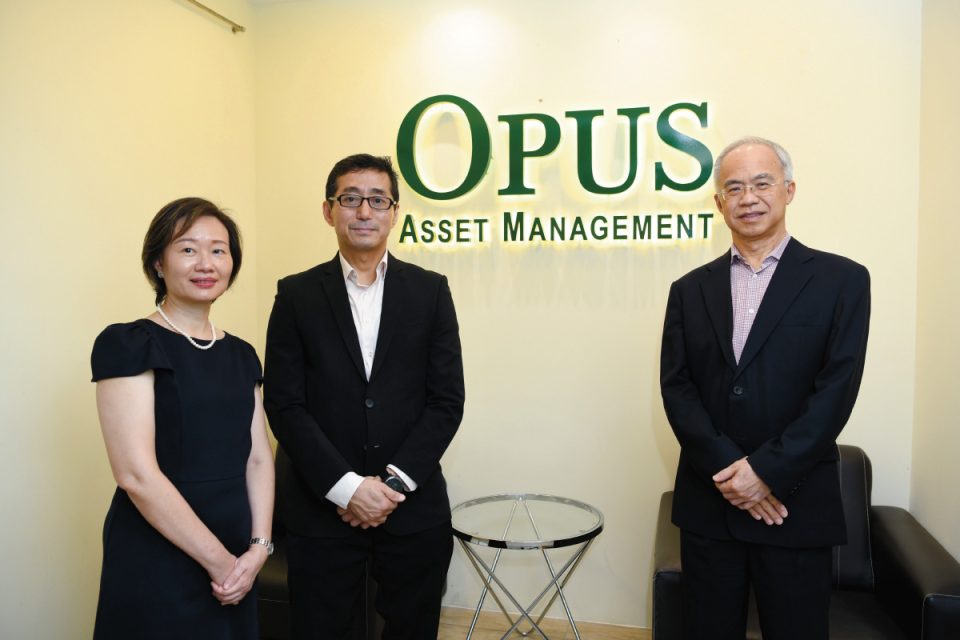
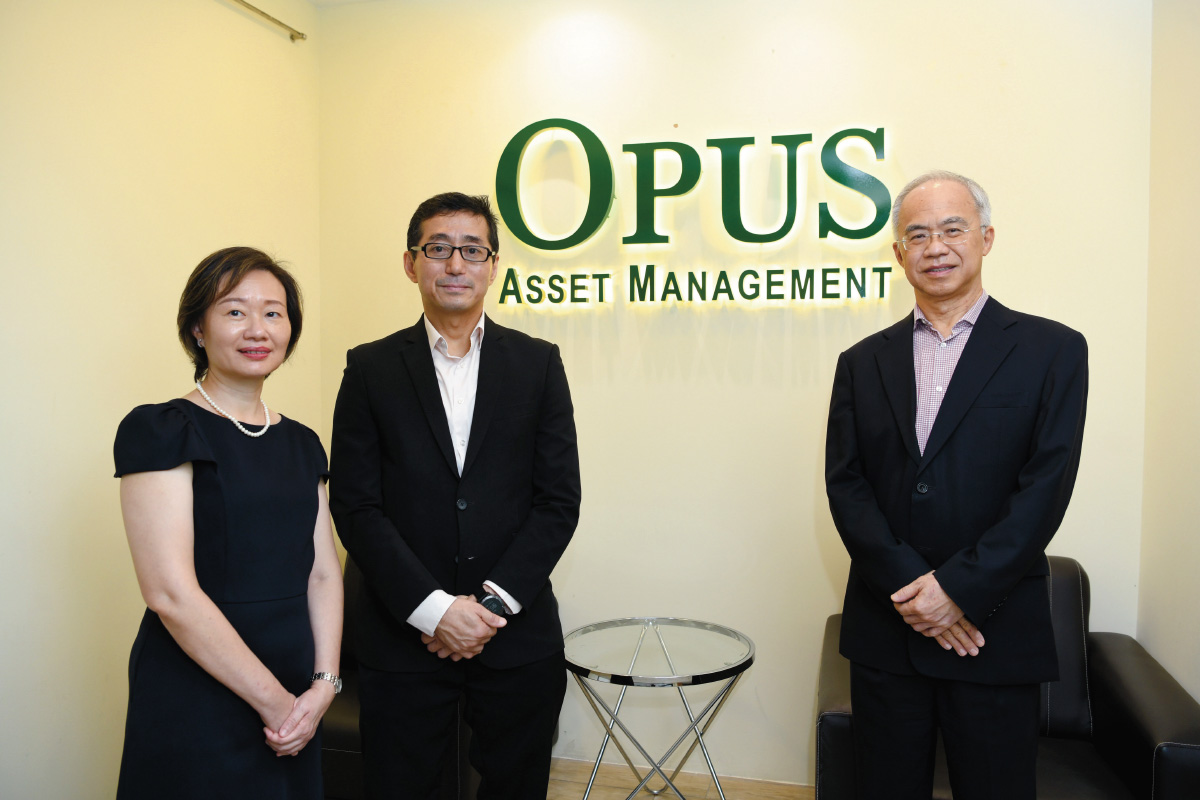

Siaw: The objective is not to abandon fixed income, but to rethink what resilience means in modern portfolio construction. For clients, this means portfolios that are designed not just around yield or duration, but around resilience across different market environments.
For over two decades, OpusAsset has built a reputation as a fixed income specialist, managing bond and income-focused portfolios for institutions, corporates and high-net-worth clients in Malaysia.
Now, the independent Malaysian fund manager is venturing into an area of global finance that is still largely unfamiliar to local investors.
In November 2025, OpusAsset launched the Opus Life Settlement Fund 1 (“Fund”), a wholesale feeder fund that invests in the One Life Settlement Limited Partnership (“Target Fund”) managed by UK-based SL Investment Management Ltd (“SL Investment”).
As a pioneering adopter of an open-ended life settlement wholesale fund in Malaysia, the Fund marks a strategic expansion of OpusAsset’s investment approach beyond traditional fixed income into alternative assets with fixed income-like characteristics.
The launch comes at a time when investors are increasingly seeking assets that can thrive in a world of increasing market uncertainty. The notion that bonds and equities offset each other during stressful times is increasingly being challenged.
“What has evolved is how we build portfolios around that foundation in response to a changing investment landscape,” says group managing director Siaw Wei Tang.
“‘Fixed Income Plus reflects a broader and more pragmatic approach to portfolio offerings. While high-quality bonds remain core, we now complement them with strategies that introduce additional sources of return and diversification, especially where traditional correlations have weakened.”
From fixed income to Fixed Income Plus
Life settlements allow policyholders to sell their policies at significantly above the surrender value, while enabling investors to earn returns from mortality-driven cash flows. The US is currently the only country in the world with a developed and consistently enforced life settlement regulatory regime.
Life insurance policies are legally recognised as transferable property in the US (Grigsby v. Russell, US Supreme Court, 1911). This enables policyholders, typically seniors aged 65 and above, with larger policies of more than US$100,000 to sell their policies to third-party buyers, often institutional investors or funds, for an amount above the surrender value but lower than the eventual payout.
The buyer assumes ownership, continues premium payments and receives the payout when the policy matures or the insured person passes away. In essence, it transforms a typically illiquid insurance policy into immediate cash for retirees, while giving investors exposure to a return stream that has low correlation with broader market conditions.
“Globally, life settlements have developed into an established institutional asset class supported by strong structural and regulatory foundations,” says Raymond Tang, adviser to OpusAsset.
“Ageing demographics, rising healthcare costs and underprepared retirement savings continue to create a steady supply of policies, while policy proceeds are backed by regulated and highly rated US insurance companies, adding an important layer of financial strength to the asset class.”
Despite its niche nature, life settlements sit atop a vast underlying market. The US life insurance industry represents US$22 trillion1 in coverage, while an estimated 88%2 of universal life policies lapse or are surrendered before maturity.
Underpinned by robust regulation, oversight and industry standards, the life settlement market in the US has evolved into a credible and institutionally accepted alternative investment with broad global investor participation.
The average age of policyholders in the Target Fund is about 80 years old. Many sell their policies because they need cash flow or premiums have become too expensive in retirement, while others no longer require the insurance coverage because their children are financially independent.
“In the US, healthcare costs have gone through the roof,” says Raymond. “A lot of these policyholders are baby boomers who bought [life insurance] policies for their children or spouses when they were working in case anything happened to them. But when they are 70 or 80, the financial need for the policy no longer applies, so they might as well cash out.”
A return stream outside traditional market cycles
For OpusAsset, the attraction lies less in the novelty of the structure and more in its behaviour relative to traditional assets. Unlike these assets, the performance of life settlements is not driven by traditional market factors.
“The economic investment value of a life settlement is driven primarily by the life expectancy of the insured as this determines both the expected duration of the premium payments and the anticipated timing of the policy’s maturity. Returns are shaped by how policies mature over time relative to these assumptions, rather than by earnings growth or yield curves,” Raymond explains.
That distinction has become increasingly relevant amid heightened uncertainty and volatility across global financial markets.
Traditionally, investors could rely on bonds and equities for a relatively balanced mix of growth and stability in their portfolios. But in recent years, market conditions have become less stable and harder to navigate.
“Since 2020 and the post-pandemic era, the diversification benefits between bonds and equities have weakened as both asset classes tended to be sold off concurrently in response to rising market stress and heightened volatility. Portfolio construction discussions are increasingly focused on building resilient, low-correlation asset classes that are fundamentally independent of traditional market dynamics,” says OpusAsset group head of investment Ng Lee Peng.
Thus, life settlements are being positioned not as a replacement for traditional assets, but as a diversifier. “Alternative investments add value when they introduce fundamentally different return drivers, complementing rather than replacing traditional assets,” says Siaw.
“Industry and academic research show that alternative investments like life settlements are driven by actuarial outcomes rather than economic growth, interest rates or market sentiment, resulting in structurally low correlation to traditional asset classes,” he adds.
Life settlement strategies have historically exhibited lower volatility than global equities while generating double-digit annualised returns over the long term, according to data presented by OpusAsset. SL Investment’s life settlement portfolio has historically delivered annualised returns of about 11% to 14% over the past decade.

The actuarial engine behind the strategy
OpusAsset says the key to successful performance lies in the underwriting discipline.
SL Investment, the manager of the underlying assets, specialises solely in life settlement investments and has been involved in the asset class since 1990. The firm analyses each policy individually with over 140 check points, including reviewing medical records, policy structures, insurer strength and projected premium obligations, before deciding whether to acquire them.
“This reflects a strong depth of analytical experience with a 100% maturity collection track record over the past 30 years,” says Raymond.
As at Jan 31, 2026, the Target Fund comprises 510 policies issued by 77 US insurers, most of which carry a financial strength rating in the A to A++ range.
Designed for sophisticated investors, with a minimum investment of US$25,000 or RM100,000 depending on the share class, the Fund targets an annual return of 10% in US dollar terms and a target payout rate of 8% through semi-annual income distribution. While not guaranteed, the returns are driven by actuarial factors rather than market sentiment.
Independent manager broadens playbook
Founded in 2005, OpusAsset is the fund management brand of Opus Asset Management Sdn Bhd and Opus Islamic Asset Management Sdn Bhd, with over RM10 billion in assets under management across unit trusts, wholesale funds and discretionary mandates. OpusAsset remains independently owned, unlike many bank-affiliated fund managers.
“We are professionals and also 100% locally owned. We are not owned by any financial institutions,” says Siaw.
In an era when traditional diversification assumptions are increasingly being questioned, OpusAsset believes that investors may need to look beyond conventional asset classes for stability.
As Siaw puts it, the objective is not to abandon fixed income, but to rethink what resilience means in modern portfolio construction. “For clients, this means portfolios are designed not just around yield or duration, but around resilience across different market environments,” he says.
Learn more about the Fund at www.opusasset.com or contact [email protected].
1. ACLI Life Insurers Fact Book 2024
2. Gottlieb, Daniel; Smetters, Kent. “Lapse Based Insurance.” Perspectives on Modernizing Insurance Regulation (Committee on Banking, Housing, and Urban Affairs, US Senate).
This content has not been reviewed by the Securities Commission Malaysia. It is intended for informational purposes only and should not be construed as an offer document or an offer or solicitation to buy or sell any investments. Information provided herein may include data or opinion that has been obtained from, or is based on, sources believed to be reliable, but is not guaranteed as to the accuracy or completeness of the information. Past performance is not indicative of future performance. For more information, kindly visit our website at www.opusasset.com.