
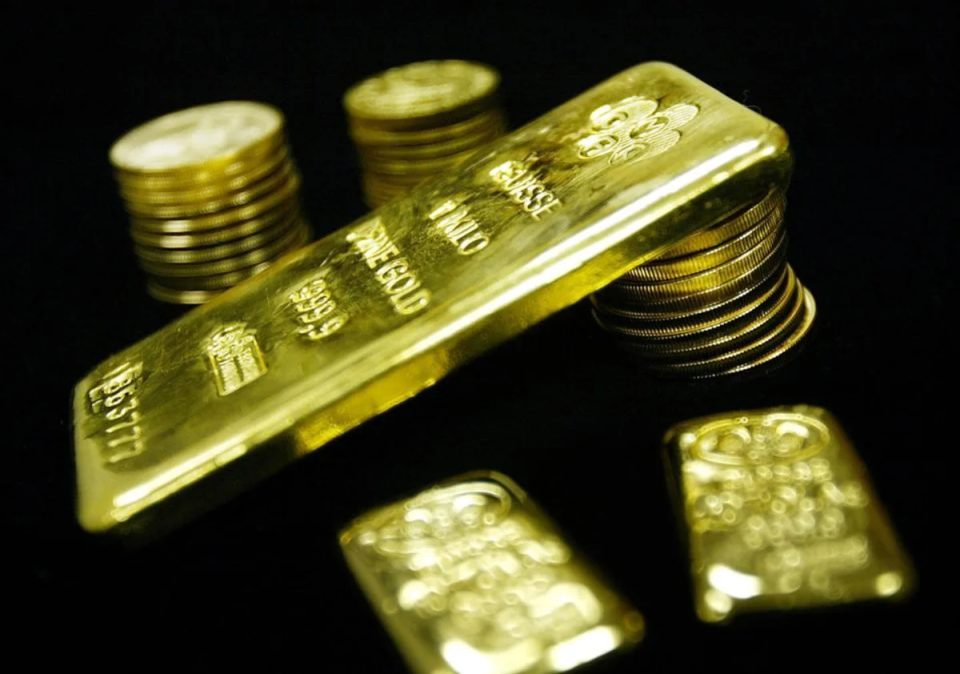

Gold doesn’t move up or down. Gold’s movements signal the direction of the currencies in which it’s priced.
Gold analysis is analysis of other things. That’s why markets happened upon the yellow metal globally many centuries ago. Due to unique stock/flow characteristics, it’s the commodity least likely to be influenced by other things, which means it’s ideal as a currency measure.
Money exists to facilitate exchange of products for products, and since producers want equal value in return for their production, money defined in terms of gold facilitates trade in ideal fashion. Gold’s constancy is its genius as a low-entropy definer of money.
So, why is it in decline right now, as in why is the dollar moving upward? Before getting to an entirely speculative answer, it’s useful to address one myth about gold that won’t die: gold is supposed to rise in response to rising market prices that all-too-many mistake for “inflation.” Or vice versa. Nonsense.
Gold once again doesn’t move. If it’s rising, as in the dollar is falling, that’s the inflation. Market prices are at best the effect of inflation. To say gold must rise in response to rising prices is like saying wet sidewalks must cause the rain. No rain is rain, and inflation is a shrinkage of the unit. Wet sidewalks and rising prices are the effect.
Which means it’s perfectly normal for gold to be in decline as “inflation pressures” rooted in higher market prices reveal themselves. For one, markets are looking ahead. Second, market prices can rise and fall for all manner of reasons that have nothing to do with inflation. Third, a rising price signals a falling price. Economics is about tradeoffs.
Why the gold-price decline? One speculation is that forward looking markets corrected the dollar downward (rising gold) on the expectation of much worse about what would happen in Iran, or for that matter simply re-priced the dollar based on a portion of worst-case scenarios born of conflict with Iran. This could include a world war in worst case, a nuking of Iran, Israel or both in another worst case, or possibly a substantial loss of American lives in a drawn-out conflict that, for being lengthy and bloody, would perhaps reflect in the dollar.
Without getting into the good or bad of the war, markets price possibilities and probabilities to varying degrees. The worst-case scenarios described have so far not come about, and this has arguably been good for the dollar. Call the decline in the price of gold a dollar relief rally.