
By Nic Lees. Dr Lees is a senior lecturer in agribusiness management at Lincoln University.
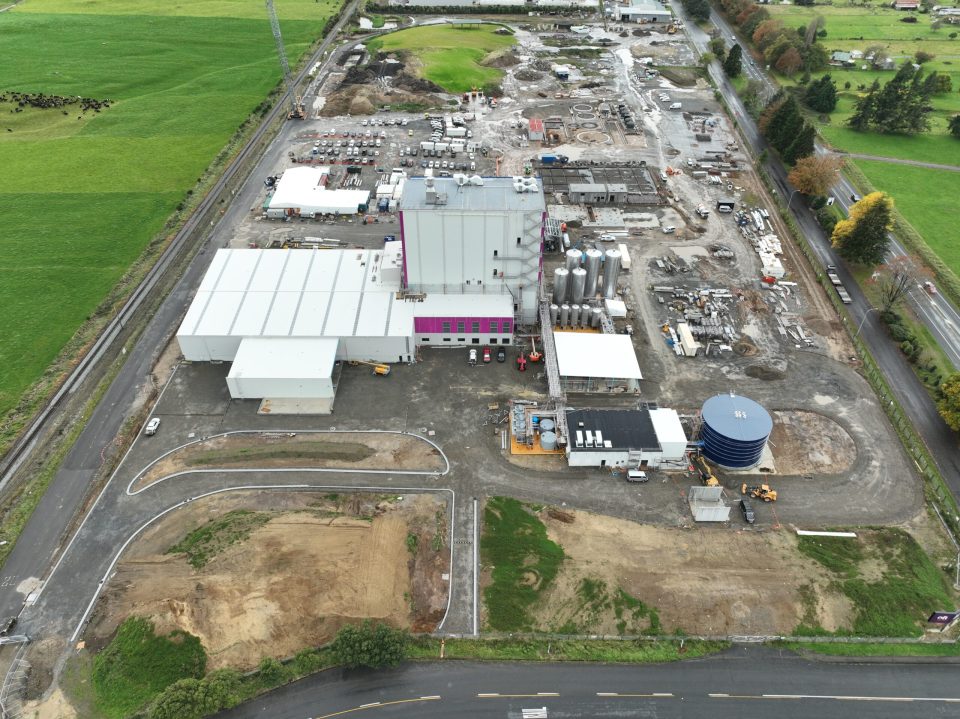
Olam Food Ingredients’ second dryer at Tokoroa could be seen as another vote of confidence in New Zealand dairy.
Yes, but it also exposes a deeper tension.
It is a reminder that some of the most valuable parts of NZ dairy are increasingly being owned, branded and controlled offshore.
Fonterra’s retreat from branded consumer dairy makes that shift harder to ignore. The co-operative has chosen to focus on ingredients and foodservice, while more of NZ’s consumer dairy brands are being taken over by foreign owners.
The new Tokoroa dryer is aimed at milk protein concentrate, a higher-value ingredient used in sports nutrition, beverages and medical nutrition. This is not just another whole milk powder story. It is part of a much bigger shift from commodity dairy to specialised nutrition.
That is where the money is moving, and the money is not mainly local.
Olam is Singapore-based. Abbott is based in the United States. Yili and Bright Dairy are Chinese. Danone and Lactalis are French. Goodman Fielder is owned by Singapore-based Wilmar International. Froneri, which owns Tip Top, is a global ice-cream company.
Together, they show how much of NZ’s dairy value chain now sits in foreign hands.
Yili owns Westland Milk Products and Oceania Dairy, giving it a major South Canterbury processing base and an established West Coast dairy business with long-standing farmer supply relationships.
Bright Dairy is the majority shareholder in Synlait, a company built around the promise that NZ could move beyond commodity powder into infant formula and advanced nutrition.
Abbott’s purchase of Synlait’s North Island assets makes the same point from another angle. Abbott is not a traditional dairy processor. It is a global healthcare and nutrition company interested in Pōkeno and Auckland because they offer trusted manufacturing, regulatory approvals, food safety systems, and the ability to produce premium nutrition products.
Danone’s Nutricia operations also connect NZ milk and the country’s food reputation to global infant formula brands.
Lactalis’s purchase of Fonterra’s Mainland Group moved familiar names such as Anchor, Mainland and Anlene into the hands of the world’s largest dairy company. Goodman Fielder controls Meadow Fresh, Puhoi Valley and Tararua, while Froneri owns Tip Top.
Foreign ownership is not just about export plants and milk powder. It now extends into the domestic dairy brands New Zealanders buy every week.
This is the part of the story farmers should care about.
NZ still produces the milk. Farmers bear the costs of land, animals, labour, compliance, weather, emissions and water-quality expectations. Rural communities provide the workforce and infrastructure. The national reputation helps sell the product.
But more of the margin is being chased downstream, beyond the farmgate, in proteins, infant nutrition, medical nutrition, brands, formulations, customer contracts and market access.
Olam’s Tokoroa expansion fits this pattern. It gives south Waikato farmers another milk buyer, which is positive. More competition for milk is usually good for suppliers. The plant brings investment and jobs to the region. If Waikato milk can be turned into higher-value protein ingredients, that should be good news.
But the harder question is whether farmers will capture much of that extra value.
Foreign investment can bring capital, technology, jobs, export access and competition in the milk market. It can rescue struggling assets and open doors that local companies cannot open on their own.
But foreign investment also changes where power sits.
The company that owns the brand, the formulation, the customer contract and the route to market usually captures the most attractive margin.
The farmer supplies the essential raw material, but may still be paid largely as a commodity supplier.
NZ dairy is not being hollowed out. It is still one of the world’s strongest dairy sectors. But it is being reshaped. The farm remains local. The processing is increasingly international. The brands are increasingly foreign-owned. The customer relationships are increasingly offshore.
Olam’s second dryer at Tokoroa should therefore be seen as more than just a good-news investment story.
It is a signpost.
The future of NZ dairy is being built around specialised nutrition, high-value proteins and global branded channels. The question is whether NZ farmers will be genuine beneficiaries of that future, or simply the milk suppliers behind someone else’s brand.
If NZ milk is valuable enough for Olam, Abbott, Yili, Bright Dairy, Danone, Lactalis, Goodman Fielder and Froneri to invest in, farmers are entitled to ask a deeper question.
Can we create more value for NZ dairy, or are we just providing raw material for global companies to take that value elsewhere?