
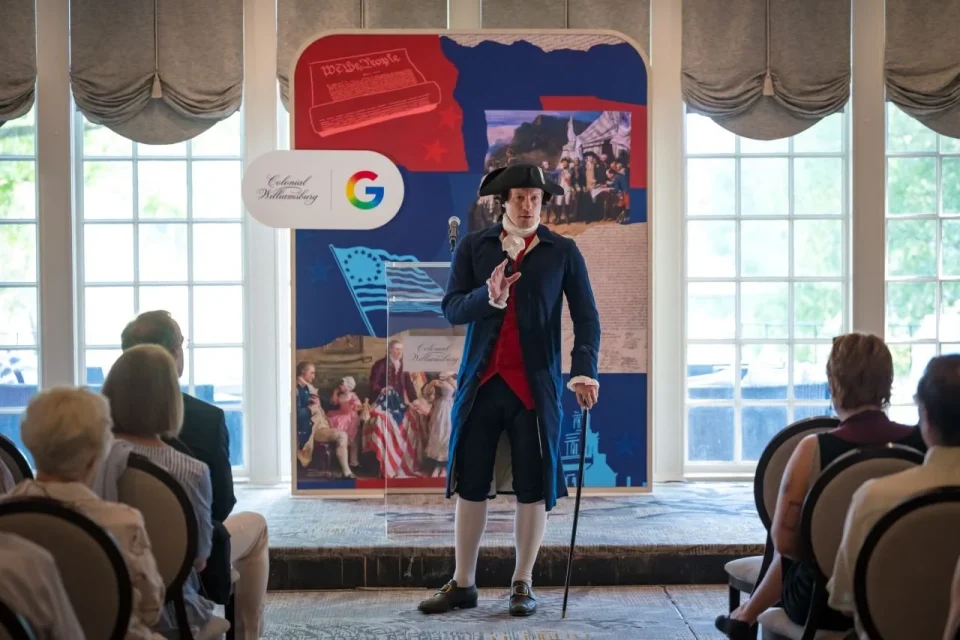
Google Arts & Culture and The Colonial Williamsburg Foundation have opened a digital history hub containing more than 3,500 assets connected with daily life, politics, education, trades, and social history in 18th-century Virginia.
Released on June 22 to coincide with the 250th anniversary of the founding of the United States, the collection includes more than 2,000 objects held by Colonial Williamsburg’s museums, newly captured Street View imagery, virtual guided tours, and eight detailed 3D models of historic sites and artifacts.
The project also includes a dedicated NotebookLM created with Colonial Williamsburg historians from more than 150 sources. The material includes 18th-century documents, artifacts, research articles, and content written by the Foundation’s subject specialists.
The digital resources are available through Google Arts & Culture and are intended for students, teachers, researchers, and members of the public around the world. Users can access the collection online or through the free Google Arts & Culture app on iOS and Android.
The collection covers the American Revolution, colonial government, historic trades, archaeology, conservation, slavery, Indigenous history, and the people who lived and worked in Williamsburg.
Collection combines museum objects with social history
The hub brings together digital images, historical accounts, museum objects, and interactive material covering Williamsburg’s role in the American Revolution.
Users can examine how debates about independence developed in Virginia’s colonial capital and how political divisions affected people living in the city. The collection includes material connected with figures such as Thomas Jefferson and Patrick Henry, alongside accounts of Williamsburg’s enslaved residents and Indigenous communities.
It also covers the crafts and occupations that supported the colonial economy, including shoemaking, silversmithing, and printing.
Everyday objects appear alongside documents associated with major political developments. The available material ranges from the Declaration of Independence to household and sanitation items used by people living in Williamsburg.
Google Arts & Culture’s large-scale data program was used to organize the digital assets. The collection also provides access to work taking place behind the scenes at Colonial Williamsburg, including archaeology, artifact conservation, historic building maintenance, reconstructed gardens, and the care of rare animal breeds.
These resources provide additional material for lessons that connect political history with work, family life, the built environment, and the experiences of people whose perspectives have often received less attention in accounts of the period.
Street View and 3D models open historic sites remotely
New Street View imagery allows users to move through parts of Colonial Williamsburg’s historic area without visiting Virginia.
Virtual guided tours include the Raleigh Tavern, a meeting place used by figures involved in the independence movement, and the Williamsburg Bray School, an 18th-century school attended by enslaved and free Black children.
The collection also includes the local courthouse and other sites linked with government, trade, education, and community life.
Eight 3D models allow users to inspect selected buildings and objects from multiple angles. Google and Colonial Williamsburg have not published technical details about the models, including their resolution, accessibility functions, or compatibility with classroom learning platforms.
The virtual material could support history teaching where travel to Williamsburg is not possible. However, the announcement does not include ready-made lesson plans, specified age ranges, assessment activities, or evidence showing how the resources affect student understanding.
Schools and teachers will therefore need to determine how the collection fits their curriculum, local historical context, and classroom technology.
NotebookLM uses more than 150 Colonial Williamsburg sources
The project’s NotebookLM allows users to ask questions and investigate material drawn from a collection assembled with Colonial Williamsburg historians.
Its source library contains more than 150 items, including original documents and artifacts from the 18th century, articles from Colonial Williamsburg’s Trend & Tradition publication, and research produced by subject experts.
The tool is intended to support questions about the debates surrounding independence, the people involved, and the political ideas that influenced the formation of the United States.
Users can also examine how residents of colonial Virginia understood the British government, the independence movement, and the system of government that followed.
NotebookLM generates responses from the uploaded source collection rather than searching the wider internet. The announcement does not explain how its answers were evaluated by historians, whether citations were checked before release, or what safeguards are in place for questions involving contested historical interpretations.
Students and teachers will still need to inspect the cited source material and distinguish between primary documents, later scholarship, institutional interpretation, and AI-generated summaries.
The Colonial Williamsburg digital hub is now live through Google Arts & Culture, with the Street View tours, 3D models, museum collection, and NotebookLM available as part of the release.