
KeyInvest Managed Investments launches with a multi-manager private credit platform forged from three years of internal capital deployment, radical manager selectivity, and look-through transparency built to institutional standards.
The Australian private credit market has, over the past four years, undergone an expansion that has reshaped the investment landscape.
Funds under management in the asset class have grown from approximately $130 billion at the end of 2021 to $225 billion by the end of 2025, reflecting both a structural shift in credit intermediation and a surge in institutional and wholesale demand for yield with defensive characteristics.
With that growth, however, has come a proliferation of managers, products, and structures of widely varying quality. Into this environment, KeyInvest Managed Investments (KIMI) has entered with a proposition built not on marketing narrative but on institutional process.
KIMI is the investment management platform of KeyInvest, an APRA-regulated member-owned mutual friendly society that traces its origins to Adelaide in 1878.
Serving approximately 50,000 members and operating under the Life Insurance Act (1995), KeyInvest is not a new entrant to capital management. It is, rather, a 147-year-old institution that has navigated every major financial cycle of the modern era, now formally opening its investment capabilities to financial advisers, asset managers, and wholesale investors.
The Institutional Foundation
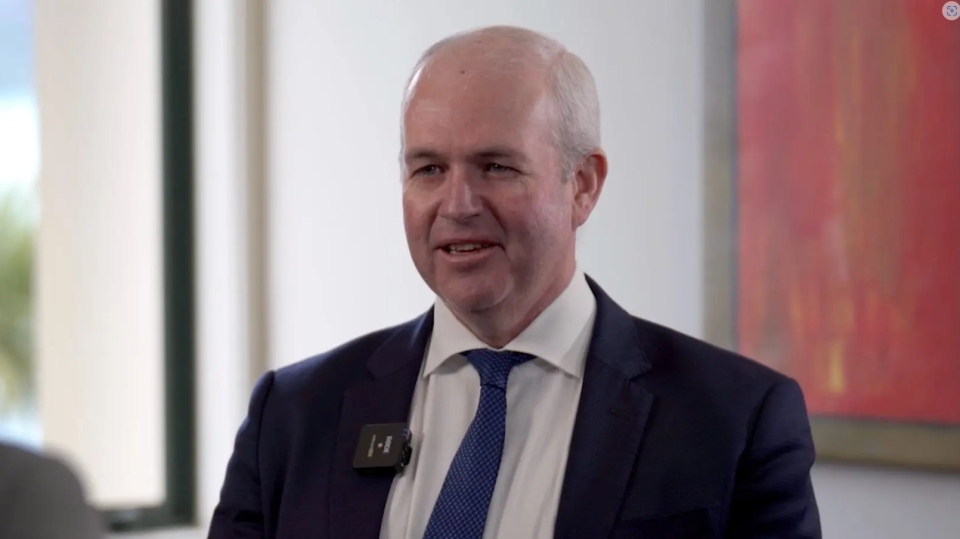
KeyInvest Managing Director and CEO Craig Brooke notes that since 1878 the organisation has invested through world wars, economic depressions, financial crises, and periods of extraordinary economic expansion, situating KIMI within that historical context explicitly.
“Across those cycles markets have changed significantly, but certain principles about successful investing remain consistent. Some of the most attractive opportunities exist in areas shaped by structural forces such as regulation, capital constraints, and complexity, and that is precisely where KIMI is focused.”
The reference to structural forces is not incidental. Private credit, as an asset class, derives much of its return premium from exactly those dynamics: regulatory constraints limiting bank balance sheet activity, information asymmetries that reward specialised due diligence, and illiquidity premiums that compensate patient capital.
KIMI’s thesis is that excess returns in this space accrue not to those with the broadest market exposure, but to those with the most rigorous selection discipline.
Internal Track Record Precedes External Offering
A notable feature of KIMI’s launch is the existence of a substantive internal performance record prior to any external capital raise.
Since 2022, KeyInvest’s Funeral Bond has allocated up to 20% of its capital-guaranteed portfolio into the same underlying private credit strategy that anchors KIMI’s first fund. That strategy has delivered market-leading returns across three consecutive years.
The deployment of an institution’s own members’ capital into a strategy, under the governance and risk management constraints of an APRA-regulated entity, represents a materially different standard of pre-launch validation than the typical track record of a newly established manager. KeyInvest has, in effect, run a three-year pilot inside one of its most risk-sensitive vehicles.
“We spent three years investing our own members’ capital in this strategy before inviting others to participate,” Brooke says. “That is what genuine alignment looks like.”
Manager Selection: A Process of Elimination
The investment architecture of KIMI’s inaugural strategy, the KeyInvest Senior Debt Income Fund, is that of a diversified multi-manager portfolio. KIMI conducted a review of more than 300 Australian private credit managers to construct it. Twelve were selected.
The selection rate of approximately 4% is not a function of market scarcity. It reflects the application of KIMI’s governance, scale, and track record criteria to a market that has expanded rapidly but unevenly. Many newer entrants, and some larger ones, did not meet the threshold.
KIMI Executive Director Ciaran McAssey frames the rationale for the multi-manager structure clearly.
“By combining best-in-breed managers into a single diversified portfolio, we unlock sources of alpha that a single-manager approach simply cannot access,” he says. “But that only works if you are prepared to be ruthless in who makes the cut. The majority of managers we assessed did not meet our standards, and that discipline is what protects investors.”
The argument here is that manager selection, rather than asset class exposure, is the primary driver of risk-adjusted returns in private credit at this stage of the market cycle.
As the asset class has grown and capital has chased yield, the dispersion between manager outcomes has likely increased. The premium for disciplined selection, on this view, is now larger than the premium for simple allocation.
Transparency as a Structural Feature
One of the more significant differentiators KIMI brings to the market concerns portfolio transparency. The opacity of private credit structures has become a known concern among asset consultants and institutional investors.
In a multi-manager, multi-borrower structure, the capacity to understand individual exposures at the deal level is both technically demanding and commercially sensitive.
KeyInvest Managed Investments has built its platform to address this directly. McAssey says the approach is intentional:
“Unlike many private credit offerings where underlying exposures remain largely opaque, KIMI has built the platform around institutional-grade transparency and portfolio look-through capabilities, allowing us to drill down to each individual deal for each of the managers, which should provide investors with greater confidence.”
For asset consultants and institutional allocators, this level of transparency has material implications for portfolio risk monitoring, concentration management, and ongoing manager assessment.
Additionally, it aligns with the direction of regulatory and governance expectations, which have consistently moved towards greater disclosure standards for alternative asset structures.
The KeyInvest Senior Debt Income Fund
The first strategy under KIMI’s Unlock Series targets returns of RBA Cash Rate plus 5% per annum (net of fees and costs) through investment in senior secured loans backed by first-ranking mortgages over real assets, including property and infrastructure.
The fund distributes income monthly and is currently available to wholesale clients under the Corporations Act 2001 (Cth).
Asset consultant Atchison has been appointed as investment adviser, providing independent expertise in manager research, portfolio construction, and ongoing oversight. The appointment reflects KIMI’s commitment to independent governance alongside internal process rigour.
Two further strategies are planned under the Unlock Series: an Australian Small Companies fund and a Global Small Companies fund. This progression from private credit into equities, specifically in the small-cap segment, suggests KIMI’s longer-term ambition is to operate as a diversified specialist platform rather than a single-asset-class vehicle.
The fund is operated through KeyInvest Managed Investments Pty Ltd with KeyInvest Ltd as parent entity and product issuer. A registered retail structure is under consideration for future access.
Implications for Allocators
For institutional investors, asset consultants, and wealth managers assessing private credit allocations, KIMI presents a number of features warranting close attention.
The combination of an internal three-year performance record in a regulated entity, a 4% manager selection rate from a comprehensive peer universe, look-through transparency to individual deal level, and independent consultant oversight represents a governance stack that compares favourably with much of what the market currently offers.