
Shell is preparing to sell its offshore wind farm portfolio in a deal that could be worth more than $1 billion, according to a Bloomberg News report. The company has reportedly hired advisers from Rothschild & Co. and PJT Partners to explore a sale process. Marketing of the assets could begin later in 2026, with a deal potentially closing in 2027.
If completed, the transaction would mark one of Shell’s largest renewable energy divestments in recent years. It would also add to a growing list of clean energy assets the company has reviewed or exited under Chief Executive Officer Wael Sawan.
The reported move follows Shell’s review of Sprng Energy, its India-based renewable power business acquired in 2022 for $1.55 billion. The company has also stepped back from some offshore wind developments and reduced investments in parts of its power business.
Together, these actions point to a broader strategy shift. Shell is becoming more selective about where it invests as it seeks higher returns while continuing to pursue long-term climate goals.
Why Shell Is Reassessing Parts of Its Renewables Portfolio
Since taking over as CEO in 2023, Sawan has focused on improving profitability and shareholder returns.
Shell generated $23.7 billion in adjusted earnings in 2025 and about $54 billion in cash flow from operations. The company plans to return 40% to 50% of cash flow from operations to shareholders through dividends and share buybacks.
This financial focus has influenced investment decisions across the business. While Shell continues to support the energy transition, management has emphasized that future projects must compete for capital and deliver attractive returns.
That approach comes as renewable energy developers face rising costs. Higher interest rates, inflation, supply chain disruptions, and equipment shortages have increased project expenses across the wind sector.
Many offshore wind projects worldwide have faced delays, renegotiations, or cancellations in the past two years. This is because costs increased faster than expected.
Thus, many energy companies are now reassessing their renewable portfolios. These portfolios were created when borrowing costs were lower and government incentives were stronger.
Net Zero Remains the Goal—But the Route Is Changing
The reported sale does not mean Shell is abandoning its climate ambitions. The company continues to target becoming a net-zero emissions energy business by 2050.
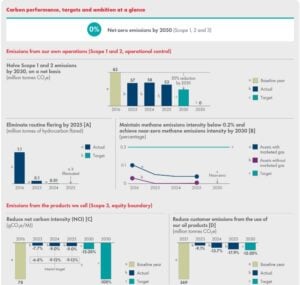
- The oil major also aims to reduce the carbon intensity of the energy products it sells by 15% to 20% by 2030, compared with 2016 levels.
Shell measures progress using its Net Carbon Intensity (NCI) metric, which tracks emissions linked to the energy products customers use. According to the company’s latest reporting, Shell has reduced its NCI by roughly 6% to 7% since 2016. However, the challenge remains significant.
Shell’s total value-chain emissions remain around 1.1 billion metric tons of CO2 equivalent annually. More than 90% of those emissions come from customers using the fuels and energy products the company sells, known as Scope 3 emissions.
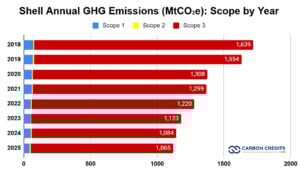
Like other major oil and gas companies, Shell faces the difficult task of lowering emissions while meeting global energy demand. The company keeps investing in lower-carbon areas. This includes biofuels, hydrogen, electric vehicle charging, carbon capture and storage (CCS), and renewable power.
- In 2025 alone, Shell invested approximately $5.6 billion in low-carbon energy solutions and transition-related businesses.
Beyond Wind: Where Shell Is Still Betting on Clean Energy
Although Shell is reviewing parts of its wind portfolio, it remains active across several clean energy markets. The Renewables and Energy Solutions division sold around 331 terawatt-hours (TWh) of electricity in 2025. This made it one of the biggest power marketers globally.
Shell also operates one of the world’s largest electric vehicle charging networks. The company has built a global network of more than 75,000 public charge points across Europe, North America, and Asia.
In addition, Shell continues to expand investments in hydrogen production, biofuels, and carbon management technologies. These businesses are expected to play a growing role as governments and companies work toward net-zero goals.
The company’s strategy seems less about owning big renewable energy portfolios. Instead, it focuses on energy trading, customer solutions, charging infrastructure, and other areas where Shell sees a competitive edge.
LNG, Energy Trading, and Stock Movement
As Shell reviews parts of its renewable portfolio, it is increasing its focus on businesses where it sees stronger returns. One of those areas is liquefied natural gas (LNG).
Shell remains the world’s largest LNG trader and expects demand for the fuel to continue rising. According to the company’s latest LNG Outlook, global LNG demand could grow by as much as 60% by 2040.
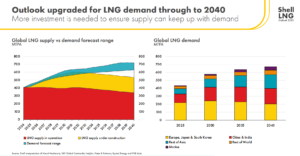
The company also remains a major player in energy trading, a business that has generated strong earnings during periods of market volatility. For Shell, these businesses offer a combination of scale, cash generation, and global reach.
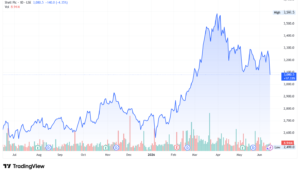
Investors have generally supported Shell’s strategy of focusing on higher-return businesses and stronger capital discipline. While the reported offshore wind sale did not trigger a major stock reaction on its own, Shell shares have performed well over the past year.
Shell stock (NYSE: SHEL) has gained roughly 15% to 26% over the last 12 months, depending on the measurement period, supported by strong cash generation, share buybacks, and earnings from its LNG and trading businesses.
However, the stock has recently pulled back from its 52-week high amid broader market volatility and uncertainty in energy markets. As of mid-June 2026, Shell shares were trading about 15% to 18% below their recent peak.
Offshore Wind Remains a High-Growth Market
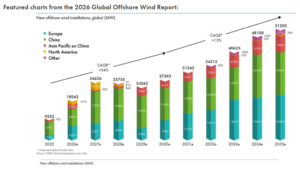
Shell’s reported exit comes even as offshore wind continues to expand globally. The Global Wind Energy Council (GWEC) reports that global offshore wind capacity hit about 83 gigawatts (GW) by the end of 2024.
The industry is expected to continue growing rapidly. GWEC predicts that global offshore wind capacity may surpass 250 GW by 2030. This would be one of the fastest-growing areas in the energy transition.
Governments in Europe, Asia, and North America back offshore wind. It can produce a lot of electricity while keeping emissions low.
Offshore projects often benefit from stronger and more consistent wind speeds than land-based facilities. Individual projects can also generate enough electricity to power hundreds of thousands of homes.
However, growth has not come without challenges. Higher financing costs and supply chain pressures have increased development costs across the sector. Turbine manufacturers have also faced margin pressure as raw material and transportation costs have climbed.
These challenges have forced developers and investors to become more selective when evaluating projects.
The Bigger Message Behind Shell’s Renewable Retreat
If the reported offshore wind sale moves forward, it will likely be viewed as another sign that the energy transition is entering a more disciplined phase.
The shift is not necessarily about abandoning renewable energy. Instead, it reflects a growing focus on returns, capital efficiency, and strategic priorities.
Shell’s net-zero ambition remains in place. The company continues to invest billions of dollars in lower-carbon businesses and energy transition technologies. At the same time, it is directing more capital toward areas where management believes it can generate stronger financial performance.
The reported $1 billion offshore wind sale offers a clear glimpse into how one of the world’s largest energy companies is reshaping its strategy for the next phase of the energy transition.