
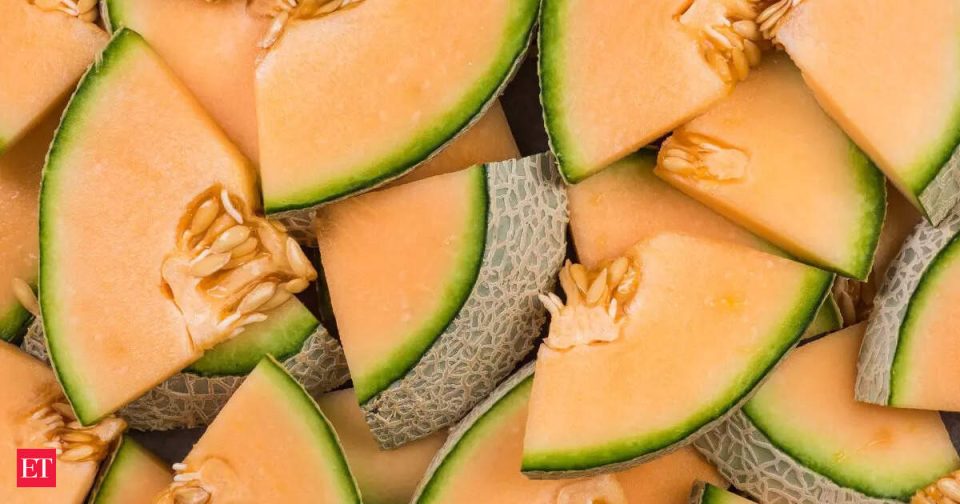
Just this week, a box of two Yubari melons from the mountainous city of Yubari in Hokkaido fetched a record 5.8 million yen (about Rs 35 lakh) at the season’s first auction in Sapporo, according to a report in The Japan Times. Japan’s fruits, often overshadowed globally by sushi, sakura and anime, are among the most expensive in the world. What makes them so pricey—and exquisitely tasty?
Also Read: India’s kitchens turn into mini gyms as protein orders soar 150%
PASSION FRUITS
Kawasaki says the answer lies partly in economics and partly in obsession. Expensive labour and limited farmland constrain supply but, more importantly, Japanese growers focus on producing world-class fruit in taste, texture and appearance rather than maximising volume.
That philosophy becomes immediately visible inside stores like the fruit boutique Sembikiya. During a recent visit to its outlet in the upmarket locality of Ginza in Tokyo, melons from Shizuoka prefecture (costing up to Rs 9,000 apiece), mangoes from Miyazaki (Rs 16,000 apiece) and watermelons from Kumamoto prefecture ( Rs 10,000 apiece), were displayed like jewellery. A note beside a musk melon in the basement food hall of the Sembikiya at Matsuya said it had been cultivated using the “one branch, one fruit” method where farmers nurture a single melon per stem to concentrate sweetness and texture.

In Japan, fruit is not treated as an everyday commodity alone but also as an artisanal product. A single piece is expected to be visually flaw less symmetrical, evenly coloured and perfectly ripe. The emphasis on precision mirrors a broader culture of craftsmanship seen across Japanese industries, from ceramics to knife-making.
A part-time worker at Sembikiya Sohonten, the flagship store, in Matsuya’s food hall said there is a longstanding culture of taking fruit baskets to people recovering from illness, making fruit a symbol of health and care. Another theory around gifting fruit is practicality: homes in Japan are often compact, and the perishable nature of fruit can make it feel like a more thoughtful gift than objects that add clutter. She adds that to produce each piece perfectly in colour and size costs a lot of time and money which adds to the price.Also Read: PepsiCo new packaging to carry ‘No Artificial Flavours or Colours’ label
Historically, fruit has occupied a special place in Japanese gifting culture. Some accounts suggest the samurai once presented fruits to their seniors as offerings of respect and loyalty. Over time, department stores and specialty fruit houses refined that tradition into a premium retail experience.
Today, the culture extends beyond retail counters. At fruit parlours run by chains such as Takano Fruit Parlour and Sembikiya, locals and tourists line up for fruit sandwiches, parfaits and desserts built around seasonal produce. The fruits themselves become the attraction.
“It is part of targeting the premium segment,” says Kawasaki. “These brands select very specific and expensive fruits, wrap them and place them in wooden boxes and the price can be up to 10 times higher than that of normal fruits . These gifts are well appreciated.” Regional fruits, he adds, often become ambassadors of local identity. “Fruits become a topic of conversation to discover the locality they come from.”
LIMITED EXPORTS
Despite the high quality of Japanese fruits, exports remain limited.
Kawasaki says only a small share of Japan’s fruit production is exported because domestic demand for premium produce in cities such as Tokyo is already high. Maintaining freshness is another challenge. “These fruits are delicate and freshness is very important. They cannot survive long distances easily,” he says.
Protecting fruit varieties is a priority for the Japanese government. In recent years, there have been concerns around counterfeiting and illegal exports of seeds and saplings to recreate Japanese varieties overseas, potentially reducing Japan’s market advantage.
Currently, only a limited range of Japanese fruits, including apples, cherries and peaches, are permitted for export to India under quarantine arrangements. Kawasaki says JETRO’s earlier efforts to promote Japanese apples in India faced challenges, including high import duties and pricing sensitivity.
Japan is in discussions with India to expand the list of fruits and other agricultural products allowed into the country, but the progress is expected to take time due to quarantine constraints and ongoing bilateral negotiations.
“The discussion about quarantine between the Japanese and Indian governments naturally takes time,” says Kawasaki. “Even the fruits currently allowed are imported in very small quantities. As JETRO, we would like to increase this amount and work together with Japanese farmers and exporters on ways to further promote Japanese agricultural products in India”.