

“Talk to a lender, talk to a realtor and look at all the programs available,” she said. “You might be closer than you think.”
Demand for homes in Flagstaff will always be high. It’s one of the region’s most desirable places to live, with its mountain setting, outdoor lifestyle and strong sense of community. But that desirability comes at a cost, and for many first-time homebuyers, that cost is becoming harder to overcome.
“I feel bad especially for people who are keeping this town going. It’s becoming less realistic for people to own a home here,” said Lisa Paffrath, a longtime Flagstaff-based realtor with Better Homes & Gardens and 2025-26 President of the Arizona Association of Realtors. Paffrath says her passion is helping first-time buyers find a path into homeownership, even as the market grows more challenging.
One of the biggest hurdles is a simple one: there just aren’t enough homes available.
Before the pandemic, Flagstaff typically had between 800 and 1,000 homes on the market at any given time. Today, that number has dropped to fewer than 300. Of those, roughly 100 are priced above $1 million, which is far beyond the reach of most local buyers. As of April, the median price for a single-family home in Flagstaff sits at $705,000.
“It’s sad because the demand is there but we have such low inventory, it’s keeping demand high,” Paffrath said.
While homes are taking longer to sell than they did during the peak of the pandemic-era buying frenzy, sellers are still holding firm on price. Paffrath describes the current environment as a stabilized market, not clearly favoring buyers or sellers.
Homes are now typically on the market between 60 and 180 days, a noticeable shift from the rapid sales seen in recent years. Still, price flexibility remains limited.
“Ninety percent of homes sold in the last six months sold at listing price,” she said. “Sellers don’t budge. The whole idea right now is, ‘If you want that house, I’ll wait for the money.’”
High interest rates are adding another layer of difficulty, particularly for first-time buyers trying to make the numbers work. Earlier predictions that rates might dip below 6% have not materialized and broader economic pressures continue to keep borrowing costs elevated.
“If rates were lower, we’d see more movement,” Paffrath said. “But right now, affordability is still a major barrier.”
That slowdown has ripple effects beyond the housing market. Paffrath notes that when homes aren’t selling, it impacts a wide range of local industries, from contractors and flooring companies to furniture retailers and home improvement businesses.
“If more houses were available and selling, that money goes right back into the economy,” she said. “People remodel, they update, they invest in their homes, and that supports other local businesses.”
Despite the challenges, Paffrath emphasizes that it’s not all bad news, especially for first-time buyers who are willing to think beyond traditional assumptions. “There’s this belief that you have to put 20% down and that’s just not true anymore,” she said. “There are more options than people realize.”
Federal Housing Administration (FHA) loans, for example, allow buyers to purchase a home with as little as 3% down, often with more flexible credit requirements. Conventional loans can require as little as 5% down, while VA loans offer qualified veterans the opportunity to buy with no money down.
For buyers open to living outside Flagstaff, additional opportunities exist. U.S. Department of Agriculture (USDA) loans, designed to encourage homeownership in rural areas, also offer zero-down financing and more lenient credit standards.
Communities like Williams, about 30 minutes west of Flagstaff, or even Winslow, less than an hour away, can provide significantly more affordable options. In some cases, buyers may save $100,000 to $200,000 compared to Flagstaff prices, often with larger lots or acreage.
“There are trade-offs, like commuting or hauling water in some areas,” Paffrath said. “But for many people, it’s a way to get into a home when they otherwise couldn’t.”
Her advice to prospective buyers is simple: explore every option before assuming homeownership is out of reach. “Talk to a lender, talk to a realtor and look at all the programs available,” she said. “You might be closer than you think.”
In a market defined by limited inventory and persistent demand, creativity and flexibility may be the key to unlocking homeownership in Flagstaff. FBN
By Mary Marini Para, FBN
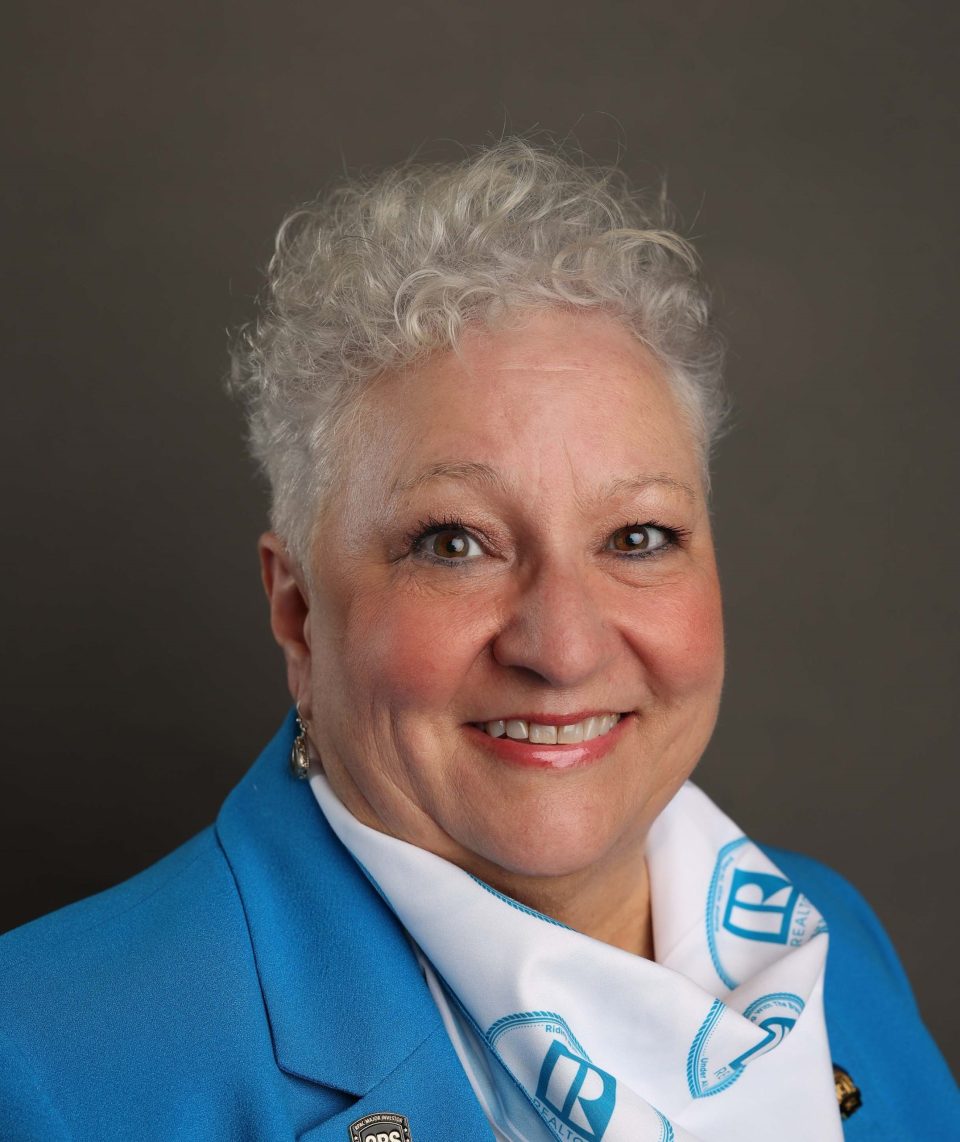
Courtesy Photo: Realtor Lisa Paffrath advises first-time buyers to think beyond conventional strategies.