Even in the depths of the recent crypto winter, stablecoins stood out as a beacon of optimism. Investors and startups hail them as a long-awaited killer application, and even crypto haters concede stablecoins are a superior technology for moving money around—especially following the 2025 passing of the GENIUS Act, which created a predictable regulatory environment for using the tokens. Still, if stablecoins are so great, why is it so hard to figure out who’s going to use them?
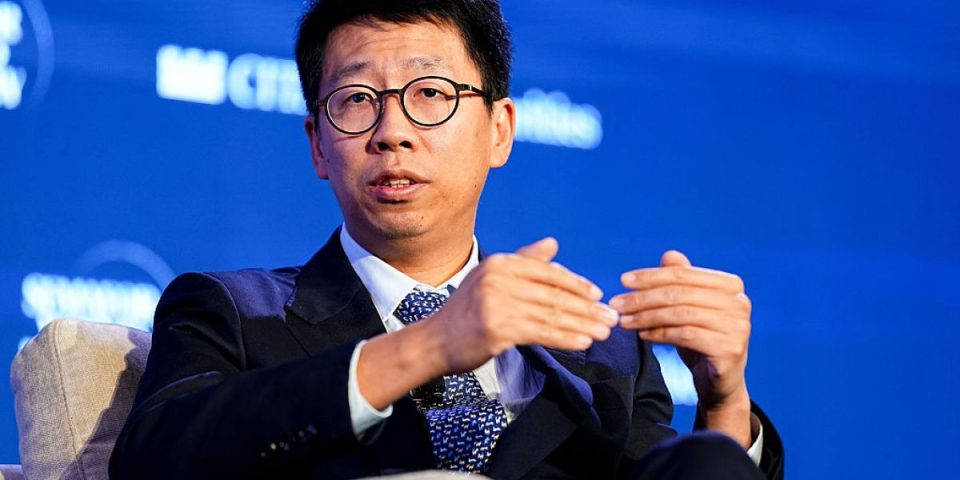
That question occurred to me last week while speaking with Dan Kim, who is VP of Product at the emerging fintech giant Airwallex. Prior to his current gig, Kim held a senior business development role at Coinbase, where he led efforts to persuade merchants to adopt stablecoins. It was a tough sell. Many times, Kim recalls, merchants had concerns about who would handle chargebacks, or simply balked at adding another layer of complexity to an already-complicated payment system. “I ran into a blocker for how to make stablecoins useful … It was a dead end,” Kim told me.
Kim may have a point. While stablecoins are useful in the world of crypto trading, I’ve never seen a need for them in my day-to-day life. If I need to send money to a friend or local business, Venmo and Zelle work just dandy, and even if Coinbase can stand up a robust ecosystem of stablecoin rewards—which it is trying to do with USDC—I can’t see a world where those rewards are more lucrative than what I accrue with my credit cards.
It’s a different story in some countries, of course. If you want proof, look at the $183 billion stablecoin business that Tether has built by catering to consumers in developing countries who want a reliable way to hold U.S. dollars. Meanwhile, in places like Northern Europe where many favor debit cards, it’s possible stablecoin rewards could play well. But here in North America, it’s hard to see why consumers will seek out stablecoins anytime soon.
That leaves cross-border business payments, which seem a natural use case for stablecoins, since they allow for much faster and more secure transfers than wires and other legacy technologies. But this too is more complicated than it looks. As Kim pointed out, big companies are well-poised to adopt stablecoins, but that might not be the case for the smaller vendors that serve them. In some markets, those vendors may face regulatory restrictions on accepting crypto or U.S. dollar payments and, in any case, they still need to operate in their country’s native currency.
In theory, these bottlenecks could be resolved by the adoption of various national stablecoins—a real stablecoin in Brazil, a Canadian dollar stablecoin in Canada, and so on. The reality though is that, even though these other tokens do exist, a whopping 98% of stablecoins out there are backed by U.S. dollars—and that’s been the case for years.
All of this is why Airwallex’s CEO, Jack Zhang, told me in 2024 that he was skeptical of stablecoins entirely, and figured that his company—which you can think of as a Wise for the B2B crowd—felt its existing business model was sufficient. That model revolves around acquiring financial licenses, and holding large pools of local currencies around the world, in order to provide companies with low-cost forex transfers.
A lot can change in two years, however, and Airwallex has started to change its tune on stablecoins. According to Kim, stablecoins are now so widespread that Airwallex has created a service focused on the last mile—namely, helping customers convert U.S. stablecoins into local currency.
Airwallex—which has taken a hefty investment from Visa—is also backing a startup called Metal that is building a blockchain designed to be compliant with all local financial regulations right out of the box. Finally, Kim noted that stablecoin use will grow in the coming era of agentic commerce, where bots will handle a portion of our shopping.
So what to make of all this? On one hand, Airwallex makes a compelling case that it is entering the stablecoin market at the right time, and with the right business model. On the other, it’s fair to ask if the company simply decided “better late than never.” In any case, Airwallex will be in tough competing on the last mile front with the likes of Rain and MoonPay. Meanwhile, agentic commerce is still in an early-adopter phase, and there is a long list of companies—including Coinbase, Robinhood, and Stripe—racing to figure it out first.
Long story short, all we really know right now is that it’s too soon to say how any of this will turn out.
Jeff John Roberts
jeff.roberts@fortune.com
@jeffjohnroberts
A note to readers: We will not be publishing on the Labor Day holiday, but will be back in your inbox on Sept. 14.
DECENTRALIZED NEWS
Bitcoin has enjoyed a fine two weeks, but Zcash and Solana have fared even better (Fortune, Fortune)
A new report reveals that the U.S. bank owned by the Trump family’s World Liberty Financial, which recently received an OCC license, is 49% owned a UAE sheikh (WSJ)
The rally has seen the value of Strategy’s $66 billion Bitcoin hoard jump above cost basis, leading Michael Saylor to hint a buy could be coming (Decrypt)
Nigel Mirage’s UK Reform party is distancing itself from the crypto sector in a bid to appear more professional (Bloomberg)
Stay classy, crypto: Memecoin slingers responded to beloved singer Dolly Parton’s death by issuing tokens and then promptly rugging the buyers (Fortune)
MEME O’ THE MOMENT