
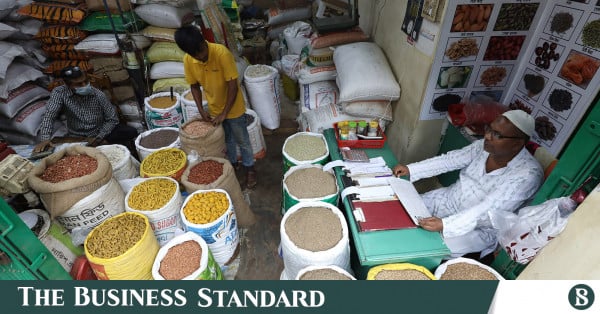
Key wholesale markets, including Khatunganj in Chattogram and Moulvibazar in Dhaka, are feeling the heat.
File Photo: Chattogram’s Khatunganj is the country’s largest wholesale market for consumer goods. Photo: Mohammad Minhaj Uddin/TBS
“>

File Photo: Chattogram’s Khatunganj is the country’s largest wholesale market for consumer goods. Photo: Mohammad Minhaj Uddin/TBS
Highlights:
- International supply chains disrupted for Mideast war and energy crisis
- Disrupted shipments, higher booking rates, and stronger dollar inflate import expenses
- Essential commodities at major wholesale hubs see increases in prices
- Transport costs surge by Tk10,000-20,000 per truck
- Traders warn of further price volatility if war and fuel shortages persist
The ongoing war in the Middle East, coupled with a deepening energy crisis, has pushed the prices of import-dependent daily essentials sharply upward at wholesale markets across Bangladesh as international supply chains face mounting pressure.
Key wholesale markets, including Khatunganj in Chattogram and Moulvibazar in Dhaka, are feeling the heat. Traders report that disrupted international shipments, rising booking rates, and the increased cost of the US dollar have significantly inflated import expenditures.

Infographics: TBS
“>

Infographics: TBS
According to market insiders, the full impact of global booking rate hikes has yet to be reflected in local markets, leading to fears of further price escalations in the coming weeks.
The edible oil and sugar markets have been significantly affected by the surge in transportation costs. Wholesale prices of loose soybean oil have increased by Tk600 per maund to Tk7,500, while super palm oil and palm oil have risen by Tk600 and Tk700 to Tk6,800 and Tk6,650, respectively.
Sugar prices have climbed by Tk200 per maund to Tk3,620, up from around Tk3,470 at the end of February. Wheat prices have also risen by Tk200 per maund to Tk1,350.
Spices have also seen price increases. Cumin has risen by Tk150 per kilogram to Tk720 from Tk570-580 in February. Cardamom has increased to Tk4,500 from Tk4,200 per kilogram, cinnamon to Tk450 from Tk355, and cloves to Tk1,320 from Tk1,300. Mace has risen to Tk3,000 from Tk2,800, while nutmeg has increased to 720 from Tk700 per kilogram.
Almonds, which were previously sold at Tk1,800 per kilogram, are now priced between Tk3,000 and Tk3,500. Iranian saffron has witnessed an exceptional surge, rising from Tk150 per gram to Tk500 per gram.
Indian sago has increased from Tk3,500 to Tk4,400 per maund, while Thai sago has risen from Tk4,200 to Tk6,000. Dried plums (alu bokhara) have jumped from Tk500 to Tk1,320 per kilogram, sweet varieties from Tk400 to Tk500, and raisins have increased by Tk200 to Tk820 per kilogram.
However, not all commodities have been equally affected. Onion, garlic and ginger prices have remained relatively stable due to steady supply. Wholesale prices stand at Tk20-27 per kilogram for local onions, Tk125 for Chinese garlic, Tk45-50 for local garlic, and Tk100 for ginger.
Traders say adequate supply has so far shielded these items from the adverse effects of the Mideast war.
Despite this stability, traders note a decline in trading activity. Mohammad Idris Mia, general secretary of the Hamidullah Mia Market Traders’ Association in Khatunganj, said sales have dropped by nearly 75%, while the effects of the fuel supply crisis are beginning to impact daily life.
Transport costs surge
Transport costs have risen abnormally, further compounding the price pressure. Moving goods from land ports to Khatunganj and onward to various districts now requires an additional Tk10,000 to Tk20,000 per truck. Traders report that the cost of transporting a 15-tonne truckload of lentils from Hili port has surged from Tk28,000 to Tk42,000.
Wholesalers in Dhaka have also confirmed higher logistics costs. Shafiul Islam, owner of Messrs Riya Traders in Moulvibazar, said transport fares for a 30-tonne consignment have increased by Tk500 to Tk1,000 per truck, adding directly to retail prices.
Traders warn that if the war persists, the pressure on supply chains and fuel costs will intensify, leading to further price hikes. They fear that essential commodity prices may rise even more ahead of Eid-ul-Adha, placing additional strain on consumers already grappling with high living costs.