
TradingKey – On July 12, Eastern Time, military conflicts erupted again between the United States and Iran, significantly heating up tensions in the Middle East. According to the latest reports, a container ship was attacked and caught fire near the Strait of Hormuz. Subsequently, the U.S. launched airstrikes against multiple military targets inside Iran, while Iran fired missiles and drones at several U.S. military-related facilities in the Middle East, further escalating the military confrontation between the two sides.
The clash occurred after a brief easing of relations between the U.S. and Iran. Previously, both sides had attempted to reduce the intensity of military conflicts through temporary arrangements and to promote the resumption of normal navigation in the Strait of Hormuz. However, the latest round of attacks has once again cast uncertainty over the prospects of relevant agreements and subsequent negotiations. Iran announced strengthened control over the strait, while the U.S. emphasized that commercial vessels could still pass through, though the actual number of ships transiting the strait has decreased significantly.
Influenced by rising geopolitical risks, international oil prices opened significantly higher during Monday’s Asian trading session. As of the early Asian market, WTI ( USOIL) crude oil rose by over 4%, peaking at $74.66 during intraday trading; Brent crude rose by over 5%, peaking at $79.55 during intraday trading.
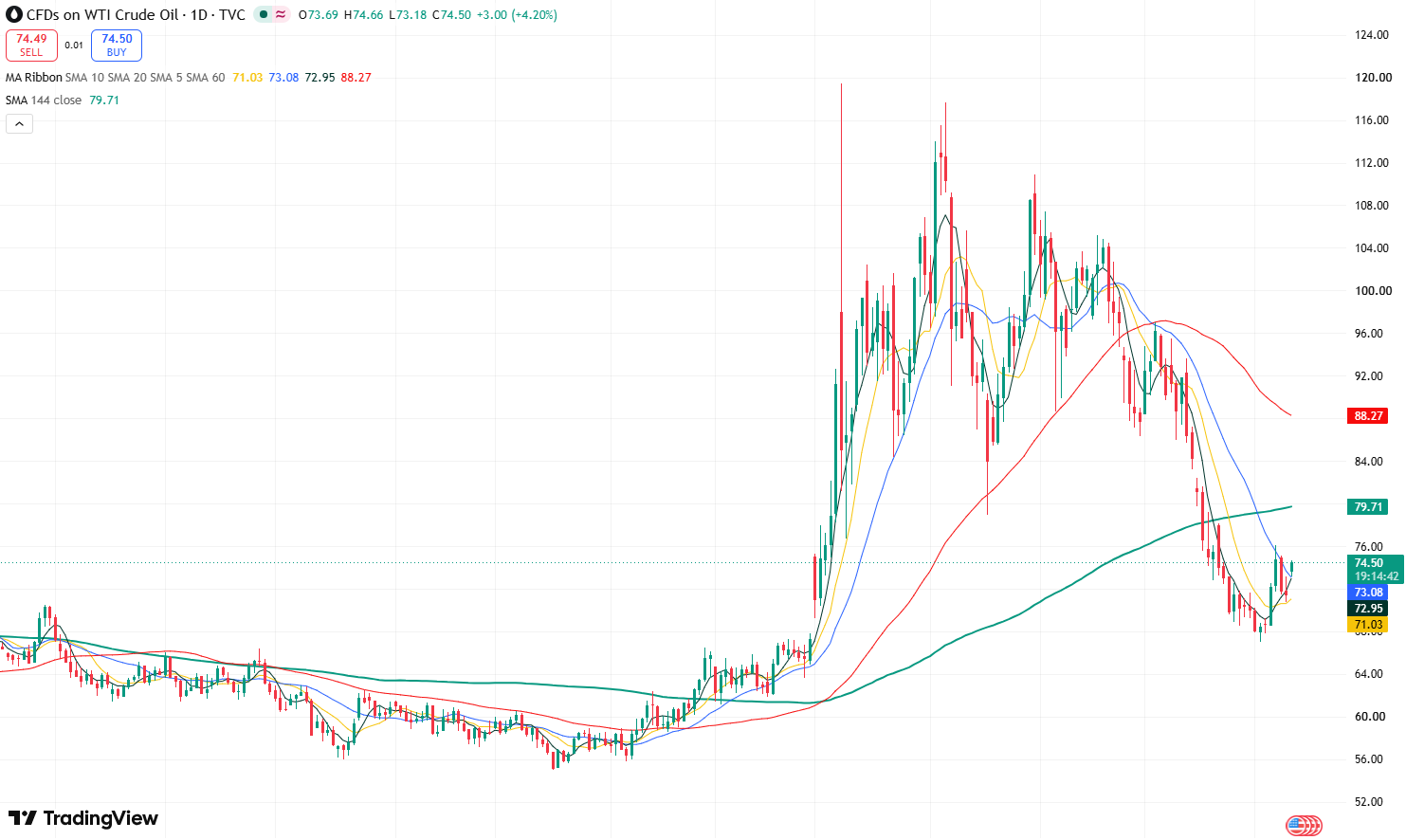
WTI Crude Oil Price Daily Chart, Source: TradingView
The Strait of Hormuz is one of the world’s most important energy transportation corridors, through which a large volume of crude oil and liquefied natural gas from the Gulf region must be shipped to international markets. If the conflict continues to escalate and leads to obstructed tanker transit, crude oil transportation costs, insurance fees, and supply disruption risks may all rise further, and Brent crude may retest the $80 per barrel mark.
However, whether oil prices can sustain their upward trend remains dependent on whether actual supply is affected. If the U.S.-Iran conflict does not escalate further and there is no long-term disruption to transit through the strait, the geopolitical risk premium may gradually recede, and the market’s focus will shift back to OPEC+ supply policies and global crude oil demand outlook.
This content was translated using AI and reviewed for clarity. It is for informational purposes only.