

The transition from a Soviet command economy to a modern market
system is rarely a linear journey, often marked by a heavy reliance
on state mechanisms and traditional banking. For decades, the
Republic of Azerbaijan followed a predictable post-Soviet financial
trajectory, where citizens stored their wealth in standard savings
accounts or physical real estate, viewing the concept of a stock
market as a distant, foreign abstraction. However, a quiet yet
profound financial revolution is currently unfolding in Baku. The
recent milestone of PASHA Bank successfully executing its Initial
Public Offering and subsequently distributing its first dividends
represents a historic watershed moment. While such an announcement
might be mundane news in developed Western capitals, for a market
with a historically fragile financial infrastructure, it signals
the birth of a genuine domestic investment culture.
To appreciate the significance of this shift, one must look at
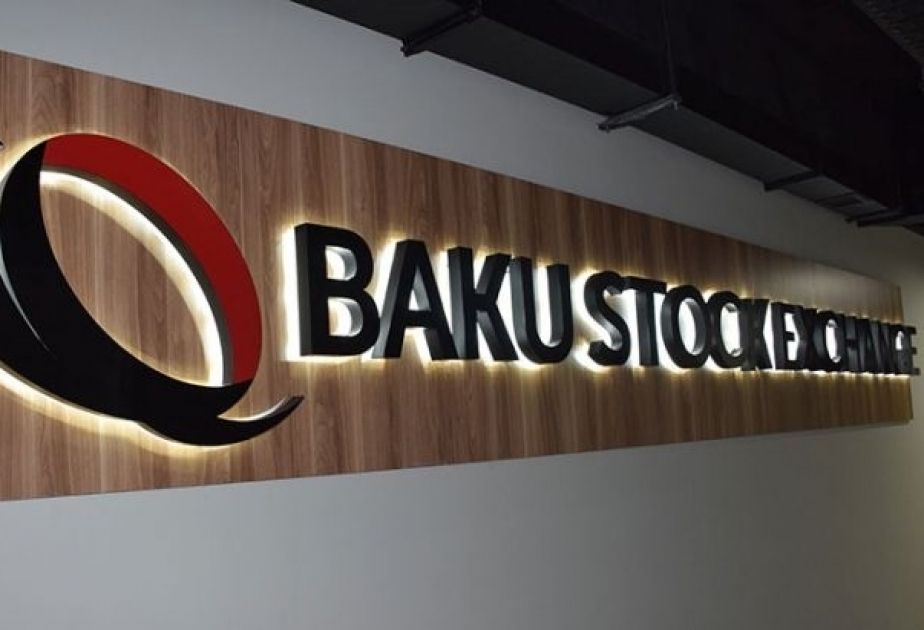
the current state of the Baku Stock Exchange. By global standards,
the domestic exchange is in its absolute infancy, pale in
comparison to the monolithic structures of Wall Street, the
Frankfurt Stock Exchange, or even Istanbul’s Borsa Istanbul.
Historically, the local trading volume has been dominated by
institutional players, large commercial banks, and investment firms
engaging primarily in repo operations. The average citizen remained
an outsider to this ecosystem. However, just as the local
population was beginning to familiarize itself with the concept of
corporate and state bonds, forward-thinking institutional entities
began taking the leap into public listings. Currently, with
prominent banking institutions having paved the way through
successful IPOs and rumors circulating about another major company
preparing to enter the public arena in the coming years, the
structural landscape is shifting.
What makes the Azerbaijani stock market uniquely compelling at
this juncture is the extraordinary financial generosity it offers
to early participants. The dividend policies of these newly public
institutions are nothing short of spectacular when compared to
global averages. The nation’s largest financial institutions boast
annual dividend payouts exceeding over ten to fifteen percent. When
paired with corporate bonds that offer coupon rates between
averagely fifteen and eighteen percent, the Baku Stock Exchange
presents a high-yield environment that is virtually non-existent in
saturated Western markets. Furthermore, the macroeconomic
environment adds an extra layer of security. The Azerbaijani manat
remains strictly pegged and stable against the United States
dollar, eliminating the grueling currency devaluation risks that
plague other emerging markets. Crucially, the state has implemented
a highly progressive tax policy, exempting both dividend payouts
and bond coupon incomes from taxation until early 2028. This
creates a pristine, high-return haven for long-term retail
investors.
The societal implications of this growing capital market extend
far beyond mere corporate balance sheets; they offer a structural
solution to the looming global pension crisis. Across the developed
world, from Germany to Japan, traditional state-funded pension
systems are collapsing under the weight of declining birth rates
and aging populations. The classic pay-as-you-go model, which
relies on taxing current workers to fund current retirees, is
mathematically unsustainable. In nations like Turkey, back in the
mid-20th century, the demographic pyramid allowed for a highly
comfortable ratio of around thirteen active workers supporting a
single retiree. Today, that luxury has vanished, and the
active-to-passive ratio has plummeted dramatically below two, a
terrifying reality that Western Europe faces even more acutely. The
United States provides a clear blueprint for survival through its
reliance on public markets. By utilizing private and state pension
funds to invest directly in equities and bonds, citizens can secure
self-sustaining wealth. The democratization of the Azerbaijani
stock market allows everyday salaried employees to buy shares for
very accessible amounts, or bonds starting around thirty to sixty
dollars. This low barrier to entry empowers the working class to
generate consistent passive income, creating a secondary safety net
for their retirement years independent of state dependency.
Beyond demographic and financial mathematics, the expansion of
the public equity market addresses a profound cultural and
religious dilemma faced by a significant segment of the population.
For devout individuals, the concept of earning fixed interest is
strictly prohibited across various religious doctrines,
particularly in Islamic finance. This has historically left
conservative, small-scale investors in a grueling predicament.
Depositing cash in traditional banks or purchasing conventional
bonds feels morally compromised, yet leaving hard-earned savings
under a mattress means watching inflation slowly erode their
purchasing power. For decades, physical gold was the only socially
acceptable alternative, but gold is a static asset that generates
zero cash flow. The rise of public equities and IPOs changes this
paradigm completely. By purchasing shares in a public company, a
religious individual becomes a legitimate fractional owner of a
business enterprise, sharing in its real-world profits and losses
through dividends. This transformation bridges the gap between
ethical compliance and modern wealth preservation.
Ultimately, the distribution of the latest bank dividends marks
the dawn of a new financial era for the citizens of Azerbaijan. It
proves that the domestic stock market is no longer an exclusive
playground for institutional giants, but an accessible escalator of
wealth for the ordinary citizen. By lowering entry barriers,
maintaining tax-free incentives, and providing yields that outpace
inflation, the nascent market is gradually weaving itself into the
daily lives of the population. As more companies prepare to
transition into the public eye, the foundations are being laid for
a more resilient, inclusive, and financially literate society,
opening grand doors of opportunity for generations to come.