
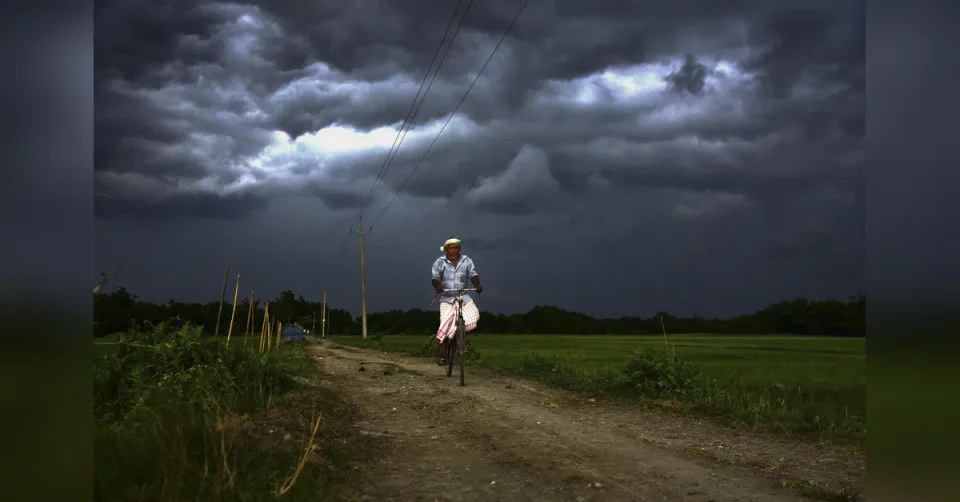
A weak monsoon in 2026 is likely to affect sectors across the board—from fertilizers, tractors, and seeds to irrigation and fast-moving consumer goods (FMCG)—analysts suggest. However, they advised investors not to panic yet, as these are still early days, and the pace and spatial distribution of the monsoon may improve in the coming weeks.
According to a recent India Meteorological Department (IMD) release, India recorded 45.6 mm of rainfall by June 20 against the seasonal normal of 84.4 mm, resulting in a 46 per cent shortfall. The delayed progress of the monsoon stoked fears of El Niño conditions.
Consequently, economic forecasters have recalibrated their estimates. For instance, S&P Global Ratings pegs India’s FY27 GDP growth at 6.6 per cent (versus 7.7 per cent growth in FY26 and 7.1 per cent in FY25) due to energy stress and a sub-par monsoon. Kranti Bathini, Director-Equity WealthMills Securities, too, suggests that even though the monsoon is deficient so far, it can pick up pace in the weeks ahead. “To that extent, the markets are overly worried yet. However, if the rains do not pick up along with an improvement in spatial distribution, markets may then sit up and take notice,” he said. Economic impact
“The implications for the economy are significant. Reservoir levels have declined sharply, kharif sowing has commenced on a subdued note, and the most rain dependent crops of pulses, oilseeds, coarse cereals and cotton remain vulnerable,” wrote Shubhada Rao, Vivek Kumar and Yuvika Singhal of Quant Eco Research in a recent note.
Sector-wise
Analysts said the direct impact of a sub-par monsoon will be felt in fertiliser and seed companies, where delayed monsoons could push sales from Q1FY27 to Q2FY27, adding inventory carrying costs.
“Other than this, the major sectors are poised to lose from adverse monsoon developments. Tractor manufacturers stand to lose as asset replacement is delayed with falling disposable incomes, something which also extends to mass market two-wheelers. Depending upon the extent of hit to the rural sector, FMCG could be another industry that is likely to see suppressed volume growth,” said Venugopal Garre, managing director, Bernstein.
“On the contrary, premium consumption including FMCG whose demand primarily comes from urban areas, luxury consumption including high-priced automobiles, IT and export-oriented segments will not be impacted by deficient monsoon. Pharmaceuticals with inelastic demand is, normally, an out-performer during deficient monsoons,” he added.
As an investment strategy, Chokkalingam suggests investors stay away from sectors that are directly impacted from a deficient monsoon, such as fertilisers, seeds and stocks of crop protection firms. “I’m not too much worried about the tractor and FMCG sectors just yet as they can still pass on higher costs to the consumers,” Chokkalingam said.