
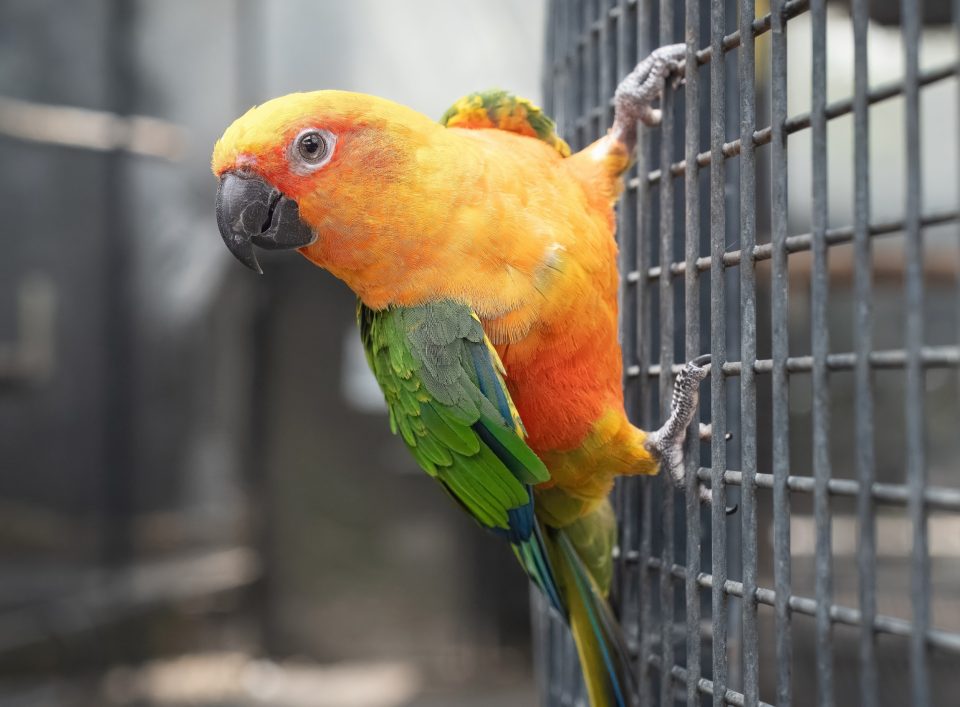
Trade in wild animals moves across the world every day. Some are sold legally. Others move through shadowy routes that rarely make headlines.
The animals end up as pets, food, or ingredients in traditional medicine. It’s a massive business worth billions, and it keeps growing.

But there’s a quieter issue riding along with that trade. When animals are captured, transported, and sold, they don’t come alone. They carry bacteria, viruses, and parasites. And those microbes don’t always stay where they started.
A new study shows just how serious this problem has become. Researchers found that animals involved in trade are far more likely to share diseases with humans than those left in the wild.
The risk isn’t just about rare events. It builds over time and spreads across borders in ways that are hard to track.
What the data reveals
After analyzing four decades of trade records and disease data, the research team uncovered a clear pattern. Mammals that are traded are 1.5 times more likely to share infectious agents with humans than species that are not traded.
The study was co-authored by Professor Meredith Gore from the University of Maryland, in collaboration with scientists at the University of Lausanne in Switzerland.
The numbers tell a deeper story. Each decade that a species stays in the trade system adds to the risk.
On average, a species shares one additional pathogen with humans for every ten years it remains in circulation. That slow buildup creates more chances for diseases to jump between species.
The danger behind exotic pets
Scroll through social media, and it’s easy to see why demand has grown. Videos of otters holding hands or sugar gliders gliding across rooms make exotic pets look harmless, even cute.
That demand fuels a market that reaches deep into forests and remote habitats.
The problem becomes worse when animals are sold live or traded illegally. These situations often involve cramped conditions, stress, and poor hygiene. All of that makes it easier for pathogens to spread.
A real-world example already exists. A monkeypox outbreak outside Africa was linked to the pet trade involving Gambian giant pouched rats and rope squirrels. That incident showed how quickly a local disease can travel across continents.
“Illegal wildlife trade enables novel opportunities for pathogens like these to make incursions at global scales, crossing boundaries that were previously barriers to disease movement and linking urban and rural places and their residents in new ways,” said Gore.
Where the real exposure happens
Most people assume the danger starts when someone buys a wild animal product. That’s not quite right. The highest risk comes earlier in the chain.
Hunters, transporters, and traders handle animals directly. They face cuts, bites, and close contact with bodily fluids. That’s where many infections begin.
“It is important to understand that the probability of being infected by playing a piano with ivory keys or wearing fur is almost nonexistent,” said study lead author Jérôme Gilpert.
“The problem lies at the beginning of the chain: Someone had to hunt the animal, skin it, transport it.”
Still, buyers are not off the hook. Their choices keep the system running.
“Even if the danger is not immediate, our consumption choices indirectly fuel the transmission of pathogens to humans,” said Cleo Bertelsmeier, research team leader at the University of Lausanne.
A growing gap in global health
Wildlife trade has long been regulated to protect endangered species. International agreements focus on preventing extinction and preserving biodiversity. Disease risk has not received the same level of attention.
That gap matters more now than ever. As habitats shrink and human activity expands, animals and people come into contact more often. Add global trade to the mix, and pathogens gain new routes to travel.
The researchers argue that stronger monitoring is needed. Tracking diseases in wildlife and animal products could help catch threats before they spread widely.
Right now, many models used to predict outbreaks do not fully account for trade patterns, especially illegal ones.
“Models predicting pathogen risk or spread may be inaccurate if they fail to account for trade dynamics, particularly those that are illegal,” said Gore.
“Such errors can result in inefficient use of limited resources for surveillance or management, particularly in low resource contexts.”
The bigger picture behind wildlife trade
This issue goes beyond individual choices or isolated markets. It connects environmental change, species loss, and human health in a tight loop.
When ecosystems are disturbed, animals move or decline. Trade fills the gap, bringing species into new settings where diseases can spread more easily.
“Wildlife trade is a mechanical vector of infectious agents that has until now received relatively little attention by the public health community,” said Gore.
The message is clear: transporting animals isn’t just a conservation concern – it’s a public health issue that affects us all.
The global wildlife trade isn’t slowing down. But understanding its risks is a step toward reducing the chances of the next outbreak.
The full study was published in the journal Science.
—–
Like what you read? Subscribe to our newsletter for engaging articles, exclusive content, and the latest updates.
Check us out on EarthSnap, a free app brought to you by Eric Ralls and Earth.com.
—–