
In December 2024, a Philadelphia rapper named Skrilla uploaded a track with the hook consisting of the numbers 6 and 7. By May 2026, the Pope was doing the hand gesture.
I would have never known about it, since I don’t listen to rap music, until I came upon, inadvertently, a few political and religious memes about this 6-7 thing. So I dug in; I asked for input from a wise guy, namely, 🐺The Wise Wolf, and that’s what we came up with.
Dear readers and subscribers,
That trajectory, from ambiguous street slang to a physical performance by the head of the Roman Catholic Church, is not a story about music, basketball, or internet humor. It is a story about how institutions respond to viral culture and what those responses reveal about the relationship between power and popular attention.
The “6-7” meme originated in the convergence of a rap hook and basketball aesthetics. The song “Doot Doot (6 7)” was paired on TikTok and Instagram (platforms I don’t have, btw) with clips of players, particularly LaMelo Ball, who is 6 feet 7 inches tall, performed the gesture: hands raised, palms up, pumped rhythmically.
The visual match was clean and shareable, so it spread.
By March 2025, a young boy named Maverick Trevillian appeared in a youth basketball video screaming “six seven” while doing the movement. The clip went viral. Schools began banning the gesture calling “nonsensical and playfully absurd.”
What followed was a cascade of institutional contact with something that, by design, meant nothing.
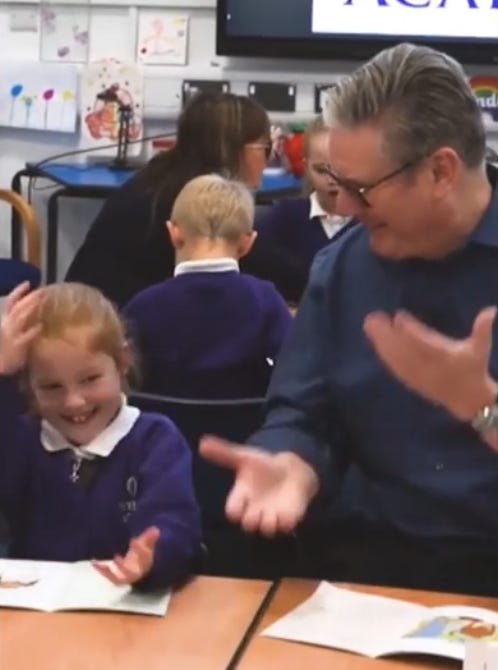
When British Prime Minister Keir Starmer visited a school in November 2025, a girl next to him pointed out that the book they were reading was open to pages 6 and 7. Starmer performed the gesture. Since the school had banned it, he apologized to the head teacher.
That same month, Representative Blake Moore of Utah referenced the trend while presiding over the United States House of Representatives.
Connecticut state lawmaker Bill Buckbee, who represents the 67th District — made the joke during a special legislative session.
These were not gaffes. They were deliberate displays of awareness: proof of currency, relevance, and not being entirely out of touch with what the young are doing.
In December 2025, Vice President JD Vance announced, after his five-year-old screamed “six seven” during a church service, that he was prepared to “make this narrow exception to the First Amendment and ban these numbers forever.” The joke landed.
It was also a case study in using a meme to perform relatability while simultaneously performing authority—a dual-channel message delivered in a single sentence.
The commercial layer followed institutional contact, as it reliably does.
-
Pizza Hut sold wings for 67 cents.
-
McDonald’s in the UAE issued a six-piece chicken pack containing seven nuggets.
-
Domino’s ran a promo code.
-
Fortnite, Overwatch 2, and Clash Royale all added in-game 6-7 emotes.
Then, in May 2026, Pope Leo XIV performed the gesture during a meeting with Catholic youth pilgrims from the Archdiocese of Genoa.
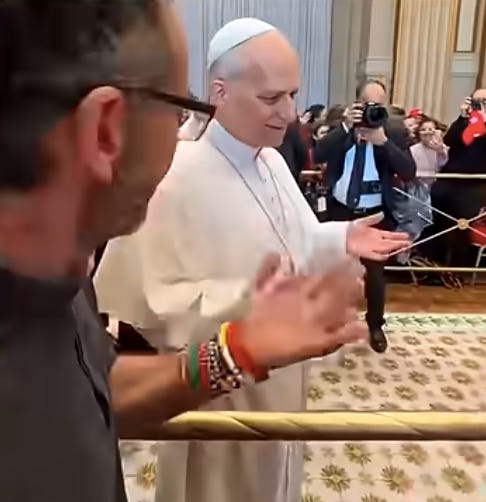
A priest and internet personality named Don Roberto Fiscer posted the video.
I’m actually wondering what work is the message doing?
In each case, the Prime Minister, the lawmakers, the Vice President, the brands, the Pope, and the adoption of “6-7” performed the same function: institutional legitimacy-seeking through cultural imitation.
The content of the meme was irrelevant.
To perform the gesture was to signal proximity to youth culture, to virality, to the internet’s present tense. The gesture said, “I am not behind the glass.” I am in the room.
This is worth examining precisely because the meme carries no ideology. It has no political valence, no programmatic content, no embedded argument.
That is what makes it analytically useful.
When a message is ideologically loaded, its adoption by an institution can be attributed to agreement. When the message is, by its creator’s explicit design, meaningless—and institutions still race to perform it—the adoption itself becomes the message.
The race was not about “6-7.” It was about attention and about who was seen as having it.
Kamala Harris briefly relaunched her political X account under the handle @headquarters67 before changing it to @headquarters68 the following day. It remains unclear whether the original handle was intentional. The correction, however, was quick, suggesting someone in the organization understood what the number was currently carrying and made a calculation.
The most structurally interesting institutional response, however, came not from a politician or a brand but from the Russian Orthodox Church —JBM.
Priest Evgeny Murzin, addressing schoolchildren’s global repetition of “Six Seven,” did not perform the gesture. He did not condemn it. He did something more ambitious: he claimed the number.
“In Christian tradition,” Murzin wrote, “the number 67 is associated with one of the most famous and solemn biblical texts, the 67th Psalm.”
He described Psalm 67 as a song about God’s victory over evil and darkness and urged parents not to get frustrated with children who repeat the meme but instead to use it as a doorway to show them that behind these two numbers lies a whole amazing world with its own history, culture, and meanings.
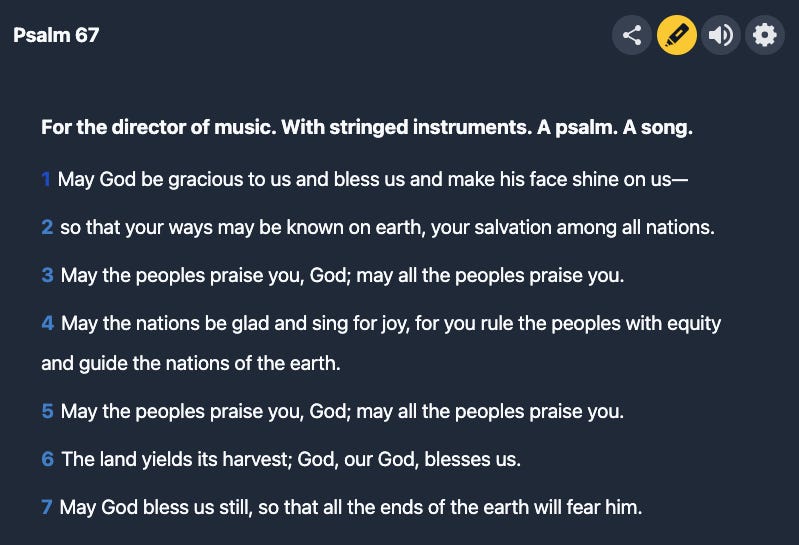
This is a categorically different institutional move from anything the politicians or the brands attempted.
Starmer and Vance performed the gesture. The Pope performed the gesture. Pizza Hut put it on a price tag. Murzin refused all of that and instead made an argument: the number was never empty. You just didn’t know what it meant.
Whether or not that argument is theologically valid is outside my lane.
The structural observation contained within it is as follows:
Murzin’s move is what semiotics scholars would call “semantic capture,” which is the strategic occupation of a sign by a party claiming prior ownership of its meaning.
The meme’s creator said it meant nothing and never would.
A Russian Orthodox priest said it always meant Psalm 67.
One of them is doing theology. The other is doing branding. It is worth taking time to consider which person is studying theology and which is studying branding.
Psalm 67 is, among other things, a prayer for God’s blessing to extend to all nations.
The “6-7” meme extended to all nations.
That coincidence is either meaningless or it isn’t, and the fact that an institution exists to make that determination is the oldest propaganda operation on earth.
The meme meant nothing, and everyone found a use for it anyway.

IS IT PROPAGANDA?® —Read. Decide. Question Everything.