
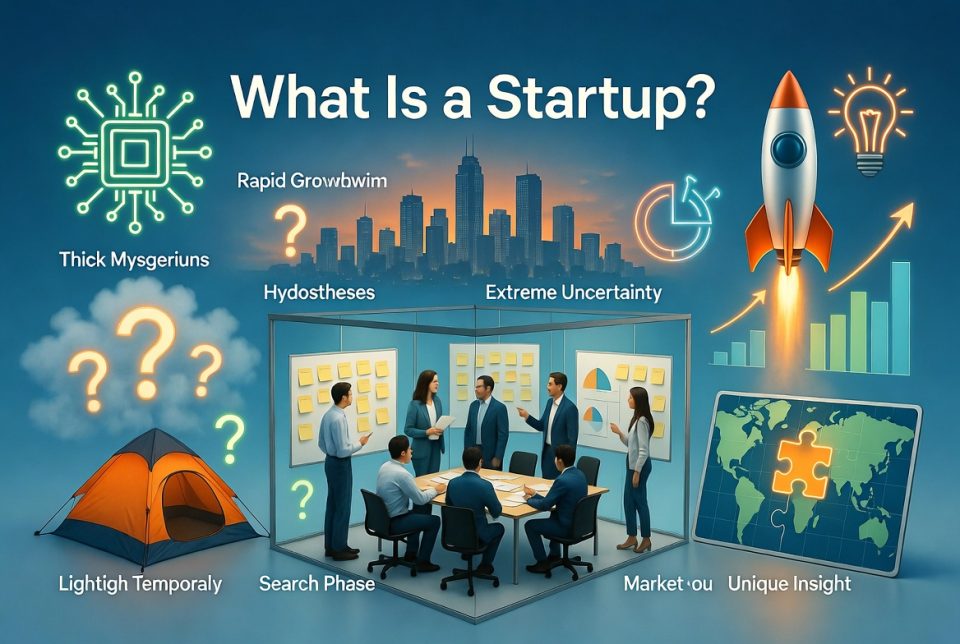
A few years ago, we published an article titled “What is a Startup?” that quickly climbed to the top of our most-read and most-shared pieces. Even today —years later — readers still quote it, link to it, and treat it as a go-to reference. That kind of staying power is rare. So we decided it was time to revisit the question from scratch: What exactly is a startup?
The term has been stretched, twisted, and diluted beyond recognition. Today “startup” gets slapped on everything from a teenager’s weekend side hustle to a 10-year-old company that just raised a Series D. It has suffered the same semantic drift as words like “innovation,” “ecosystem,” “disruption,” and “strategy.” But if we strip away the hype, what does the word actually mean?
To find out, we go straight to the people who shaped the modern startup world — the “godfathers” of Silicon Valley and the giants who fund it. Their definitions don’t agree. In fact, they differ dramatically. And that disagreement is the most useful insight of all.
Steve Blank: It’s a Temporary Search Mission
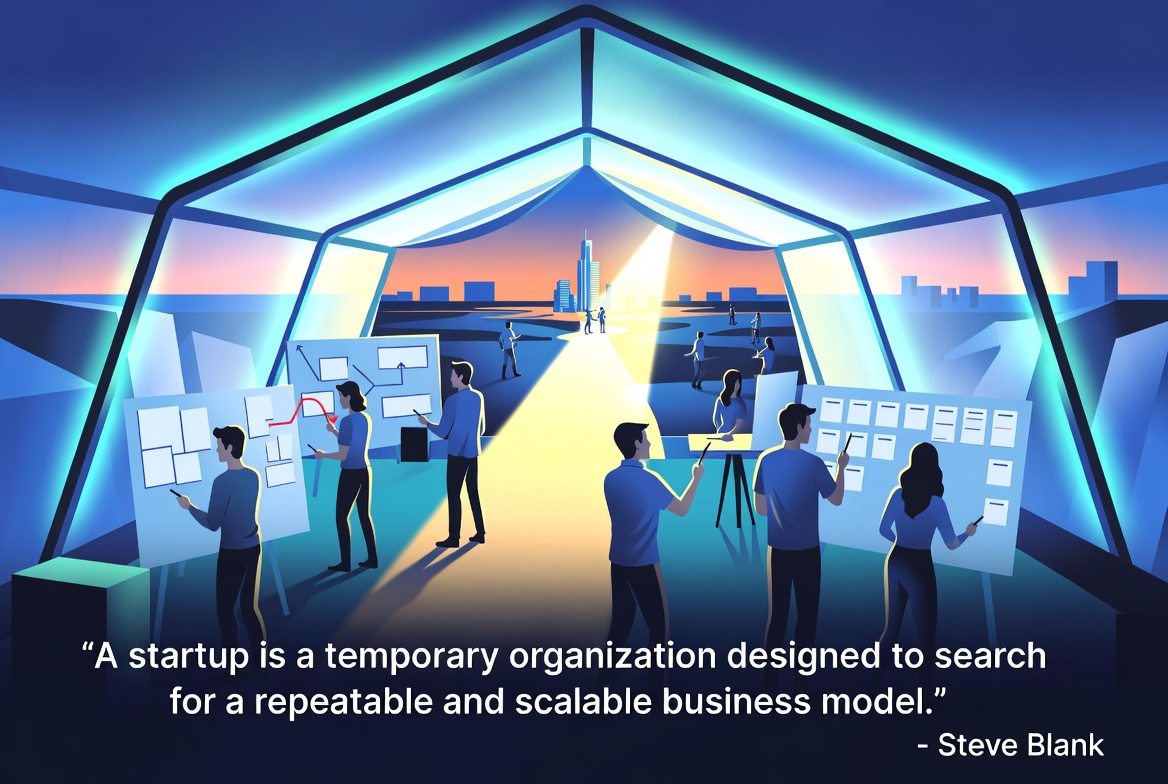 Steve Blank, the man often called the “godfather of Silicon Valley” and the creator of Customer Development (CustDev), gives what many consider the most precise definition:
> “A startup is a temporary organization designed to search for a repeatable and scalable business model.”
Key words: temporary and search.
Blank’s view is about process and purpose.
A startup isn’t a company yet — it’s an organization in discovery mode. It exists to test hypotheses, run experiments, and find a business model that can be repeated and scaled.
Once that model is found, the startup’s job is done; it either becomes a real company or it dies. This is why Blank insists that startups are not smaller versions of big companies. They require entirely different management tools.
Eric Ries: Extreme Uncertainty Is the Defining Condition
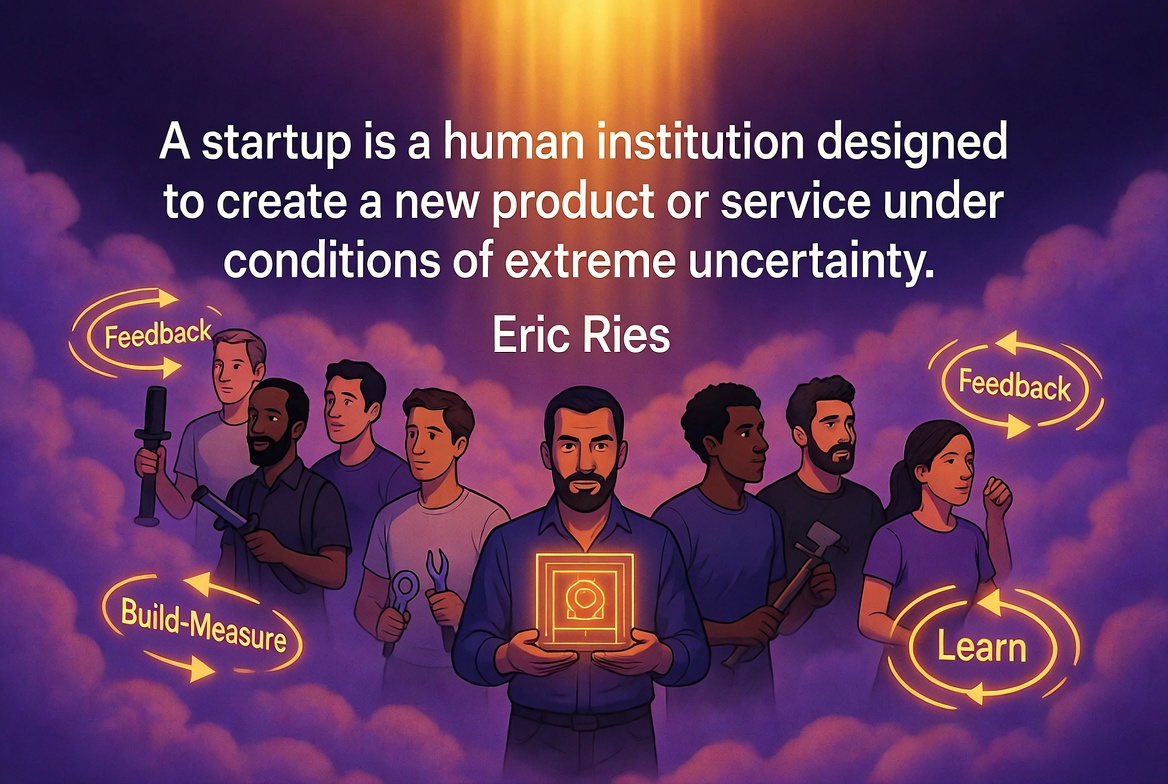
Eric Ries, author of The Lean Startup and the person who popularized the Build-Measure-Learn loop, defines it differently:
> “A startup is a human institution designed to create a new product or service under conditions of extreme uncertainty.”
Here the spotlight shifts to conditions and novelty.
 Ries emphasizes two things:
- You’re building something genuinely new.
- You have almost no idea whether it will work.
Extreme uncertainty is what separates a startup from a regular business. In a normal company you can forecast, plan, and execute. In a startup the fog is so thick that traditional management tools fail. That’s why Ries built an entire methodology around rapid experimentation and validated learning.
(Note: Some might quibble with calling a startup a “human institution,” but the core insight — extreme uncertainty — remains powerful.)
Paul Graham: Growth Is the Only Thing That Matters
 Paul Graham, co-founder of Y Combinator and one of the clearest thinkers on early-stage companies, offers perhaps the simplest and most provocative take. In his writings (and as distilled by those who study him closely):
> “Startups are designed to grow fast. The only essential thing is growth. Everything else we associate with startups follows from growth.”
Being new, working on tech, taking venture capital, or planning an exit — none of those are required. The only necessary condition is rapid growth. If a company isn’t built to grow fast, it’s not a startup; it’s a small business. Everything else (culture, funding, hype) is a byproduct of that growth imperative.
Sequoia Capital: Unique Insight + Right Team
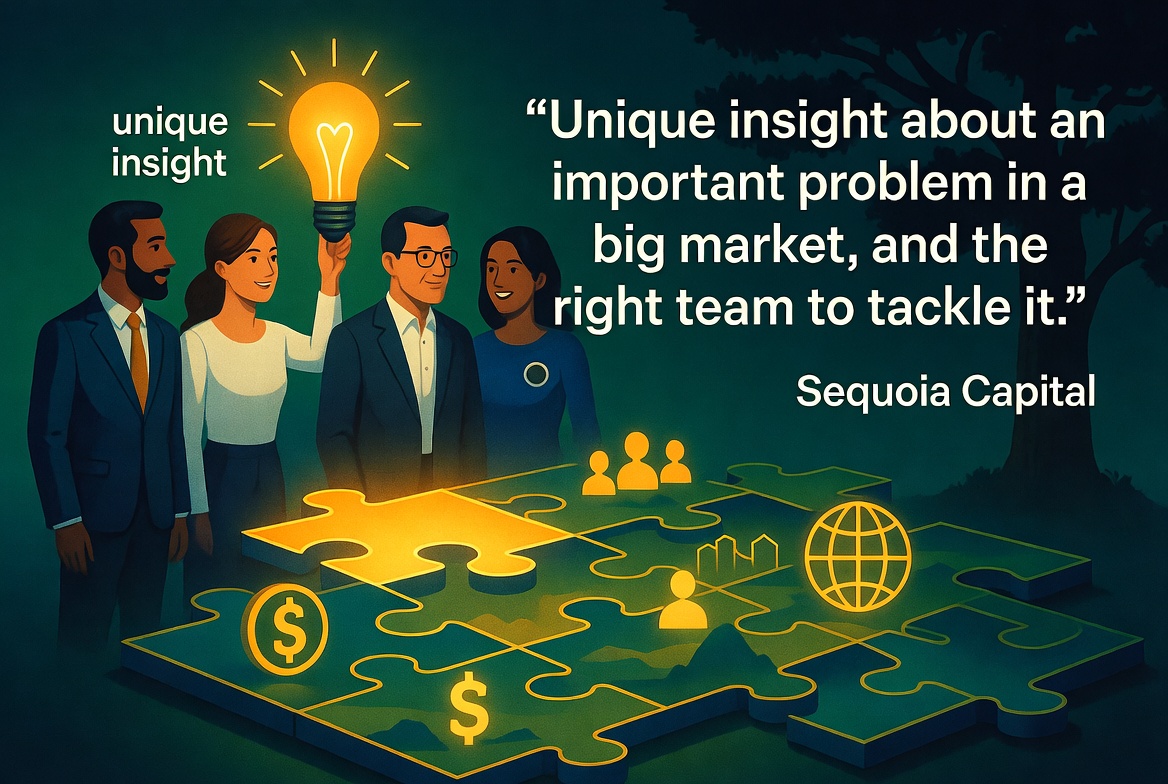 Now let’s hear from the other side of the table — the investors who have backed some of the most successful companies in history. Sequoia Capital, whose portfolio reads like a who’s-who of tech unicorns, puts it plainly in their FAQ:
> “We look for two things: 1) a unique insight about an important problem in a big market, and 2) the right team to tackle it.”
No mention of “search,” “uncertainty,” or even “growth” as the primary filter. Sequoia focuses on relevance and execution right now: Is there a massive problem? Do you see it in a way no one else does? And can your team actually solve it? Andreessen Horowitz (a16z) echoes a similar philosophy — great founders solving important problems at scale.
So… Which Definition Is Right?
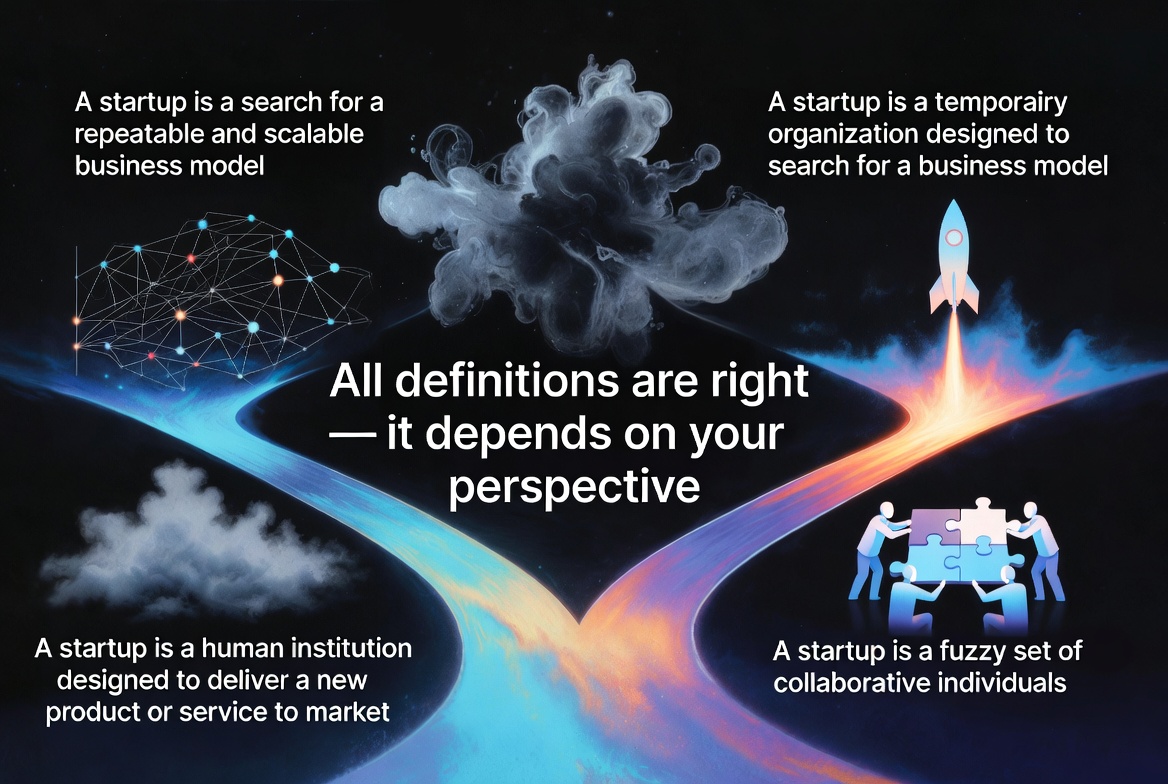
Here’s the punchline: they’re all right — and none of them is the One True Definition.
Each expert is looking through a different lens:
- Blank sees the process (searching for a model).
- Ries sees the environment (extreme uncertainty + novelty).
- Graham sees the trajectory (must grow fast).
- Sequoia sees the substance (unique insight + team attacking a big problem).
The word “startup” has become a Rorschach test. What you see depends on where you stand — founder, investor, operator, or observer.
A Practical Definition for the Real World
Given all this, I’ve stopped looking for a single perfect definition.
Instead, I use a simple rule of thumb:
A startup is any business entity that exhibits at least one of these core properties:
- It is actively searching for a repeatable, scalable business model (Blank).
- It operates under conditions of extreme uncertainty while creating something genuinely new (Ries).
- It is deliberately built to grow fast (Graham).
- It possesses a unique insight into a major problem in a large market and the team to solve it (Sequoia).
If none of these apply, it’s probably not a startup. It might be a great small business, a lifestyle company, a franchise, or a consulting operation — and that’s perfectly fine. Not everything needs to be a startup.
 Also read:
Why This Matters More Than Ever
In 2026 the startup label still carries glamour, funding potential, and media attention. But it also carries risk. Founders who mislabel themselves as “startups” when they’re really running small businesses often chase the wrong metrics, raise money they don’t need, or burn out trying to scale something that was never meant to scale.
Conversely, true startups that downplay their ambitions miss out on the talent, capital, and support systems built exactly for high-uncertainty, high-growth ventures.
The boundaries of “startup” aren’t drawn by company age, industry, funding round, or even technology. They’re drawn by mindset and ambition.
So the next time someone asks “Is this a startup?” — don’t reach for a dictionary.
Ask instead:
- Are we searching for a scalable model, or do we already have one?
- Are we operating in extreme uncertainty, or can we forecast reliably?
- Are we built to grow fast, or are we happy staying small?
- Do we have a unique insight into a big problem and the team to crush it?
Answer those questions honestly, and the label takes care of itself.
The original article that started this conversation is still worth reading. But the startup world doesn’t stand still — and neither should our understanding of it.