
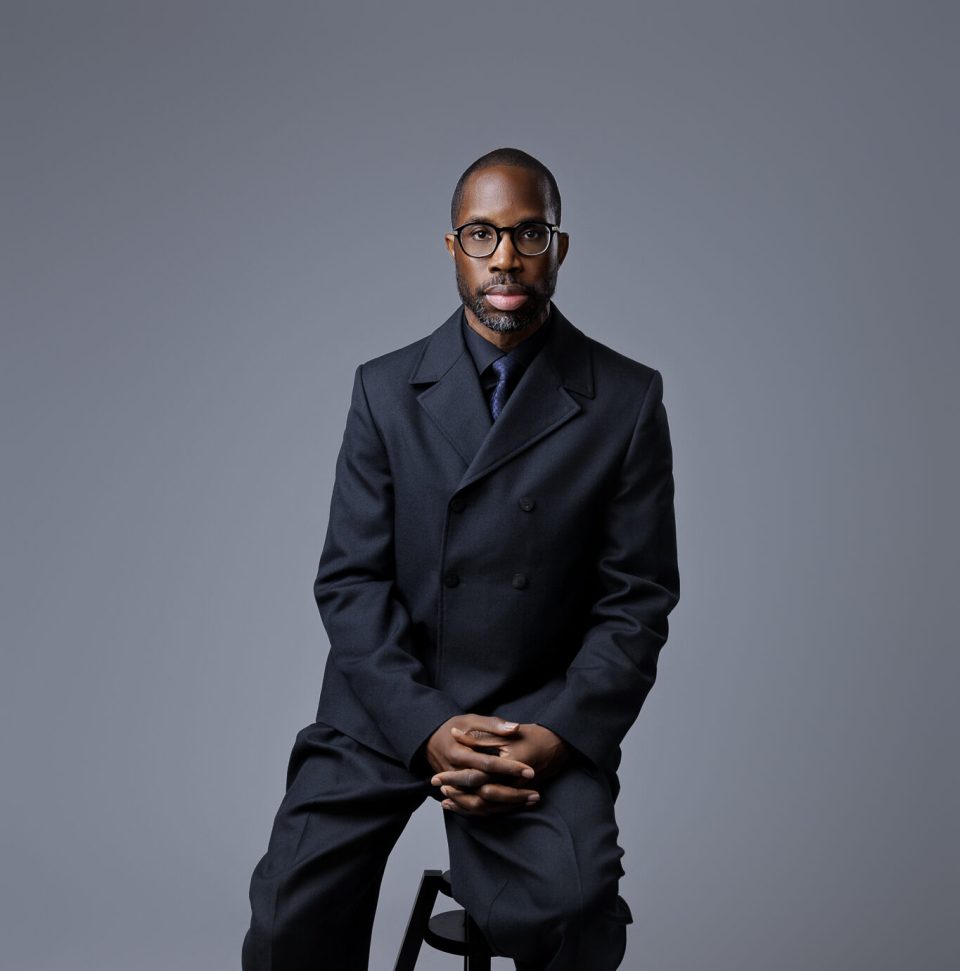
Michael Lints, Founding Partner of Golden Gate Ventures’ Middle East and North Africa fund, shares how the firm evaluates founders, supports portfolio companies beyond capital, and builds cross-regional investment bridges across Southeast Asia, the Middle East, and North Africa. Read the full interview to learn his approach to venture investing, founder selection, and the evolving startup ecosystem.
Michael Lints, Founding Partner MENA, Golden Gate Ventures, LinkedIn
About me
I have a long history in technology, which started when I was a kid. Intrigued by my father’s work with computers, I got my first computer at a very young age, and the field of technology has not left me since. That early curiosity carried me through The Hague University, where I studied computer science and graduated in 1997.
In 2000, at the height of the dot-com bubble, I co-founded my first company: an information technology managed services and data centre business in the Netherlands. After the acquisition, I moved to the other side of the table with a small fund focused on Dutch small and medium-sized enterprises, helping local founders with capital, growth strategy, and hands-on guidance I had needed myself a few years earlier, and joined the Economic Development Board of Rotterdam as Vice Chairman.
In 2013, I made the bigger leap and joined Golden Gate Ventures in Singapore. At the time, the Southeast Asian startup scene was still in its early stages. Today, my focus is on the Gulf and its role as a global hub. I am a Founding Partner of Golden Gate Ventures’ Middle East and North Africa fund, together with Hussain Abdulla, based in Qatar, where we are building the firm’s first dedicated platform in the Middle East and North Africa. Most of my time goes into institutional fundraising, partnerships with sovereign and family capital, and working with the founders in our portfolio across the region and globally.
After nearly three decades in technology, I still find myself drawn to the same thing that hooked me as a kid: the moment a new piece of infrastructure quietly rearranges what the next generation can build.
On investments
I have been investing professionally for almost two decades. Across all GGV’s funds we have backed more than 100 companies, produced unicorns, and seen multiple strategic exits and IPOs. Personally, I have helped raise over institutional capital for the firm and its portfolio, and led two of the firm’s earlier strategic acquisitions.
The wins I am proudest of usually are not the headline ones. The less-celebrated outcomes are the most meaningful: a portfolio CEO who learns to scale a leadership team without losing the company’s culture, a founder who navigates a difficult down round with their cap table intact, and the first cross‑border deal we facilitate. Those moments do not show up in fund return data, but they are the building blocks of the returns that eventually do.
The most exciting current chapter is GGV’s MENA fund itself. We are the first international VC fund established and managed within Qatar, with strategic backing from investors such as Al Khor Holding, the Al Attiya Group, and the Oman Investment Authority. Standing up a brand‑new platform in a region with this much potential has been the most meaningful work of my career.
Trust comes first because relationships are paramount in the MENA region. You cannot build a portfolio by flying in for a conference, taking 10 meetings, and flying out again. I learned that very quickly. The reason I relocated to Qatar — and the reason I have spent the last 24 months across the region— is that there’s no shortcut to genuine local credibility. In practice, you show up, keep showing up, and let the work speak.
Emerging‑market venture has historically suffered from a thin exit landscape, making secondaries an underappreciated tool. In MENA, the liquidity story is still being written, but the velocity of sovereign capital and the maturation of regional public markets give me real optimism.
Founders are the primary factor in early-stage investing, especially in emerging markets where the founder effectively is the company during the first several years. I look for people who can attract and retain top talent, articulate a vision that survives a board meeting and a recruiting call, and who keep growing as leaders as the business compounds. I spend a lot of pre‑investment time on conversations that have nothing to do with the deck — strategy, hiring philosophy, how they handle disagreement, what they do when something is genuinely broken.
Market is another filter. I want to back companies positioned at an inflection point where a new layer of capability is becoming foundational. Tailwinds matter.
I also look at infrastructure context. Regulatory frameworks, data residency rules, sovereign capital flows, and talent pools are not just background factors, they are variables that can make or break a company in this region. A strong financial technology company in a regulator-friendly market is a different investment than the same product in a more constrained one.
Unit economics are non‑negotiable. Burn multiples, gross margins, customer acquisition cost relative to lifetime value — I want to see a path to a real business, not just a story about one. For risk, I think in three buckets:
1. Founder risk — mostly mitigated by selection
2. Market risk — mitigated by understanding sovereign and regulatory tailwinds
3. Execution risk — mitigated by hands‑on engagement post‑investment.
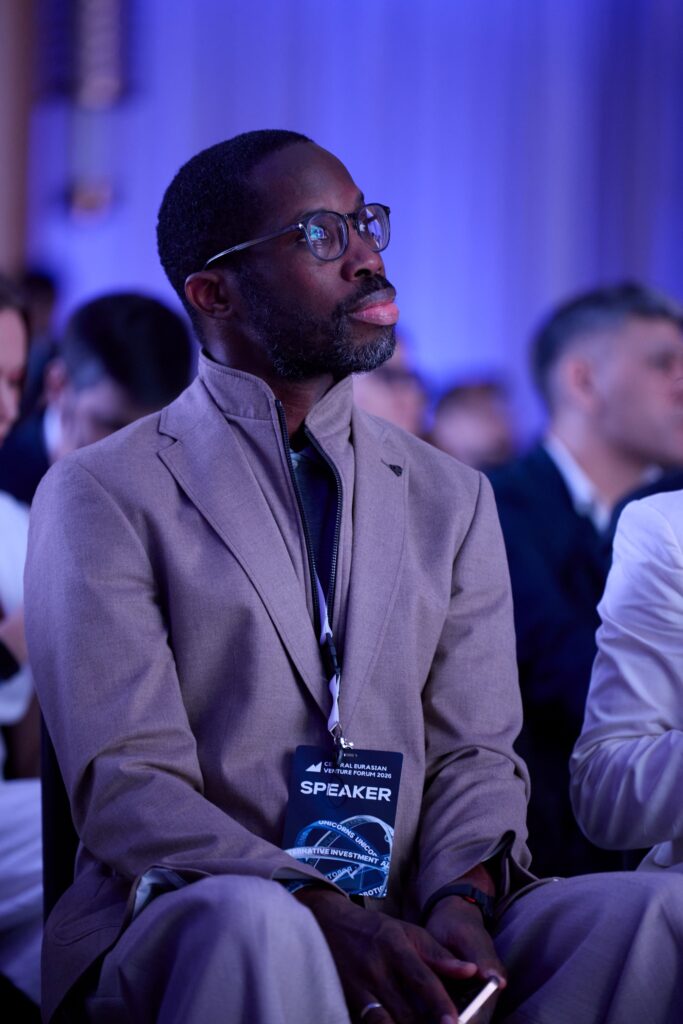
Geographic focus
My entire career has been geographically fluid, so the idea of a “home country” is somewhat complex for me. I was born and raised in the Netherlands, built my first company there, spent over a decade in Singapore, and now live in Qatar. The common thread across all of it is that the most interesting opportunities in technology rarely respect borders.
I am open to investing across geographies. In fact, the entire thesis of the Golden Gate Ventures Middle East and North Africa fund is built around cross-regional capital formation. We have seen Singaporean financial technology companies establish teams in the UAE and Saudi Arabia without raising local capital, simply because the underlying customer demand exists. We have also supported portfolio companies expanding into Central Asia and invested in leading artificial intelligence companies in the United States.
Cross-border investing requires respect. You cannot enter a new market assuming that the playbook from your previous one will apply. What consistently proves effective is a willingness to spend time in the ecosystem, understand the local context, and build relationships well before you actually need them.
On startup and venture industry in the MENA
The MENA ecosystem is in the middle of one of the fastest, most coordinated technology build‑outs anywhere in the world right now.
What distinguishes what’s happening in the Gulf from other emerging‑market technology cycles I’ve lived through? The scale of sovereign capital being deployed is unique. The regulatory and policy environment is aligned with the capital. That regulatory clarity is what allows entrepreneurs to innovate. The talent is returning. People who left for London, San Francisco, and New York a decade ago are coming home — bringing operating experience, networks, and, ambition.
On success stories, the canonical names — Careem’s exit to Uber, the rise of Tabby and Tamara in BNPL — proved that regional champions can be built here. The next wave will look different: more deep tech, more AI infrastructure, more B2B. The investors who position themselves at that infrastructure layer now will be the ones who matter in five years.
Post-investment support
A lot of my time is spent on strategy — the difficult conversations about what to do next when the obvious path has run out or when a market shifts under you. Those conversations are best had with someone who isn’t operating in the company day‑to‑day but is close enough to understand the context.
We also support our founders with hiring. I spend time helping founders define the role before they recruit, source candidates from our networks and pressure‑test fit before an offer goes out.
Investor relations and follow‑on fundraising are often requested by founders, and we leverage our global network of corporates, venture capital funds and sovereigns to support them.
The fourth is cross‑regional access. This is where the GGV MENA fund creates an unusual amount of value. A Southeast Asian portfolio company looking to expand into the Gulf can be introduced to the right family office, the right regulator, the right enterprise customer. A MENA portfolio company looking to access Asian markets, talent, or capital gets the same in reverse. Almost no other fund operating in either region can do that bridge work credibly.
The fifth is, frankly, presence. Showing up for the difficult quarter. Being on the phone when a major customer churns. Being honest when the founder needs to hear something hard. The relationship is the work.

Investment size
We are focused on early and growth stage opportunities, broadly spanning Series A through Series B, with selective participation in seed and later growth rounds when there is strong strategic alignment.
We size our investments based on three factors:
1. The stage of the round we are enteringю
2. The ownership target that allows us to be genuinely effective as a board partner or strategic adviserю
3. The reserves we need to maintain for follow-on rounds.
How I decide how much a startup actually needs is a separate conversation from how much we want to invest. We push founders on operating‑plan realism. The right amount of capital is the amount that gets you to a milestone that meaningfully de‑risks the next round. Over‑raising a Series A to a valuation that the Series B cannot justify is one of the most preventable mistakes I see, and it haunts founders for years.
For the runway, my baseline is 18 to 24 months between rounds. In a tighter capital environment, I would rather see a company raise less at a sustainable price and execute brilliantly than raise more and inherit a valuation problem they cannot grow into.
A typical venture fund has a stated life of 10 years, often with two‑year extensions, and the average holding period for a successful early‑stage investment in our part of the world is in the 7 to 10 year range. In venture, it is how thoughtfully you stage liquidity.
In practice, a well‑managed position can produce liquidity in tranches: a partial secondary at Series C or D, a strategic acquisition that takes out part of the cap table while leaving room for further upside, an IPO, or post‑IPO distributions to limited partners. Each one of those is a decision, and each one has implications for your remaining ownership, the founder’s equity, and the LP’s expected pacing.
Secondaries in particular have become a much more important part of the toolkit than they were when I started in this industry. Sovereign and institutional buyers are increasingly comfortable taking secondary positions, and that gives founders and earlier investors the optionality to take some risk off the table without forcing a full exit before the company is ready.
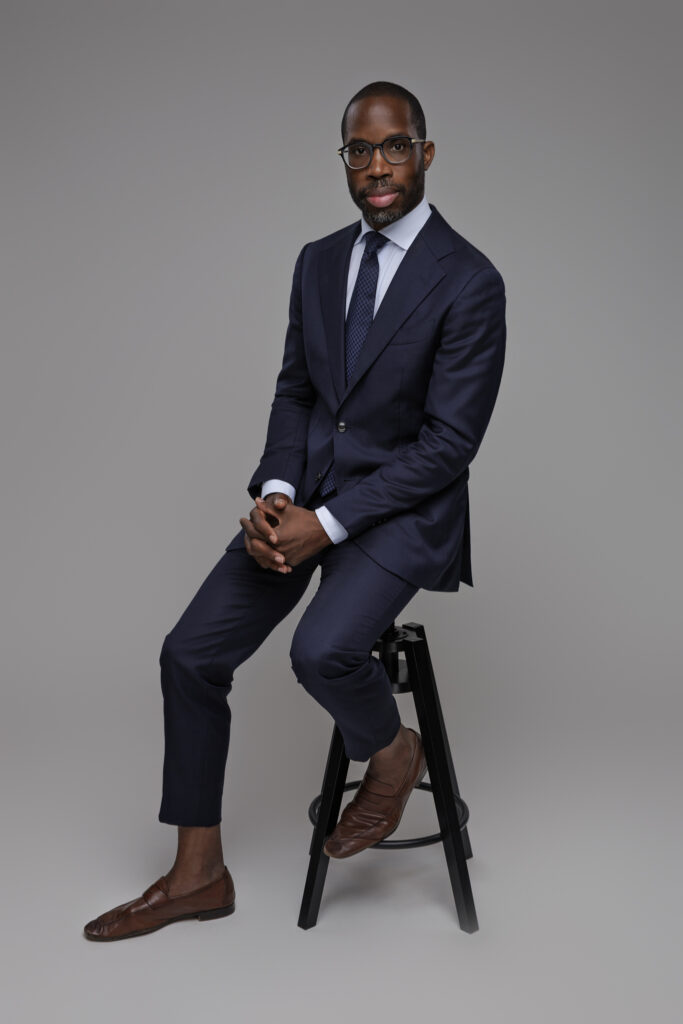
Investor’s advice
The most important thing is to be raising before you are raising. The strongest rounds I have seen come together quickly because the founder spent the previous 6 to 12 months building relationships with the investors they eventually pitched. By the time the deck went out, the investors already knew the story, had watched the company’s metrics evolve, and had emotional and intellectual buy‑in.
Founders should know their numbers cold. Not just the headline metrics — the unit economics, the cohort behaviour, the burn multiple, the realistic next‑round milestones. Second, control the narrative. Decide what story you are telling and structure the data room, the deck, and the references around that story. Third, manage the process like a process: parallel conversations, clear timelines, and a defined close window.
On where to find investors: start specifically. Generic “investor lists” are mostly noise. Map the funds whose stage, sector, and geography actually match what you are building, look at what they have invested in over the past 18 months, and find a warm path to the partner — not the firm — most likely to champion you.
Plans
My current focus is on the deployment phase of the GGV MENA fund. After spending much of the last 18 to 24 months building the fund together with Hussain Abdulla, the LP base, and the regional infrastructure, the work now is putting capital to work — thoughtfully, at the inflection points where the region’s transformation is most concentrated.
I am most excited about AI infrastructure, frontier compute and quantum, B2B FinTech serving the SMEs and Agri- and HealthTech. AI infrastructure, in particular, is where I am spending disproportionate time. We have already made anchor investments in this thesis.
The longer‑term plan is to build GGV MENA into the bridge fund between the MENA region and global innovation — the institution that founders in either region call first when they want to expand into the other.