
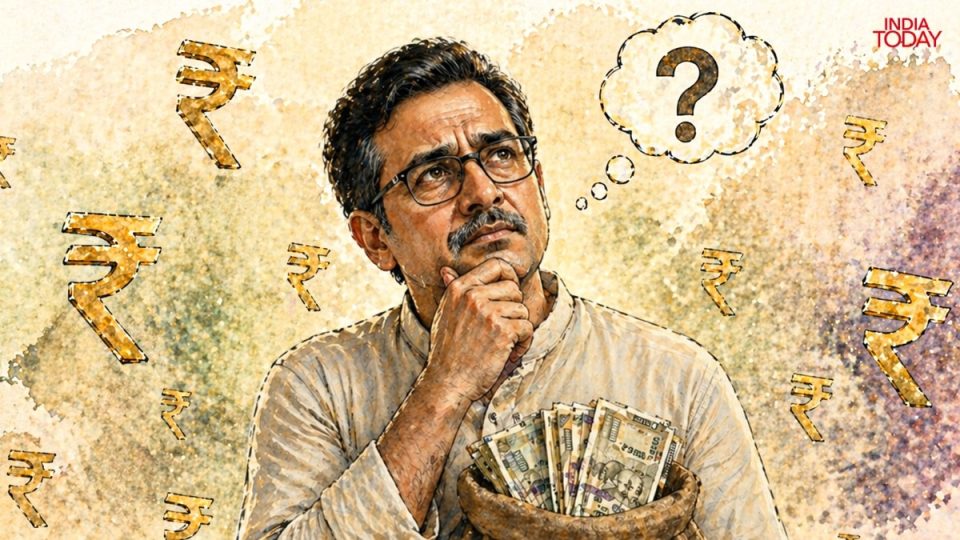
A simple Reddit post has quietly resonated with many families. A user shared that his father, after 36 years of service, has retired with a corpus of Rs 42.57 lakh, and is now facing the question that defines retirement for most people: what next?
Do you go for fixed deposits (FDs) because they feel safe? Or do you look at mutual funds for better returns, even if they come with some risk?
If you or your family have ever sat across the table with a retirement cheque and no clear plan, this dilemma will feel familiar. Because the truth is, the shift from earning a salary to depending on savings is not just financial, it is emotional too.
So, we asked experts to weigh in, and while their answers vary in structure, they all point to one core message, i.e., don’t rush into products, start with clarity.
FIRST STEP IS NOT INVESTING—IT IS PLANNING
The instinct is often to pick an investment quickly. But experts say that’s the wrong starting point.
Saurabh Bansal, Founder of Finatwork Investment, puts it simply: “The first step is not choosing a product, but understanding your needs.”
That means figuring out monthly expenses, checking if there’s any pension or other income, and setting aside an emergency buffer.
Shubham Gupta, Co-founder of Growthvine Capital, echoes the same thought. According to him, the real question is not “where to invest”, but “what role should this money play”.
In other words, this is not just another investment—it’s money that has to last for decades.
Dinkar Sharma, Partner at Jotwani Associates, adds, “A retirement corpus should never be treated as surplus money as it is a finite resource that must be structured around longevity, liquidity, and stability.”
ARE FIXED DEPOSITS ENOUGH FOR RETIREMENT?
For many families, fixed deposits feel like the safest option. They offer stability and predictable returns. But experts warn against putting everything in one place.
Bansal explains, “While fixed deposits are capital-safe, putting the entire corpus into FDs may not be sensible.”
The main concern is that FD returns may not keep up with inflation over time.
Gupta adds, “FDs do offer stability, but they struggle to beat inflation over long periods.”
Sharma puts it more bluntly: “Safety without growth can itself become a risk in retirement.”
HOW MUCH SHOULD GO INTO SAFE OPTIONS?
So, does that mean avoiding FDs completely? Not really.
Experts suggest using them as a base, not the entire strategy.
Bansal recommends keeping around 3 to 5 years of expenses in safe instruments so that day-to-day needs are never dependent on market movements.
Sharma suggests that roughly 50–60% of the corpus can stay in relatively stable options like fixed deposits, the Senior Citizen Savings Scheme (SCSS), and the Post Office Monthly Income Scheme (POMIS) ensuring capital protection and predictable cash flows.
The idea is simple, i.e., secure your essential expenses first.
CAN MUTUAL FUNDS WORK FOR RETIREES?
The word “mutual funds” often makes retirees nervous. But experts say it depends on what type you choose.
Bansal clarifies, “Mutual funds are not inherently risky or safe—it depends on the category.”
For retirees, the focus should be on debt funds, hybrid funds, or conservative balanced funds rather than equity-heavy portfolios.
Gupta explains, “The key is not whether mutual funds are safe or risky, but which category you choose.”
Sharma adds that a carefully structured mutual fund allocation can help preserve wealth while also offering modest long-term growth.
BUILDING INCOME WITHOUT KILLING GROWTH
One of the biggest challenges in retirement is ensuring a steady income without depleting the corpus too quickly.
To manage this, Bansal suggests a bucket strategy that divides money based on time horizons—short term (0–5 years) in safe instruments for liquidity, medium term (5–10 years) in hybrid funds, and long term (10+ years) in selective equity exposure for growth.
Alongside this, Gupta points to Systematic Withdrawal Plans (SWPs) as a practical tool, allowing retirees to draw a regular monthly income while keeping the remaining corpus invested.
Together, experts say, this balance helps a retirement portfolio withstand both inflation and the test of time.
THE INVISIBLE THREAT: INFLATION
One thing all experts strongly agree on is the impact of inflation.
Bansal warns, “Even at 5–6% inflation, expenses can double over 12–14 years.”
Gupta adds that a fixed income today may not feel enough a decade later. And Sharma stresses that without growth, “the real value of money may stagnate or decline.”
This is why some exposure to growth assets becomes necessary, even for conservative investors.
COMMON MISTAKES TO AVOID
Managing a lump sum after retirement can be overwhelming, and mistakes are common.
Bansal points to a few: putting everything in “safe” options, ignoring inflation, or reacting emotionally to market movements.
Gupta highlights another issue: “A common mistake is rushing to invest the entire amount without a clear plan.”
Sharma sums it up well: “The biggest mistake retirees make is either being too conservative or suddenly becoming aggressive—both extremes can be financially damaging.”
SO, WHAT SHOULD YOU REALLY DO?
There is no universal formula for a Rs 42 lakh retirement corpus. The right strategy depends on lifestyle, monthly expenses, healthcare needs, and whether there is any additional income.
First, secure your essential expenses. Then ensure liquidity. Only after that should you think about growth.
Because retirement planning is not about chasing returns—it is about making sure the money you have carefully built over decades actually lasts through the years you will need it most.
– Ends