
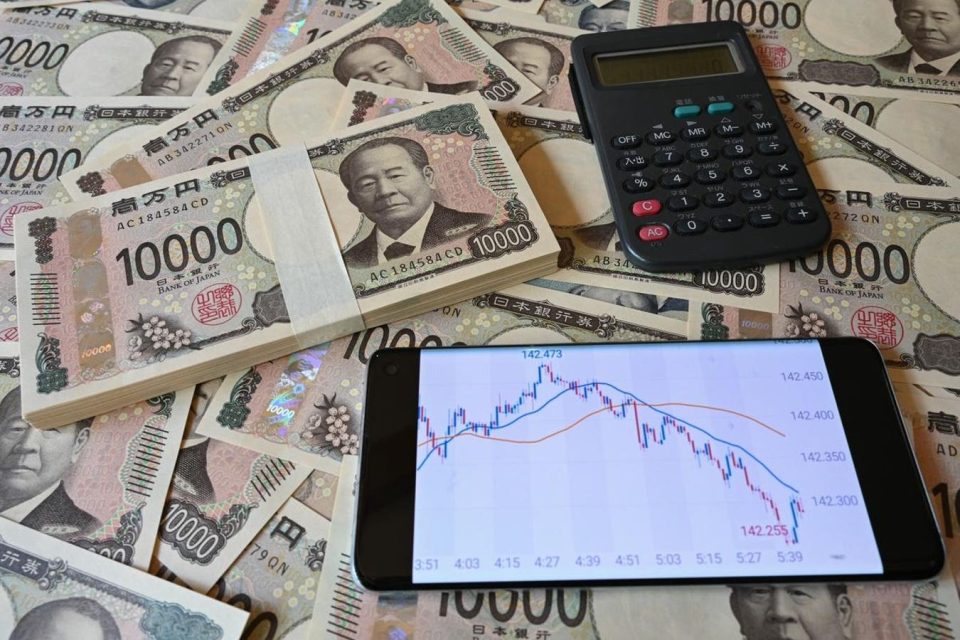

A stack and laid out 10,000 yen bills and a chart of the exchange rate. Japan’s bond market is changing, which has implications globally.
Getty
For decades, the Japan bond market has quietly served as one of the most important anchors of global interest rates. While U.S. investors often focus on the Federal Reserve, the reality is that Japanese capital, especially through its massive government bond market, has played a central role in shaping yields, liquidity and risk-taking across the world.
That anchor is now shifting. After years of ultra-low and even negative interest rates, the Bank of Japan (BOJ) has begun moving toward normalization. For investors outside Japan, this is not an academic development. It has real implications for stock valuations, bond yields, currencies and ultimately the performance of your portfolio.
Why May the Bank of Japan Raise Interest Rates in 2026?
For much of the past three decades, Japan has been synonymous with low inflation and even lower interest rates. The BOJ maintained a policy of negative rates and yield curve control (YCC), effectively capping long-term Japanese government bond (JGB) yields to stimulate growth and prevent deflation. That era is ending.
Rising domestic inflation driven by wage growth, supply chain normalization and a weaker yen has forced policymakers to reconsider. Japan is now experiencing sustained inflation above its long-standing 2% target, something that would have been unthinkable a few years ago. As a result, the BOJ has begun loosening its grip on the bond market, allowing yields to rise and signaling a broader shift toward normalization.
Globally, this matters because Japan is one of the largest holders of foreign assets, particularly U.S. Treasuries. If Japanese yields rise, domestic investors, banks, insurers and pension funds have less incentive to invest abroad. That potential repatriation of capital could ripple across global markets, tightening financial conditions far beyond Japan’s borders.
The “Yen Carry Trade” Unwind
To understand the broader implications, you need to understand the “yen carry trade,” one of the most important and underappreciated drivers of global liquidity. For years, investors borrowed cheaply in yen (thanks to near-zero rates) and invested in higher-yielding assets elsewhere, such as U.S. bonds, emerging market debt, equities, and even private markets. This created a powerful flow of capital out of Japan and into global risk assets. But this trade only works when Japanese rates remain low.
As the BOJ allows yields to rise, the economics of the carry trade begin to break down. Borrowing costs increase, and the risk of yen appreciation grows. Investors who have built leveraged positions funded in yen may be forced to unwind those trades selling global assets to repay yen-denominated liabilities.
This unwind can be disruptive. It can create volatility in equities, widen credit spreads and pressure emerging markets that have relied heavily on foreign capital inflows. For retail investors, this may show up as sudden drawdowns in portfolios that otherwise appear well diversified.
How Japanese Government Bonds Drive U.S. Treasury Yields
Japanese government bonds do not exist in isolation. They are deeply interconnected with U.S. Treasury markets. Japan is one of the largest foreign holders of U.S. Treasuries. When Japanese yields are suppressed, investors seek higher returns abroad, supporting demand for U.S. bonds and helping keep yields relatively low. But as JGB yields rise, that dynamic shifts.
Japanese institutions may begin reallocating capital back home, reducing demand for Treasuries. This can put upward pressure on U.S. yields, even if domestic economic conditions remain stable.
In other words, U.S. interest rates are not solely determined by the Federal Reserve. They are influenced by global capital flows, with Japan playing a central role.
For investors evaluating bonds versus bond funds, this shift is critical. Rising yields may offer better income opportunities, but they also introduce price volatility, particularly for longer-duration assets.
The Impact On Global Markets
The normalization of Japan’s bond market is not just a local story, it is a global macro shift.
Higher Japanese yields could lead to tighter global liquidity, especially if capital flows reverse. This environment tends to challenge high-growth equities, which rely on low discount rates to justify elevated valuations. Technology stocks, in particular, may face headwinds as global rates drift higher.
Emerging markets are also vulnerable. Many have benefited from years of abundant global liquidity and low borrowing costs. If Japanese capital retreats and the yen strengthens, these markets could face currency pressure, higher financing costs and reduced investment inflows.
At the same time, volatility may increase across asset classes. Markets that have grown accustomed to a stable, low-rate environment may need to adjust to a world where one of the largest providers of cheap capital is stepping back.
How This Impacts Your Portfolio
For individual investors, the implications are both direct and indirect. First, rising global interest rates can pressure equity valuations. Growth stocks, particularly those with earnings far in the future, are most sensitive to changes in discount rates. If Japanese normalization contributes to higher global yields, these stocks may underperform relative to value-oriented sectors with more immediate cash flows.
Second, fixed income allocations may behave differently than they have in recent years. While higher yields improve long-term return prospects, they can also lead to short-term losses as bond prices adjust. Understanding the distinction between high yield bonds and higher-quality fixed income becomes increasingly important in this environment.
Third, currency movements matter. A strengthening yen often associated with carry trade unwinds can create ripple effects across global markets. Multinational companies, commodities and emerging market assets may all be affected by shifts in currency dynamics.
Finally, diversification itself may evolve. Traditional correlations between stocks and bonds can change when global liquidity conditions shift. Investors should be prepared for periods where both asset classes experience volatility simultaneously.
Strategies For This New Normal
Adapting to this environment does not require radical changes but it does require thoughtful adjustments. First, prioritize quality. Companies with strong balance sheets, consistent cash flows and pricing power are better positioned to navigate higher-rate environments. These businesses tend to be less sensitive to shifts in global liquidity and more resilient during periods of volatility.
Second, revisit fixed income allocations. With yields rising, bonds are once again offering meaningful income. However, duration risk remains a key consideration. Investors may benefit from a more balanced approach that includes shorter-duration securities alongside selective exposure to longer-term opportunities.
Third, maintain true diversification. This includes geographic diversification, but also exposure across asset classes and sectors. In a world where global capital flows are shifting, diversification is not just about reducing risk it is about maintaining optionality.
Japan’s bond market is no longer a passive backdrop it is an active force reshaping global finance. As the Bank of Japan moves away from ultra-low rates, the effects will be felt across currencies, equities and fixed income markets worldwide. For investors, the key is not to react impulsively, but to understand the underlying dynamics and position portfolios accordingly.
The era of “free money” may be ending. What comes next will reward discipline, diversification and a clear understanding of how global markets truly work.