

Market Musings 220826: Bond Vigilantes take charge
The most important action this week in financial markets has been taking place in bonds. Specifically the largest, most liquid government bond market in the US.
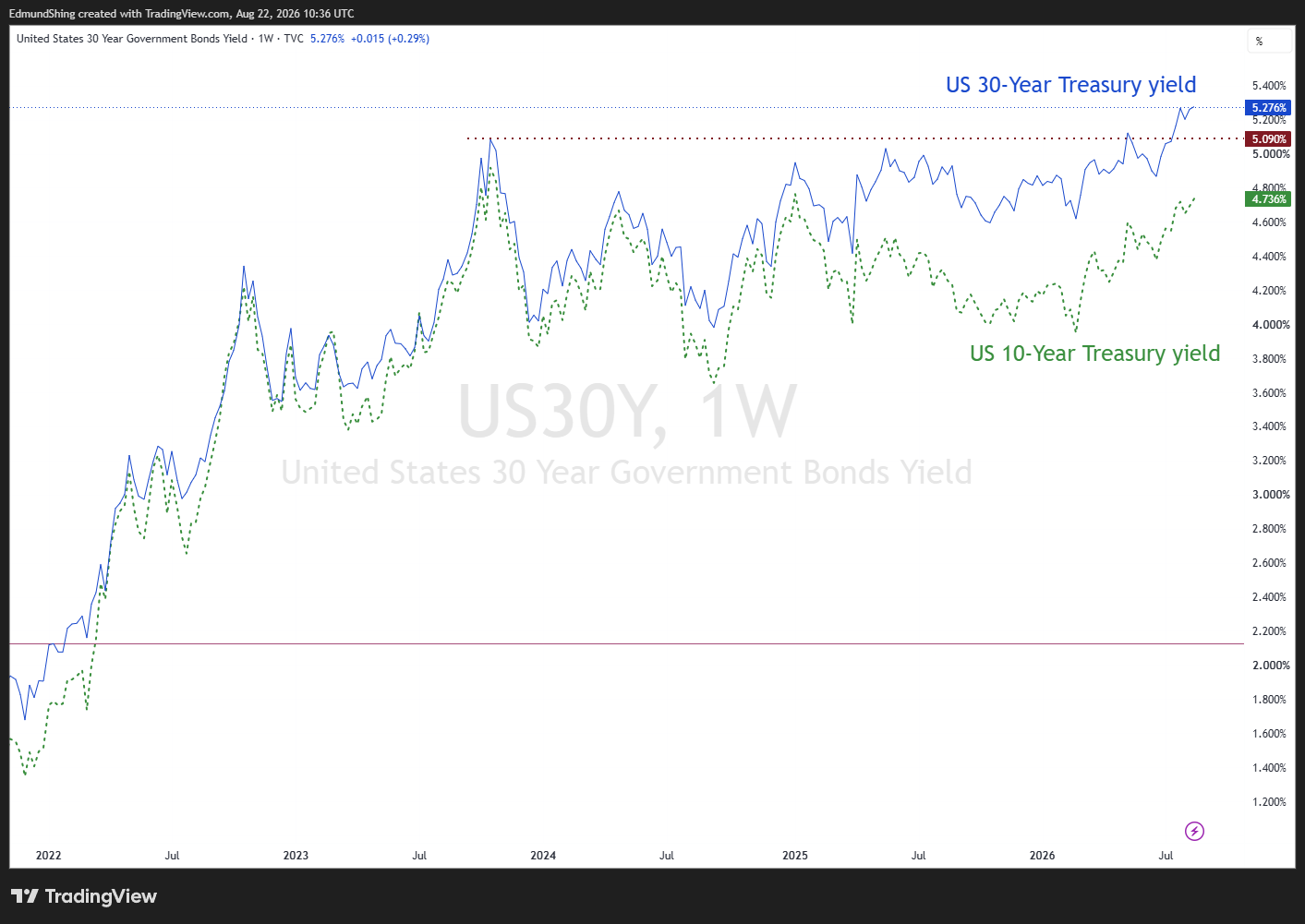
Despite Treasury Secretary Scott Bessent’s efforts to curb the rise in US long-term bond yields by buying back larger quantities of 10-30 year maturity bonds, the US 30-year bond yield has returned to a new multi-year high close to 5.3%. The rise in long-term bond yields is raising the cost of US fixed-rate mortgages and potentially raises the cost of servicing the $40 trillion stock of outstanding US government debt. In July this year, interest payments on this debt have already grown by $117bn (+14%) compared to the same period in 2025.
Chart of the week: new highs in long-term US bond yields (interest rates)
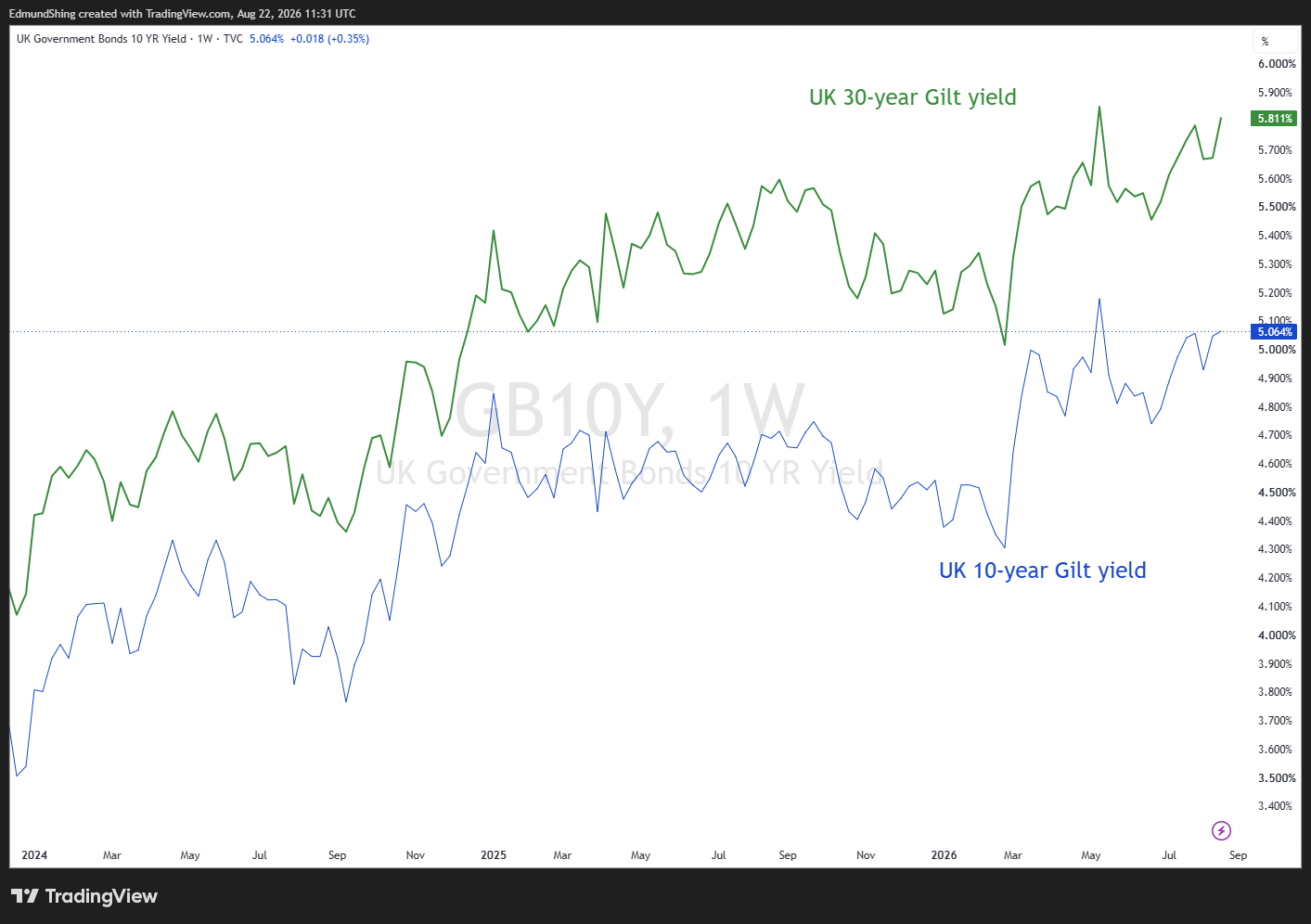
This is not just happening in the US – long-term government bond yields in the eurozone, UK and Japan are all rising in sympathy with the US. So governments in the developed world are all facing a similar problem of rising interest costs on historically high debt burdens.
This comes at a bad time for big tech companies who are increasingly borrowing money via the corporate bond market to fund their AI investment spree, as it also raises their cost of debt funding. Remember, these higher long-term interest rates represent an effective tightening of monetary conditions in the US, as it raises the cost of borrowing for consumers and businesses. So other things being equal, US economic activity should slow down in time as a result.
This creates an interesting quandary for the Fed President, Kevin Warsh. If he and the Federal Reserve decide to raise short-term interest rates, they will effectively be making this interest burden even higher on the US government, as it will raise the cost of issuing new short-term US Treasury bonds. It is no surprise then to see that the interest rate market is pricing only a 45% probability of a Fed Funds rate hike at the next Fed meeting on 16 September, 2026. Just 6 weeks ago, this was all but certain, with a 100% probability of a rate hike being priced into interest rate futures. Weaker core inflation and employment market data can help to justify the Federal Reserve keeping their benchmark interest rate at 3.50-3.75%.
FX: knock-on effect to the US dollar
The US…
Disclaimer
This is not financial advice. Our content is intended to be used and must be used for information and education purposes only. Please read our disclaimer and terms and conditions to understand our obligations.