
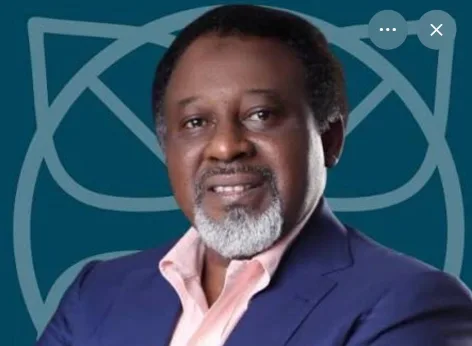
West Africa could build a $3tn cumulative energy market by 2035 if its 16 countries move from operating as separate national markets to a connected regional system, the Chairman of Rosehill Group Limited Advisory Limited, Suleiman Yahyah, has said.
Yahyah said the region could accelerate the development of its energy market by building interconnected systems rather than pursuing isolated projects, with common product specifications, shared data standards, regional infrastructure and a unified dispute resolution mechanism.
He made the proposal on Wednesday at the second West Africa Refined Fuel Market Conference in Abuja, where regulators, refiners, traders, financiers and other energy stakeholders are meeting to develop a transparent regional pricing system for refined petroleum products.
The conference was jointly hosted by the Nigerian Midstream and Downstream Petroleum Regulatory Authority, S&P Global Commodity Insights and the West Africa Regulators Forum.
The two-day event was themed, “Funding West Africa Infrastructure & Distribution to Create a Transparent Market for Regional Price Benchmarks.”
Yahyah, in his keynote presentation, said West Africa had reached a critical point in the evolution of its energy market, particularly following major investments in refining and changes in global energy markets.
He argued that the region could no longer be described merely as an emerging market with huge potential because developments in refining and energy infrastructure were beginning to change the structure of the market.
He stated, “Once upon a time, a few months ago, this market was full of potential. But a couple of months have changed the dynamics, and we are now managing six steps for emerging markets in the energy platforms.
“With the presentation done yesterday and the big investments in refining and changing dynamics in global markets, we are no longer a potential; we are now at the crossroads for an infant or emerging market composition.”
According to him, the next stage should be to create a functioning regional energy system capable of moving products, capital and information efficiently across borders.
He said focusing only on individual projects could take decades, while developing an integrated market system could accelerate the correction of the region’s energy imbalances.
The national honouree said, “How do you get there? If we think in projects, it will take us many, many years to get there. But if we think in systems, perhaps we can accelerate the correction of today’s imbalances. So, what’s the next step? West Africa will stop competing nationally and transact regionally. That means we harmonise activities so that an operator with a license in Ghana can operate in Nigeria and can trade in Nigeria.
“And that will mean that we have common product specifications, we have shared data standards, we have a modern energy contract, we have infrastructure to drive it, and we have the regional dispute resolution mechanism. If we do that, it is possible that by 2035, we can have a market that is $3tn cumulative.
“And this would mean, therefore, that the market has debt, it has integration, it is connected to global platforms, and the fiscal system where we see the fiscal system where we see the fiscal transaction, like if you look at the electricity market, a lot of cables connecting the region, the gas market, but trade is between 8 to 12 per cent. So, essentially, the market now can converge where transactions are not only stagnant, but they are following the flow of opportunities.”
Yahyah said Africa’s enormous population and energy resources had not translated into adequate access to affordable and clean energy.
He noted that Africa accounts for about 20 per cent of the global population and produces roughly 7.5 per cent of global hydrocarbons, yet hundreds of millions of people remain in energy poverty.
He said the situation was even more troubling in West Africa, where he estimated that about 45 per cent of the population remained in energy poverty, while around 75 per cent lacked access to clean power.
“West Africa, you can correlate these stylised facts for West Africa and think that West Africa too, we are at 45 per cent energy poverty and about 75 per cent without access to clean power,” he said.
Yahyah argued that the opportunity for the region was not simply to produce more oil and gas but to capture more of the financial value created by energy trading, market information, risk management and price discovery.
He said much of the value in global energy markets was controlled by institutions that did not own the physical resources but instead owned the knowledge, methodologies, technology and platforms that enabled modern markets to function.
He cited global benchmark and market institutions, exchanges and data providers as examples of entities that derive enormous commercial value from the infrastructure surrounding commodity markets.
“These institutions, they don’t own molecules; they don’t own the resources. What they own is knowledge; they own methodologies, they own technology, and they have very talented people who drive these markets,” he said.
The RHG chairman proposed a regional structure in which different countries would develop specialised roles based on their strategic advantages.
He stressed that West Africa must therefore develop its own market infrastructure while establishing strategic partnerships with global institutions rather than attempting to recreate everything from scratch.
He opined that Senegal could serve as a western gateway, Abidjan as a commercial and logistics hub, Ghana as a balancing and storage centre, while Lagos could emerge as the Atlantic hub for liquidity and refining.
He stated, “The West Africa region consists of 16 countries. We can get there if we follow the natural trend of market evolution.
“Already Senegal on the western side is the gateway, with a lot of potential, almost 250,000 miles of production. Abidjan should be the commercial and logistics hub. Ghana: balancing and storage. Lagos should be the hub, the Atlantic hub for liquidity and refinancing. West Africa will compete nationally and transact regionally. That means we harmonise activities so that one operator of a licensee in Ghana can operate in Nigeria and can trade in Nigeria.
“And that will mean that we have common product specifications, we have shared data standards, we have a modern energy contract, we have infrastructure to drive it, and we have the regional dispute resolution mechanism.”
According to him, regional integration would allow the market to develop sufficient liquidity and scale to become connected to global trading platforms.
The proposals come as West African regulators and industry players intensify efforts to create a regional reference market for refined petroleum products.
For years, the region has remained heavily exposed to international pricing benchmarks, supply disruptions, freight costs and geopolitical shocks despite being home to significant crude oil and gas resources.
The emergence of major refining capacity in Nigeria, particularly the Dangote refinery, has changed the region’s supply outlook and created an opportunity to develop more local and regional price discovery.
But Yahyah argued that refining capacity alone would not create a mature market.
He said the region must build the financial, regulatory, technological, logistical and human infrastructure that allows refined products to move freely and be traded transparently.
The proposed model would ultimately link physical infrastructure with financial markets, creating an integrated system in which products, capital and market information can move across borders.
If successfully implemented, the strategy could help West Africa move from a collection of fragmented national energy markets to a regional marketplace capable of attracting global capital while retaining a greater share of the value generated from its own resources.