
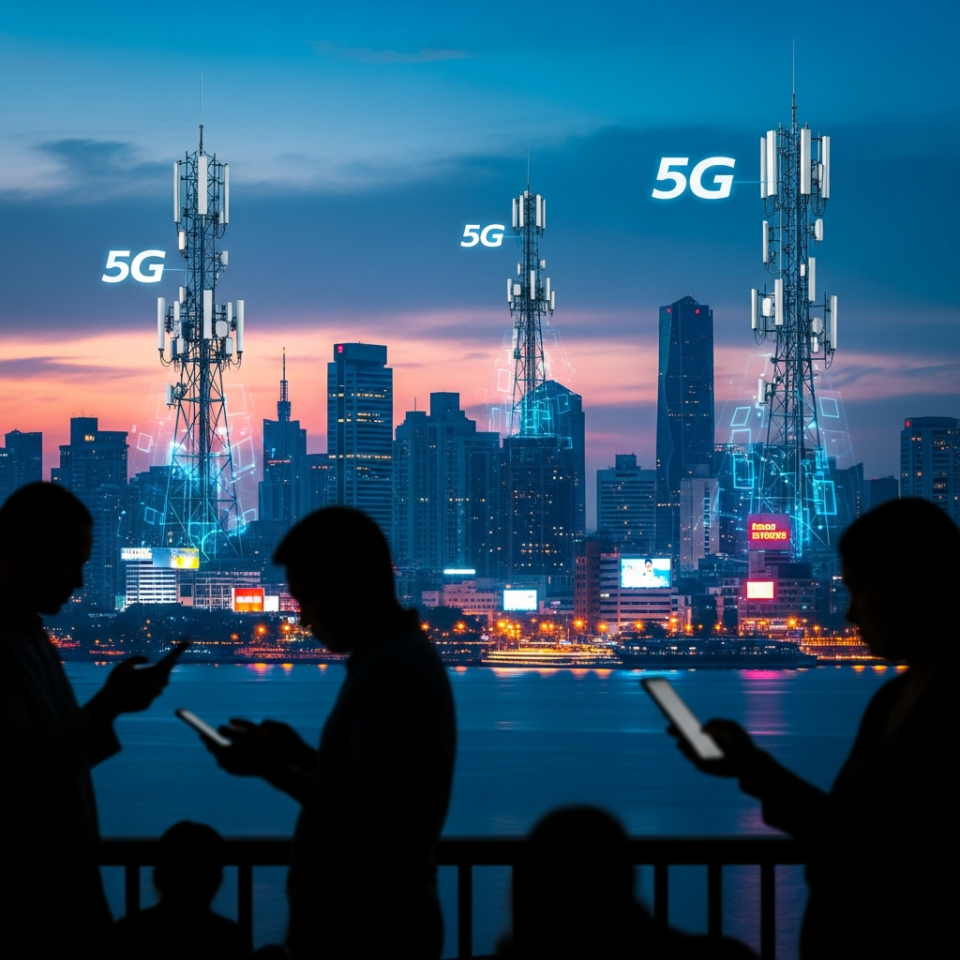
It is quite something when you think about how much our daily habits have changed in just a few short years. I remember when going online meant sitting at a clunky desk, waiting for the modem to screech its way into a connection while hoping nobody needed to use the landline. Nowadays, that entire experience is tucked into our pockets. For many of us in the UK, this shift was gradual, but in emerging economies across the globe, it has been more like a sudden, transformative leap.
The way people spend their spare time in places like Southeast Asia, Latin America, and parts of Africa is being completely rewritten by mobile infrastructure. We aren’t just talking about better phone calls; we’re looking at a fundamental shift in how entire populations access entertainment, socialise, and manage their lives. It is a fascinating bit of evolution that has far more to do with 5G towers and smartphone processors than most people realise.
When we look at the spread of 5G, it is easy to focus on our own signal bars in the local high street. However, the real story is unfolding in markets where fixed line broadband never really took hold. In many emerging economies, the traditional “cabled” internet phase was skipped entirely. This is a phenomenon often called leapfrogging, where a society jumps straight to the latest technology because the old stuff was too expensive or difficult to install.
By the middle of 2024, the GSMA reported that mobile connectivity had become the primary way for over half the world’s population to access the internet. In countries like India and Brazil, the rollout of 5G has been nothing short of aggressive. It isn’t just about being able to download a film in seconds; it is about the reliability of the connection. For a consumer in a rural area, a stable 5G signal is a gateway to services that were previously out of reach.
This infrastructure acts as the backbone for a new kind of leisure economy. When the connection is fast and, more importantly, consistent, the types of entertainment people consume change. We’ve moved away from simple, text based interactions toward rich, high definition video and real time interactive platforms. This shift has required massive investment from both governments and private telcos, but the payoff is a more connected global population that participates in the digital world on their own terms.
According to data from the International Telecommunication Union (ITU), the gap in internet usage between developed and developing nations is narrowing, largely thanks to mobile broadband. It is a bit of a revolution that doesn’t get enough credit for how it’s levelling the playing field for digital participation.
Monetising the App Economy: Shifting Consumer Spending Patterns
As the pipes got bigger and faster, the way people spend their money followed suit. In 2024, we saw a distinct shift in the “app economy” within emerging markets. It wasn’t just that more people were using apps; it was that they were starting to spend more within them for their leisure activities.
Many of us have experienced that moment where we find ourselves paying a small subscription for a streaming service or a one-off fee for an ad-free experience. In emerging economies, this trend has been accelerated by the rise of seamless mobile payment systems. When you don’t have to faff about with credit card details because your phone is already linked to a digital wallet, you are much more likely to engage with premium content.
The spending patterns we’re seeing now are quite different from the “buy once” model of old software. It’s now about micro-transactions and small, recurring payments that provide ongoing value. This has led to a boom in “snackable” entertainment. People are choosing to spend their leisure budget on things they can enjoy during a commute or a quick break.
The State of Mobile 2024 report by Data.ai highlighted that emerging markets are now driving the majority of new app downloads and a significant portion of the growth in consumer spend. This isn’t just a fluke; it’s a reflection of a growing middle class that views their smartphone as their primary entertainment hub. Whether it’s streaming music, watching short-form video content, or engaging in digital pastimes, the mobile device is where the money is going.
It is worth noting that with this increase in digital spending, responsible habits are more important than ever. It’s always a good idea to keep track of how much time and money you’re spending online. Please remember to play responsibly and stay within your limits; if you ever feel like your digital habits are becoming a bit much, there are plenty of resources available to help you stay in control.
The Hardware of Play: How Device Optimisation Influences Participation
Of course, the best 5G connection in the world won’t do much if your phone can’t handle the data. This is where the “hardware of play” comes into the picture. A few years ago, there was a massive divide between high end flagship phones and the budget models available in emerging markets. That gap has shrunk significantly.
Manufacturers have become incredibly good at squeezing high performance out of more affordable components. We’re seeing budget friendly smartphones now shipping with high refresh rate screens and processors that can handle complex rendering without breaking a sweat. This matters because the quality of the user experience dictates whether someone will stick with a platform or give up in frustration.
When a device is properly optimised, the barrier to entry drops. You don’t need a three thousand pound setup to enjoy high quality digital leisure anymore. This democratisation of hardware means that someone in Jakarta or Lagos can have the same smooth experience as someone in London or New York. It is about more than just “playing a game” or “watching a video”; it is about the fluidity of the interface. If the screen responds instantly to your touch and the graphics don’t stutter, you feel more connected to the experience.
This hardware evolution has also pushed developers to be more efficient. They’ve had to learn how to make their platforms look brilliant on a wide variety of screens and specs. It is a bit like a car manufacturer making sure their engine runs just as well on a country lane as it does on a motorway. The result is a more robust digital ecosystem where the hardware and software work in harmony to keep the user engaged.
UX Benchmarking: The Technical Transition to Mobile-First
Looking at the technical side of things, the transition to a mobile-first world has forced a total rethink of user experience (UX) design. It isn’t enough to just shrink a desktop website down and hope for the best. That leads to tiny buttons and impossible navigation that would frustrate even the most patient person.
The industry has moved toward something called low-latency rendering. In simple terms, this means the time between you tapping the screen and something happening is so short that you don’t even notice it. This is particularly crucial in high-engagement sectors where every millisecond counts.
Take, for instance, how the Virgin Games platform has approached this. They’ve transitioned their entire portfolio to a mobile-first environment, ensuring that the tech behind the scenes is as snappy as possible. When you are looking at something like mobile-optimised slots, the challenge is to maintain high-fidelity graphics and complex animations without draining the battery or causing the phone to overheat.
This is a great case study for responsive design. The platform has to detect what kind of device you are using, how fast your connection is, and then deliver a version of the software that fits those parameters perfectly. It is a lot of heavy lifting for the servers, but for the user, it just feels like a seamless, high-quality experience. This kind of technical excellence is what separates a frustrating app from one that people want to come back to.
The future of the mobile landscape
As we move further into 2026, the lines between our physical and digital lives will likely continue to blur. The infrastructure is now in place, the spending habits have stabilised, and the hardware is more than capable. What we are seeing in emerging economies isn’t just a trend; it’s a look at the future of global consumer behaviour.
We have reached a point where the smartphone is no longer an accessory to our lives; for many, it is the central point through which they experience the world. It’s a bit of a whirlwind when you stop to think about it, but it’s also incredibly exciting. The digital leap has happened, and there is no going back now.
Whether you’re someone who enjoys a quick bit of entertainment on the bus or you’re fascinated by the technical wizardry that makes it all possible, it’s clear that the mobile-first world is here to stay. And as long as we keep our habits balanced and our connections fast, there is plenty of room for this digital landscape to grow even further. Just remember to put the phone down every once in a while and enjoy the “real” world too!