
Active fixed income ETFs gathered an impressive 38% of the $173 billion of net inflows in the 12 months ended January 2026. TCW’s recent expansion serves as a strong case study in how a legacy bond powerhouse can benefit as ETFs gain market share.
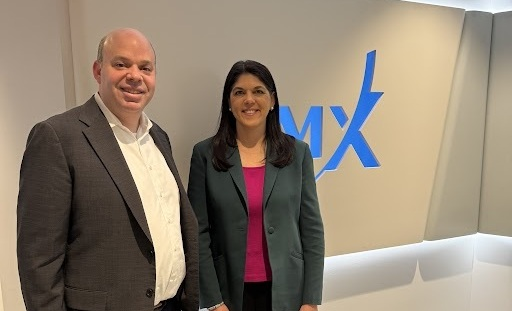
Jennifer Grancio, Global Head of Distribution at TCW, visited the TMX VettaFi New York office last week. She highlighted that the firm’s entry into the ETF space is grounded in a deep pedigree. “For more than 50 years, investors have trusted TCW to provide active strategies across fixed income,” Grancio noted. That trust has translated into significant momentum: TCW’s ETF platform has surged to nearly $6 billion in assets in short order.
FLXR Quadrupled in Size
The standout success in the lineup has been the TCW Flexible Income ETF (FLXR). The $2.6 billion multisector ETF quadrupled in size last year, driven by its ability to navigate a volatile rate environment. Last year, the fund delivered an 8.4% total return yield and continues to offer a yield north of 5%. Currently, the team is leaning into relative value by keeping duration short and maintaining higher weightings in mortgage-backed securities and securitized bonds.
TCW also recently converted its 20-plus-year-old core plus mutual fund into the TCW Core Plus Bond ETF (FIXT). Unlike the income-targeted FLXR, FIXT is a traditional total return product designed for those seeking a lower risk profile. Grancio explained: “The expansion of our ETF suite provides investors with a broader range of precision products that allow investors to capitalize on attractive alpha opportunities while actively seeking to mitigate downside risk.”
Expanding the Specialized Toolbox
Beyond the core, TCW is leveraging its scale to offer sector-specific active ETFs. A prime example is the TCW AAA CLO ETF (ACLO). TCW manages over $6 billion in Collateralized Loan Obligations (CLOs) across various products, and the $350 million ACLO allows advisors to tap into that expertise. In a market where high-quality floating-rate notes are in demand, ACLO provides a way to access these AAA-rated bonds.
For advisors willing to take on added risk to round out a portfolio, the TCW Multisector Credit Income ETF (MUSE) functions as a “completion fund.” The $40 million ETF targets non-core bonds, including bank loans, emerging markets, and high yield. Grancio confirmed that MUSE is designed to pair effectively with low-cost core holdings, such as an aggregate bond index, by providing global credit exposure that traditional benchmarks often miss.
The ETF Future Includes Multi-Share Classes
The industry is closely watching the development of multi-share class products, which would allow a single fund to offer both mutual fund and ETF shares. While TCW has secured exemptive relief to move forward, Grancio remains pragmatic about the timeline. She described the future of these products as “very interesting,” though she noted that full industry stability is likely a couple of years away as custodians and platforms build out the necessary operational plumbing.
When TCW does lean into this space, we think the initial focus is likely to be on large-cap U.S. equities. This would help round out their equity lineup, providing a core domestic foundation to sit alongside their existing megatrend ETFs, such as the TCW Power & Infrastructure ETF (PWRD).
PWRD recently crossed $1 billion in assets after tripling in size in 2025 and rising 33% in value. The concentrated, actively managed ETF focuses on companies driving the transformation of energy and power systems.
As the industry moves toward using ETFs as the primary vehicle for taxable accounts, TCW’s focus remains clear to us. As Grancio puts it: “We have developed a lineup of ETFs grounded in TCW’s decades of investment expertise.”
For more news, information, and analysis, visit VettaFi | ETF Trends.
